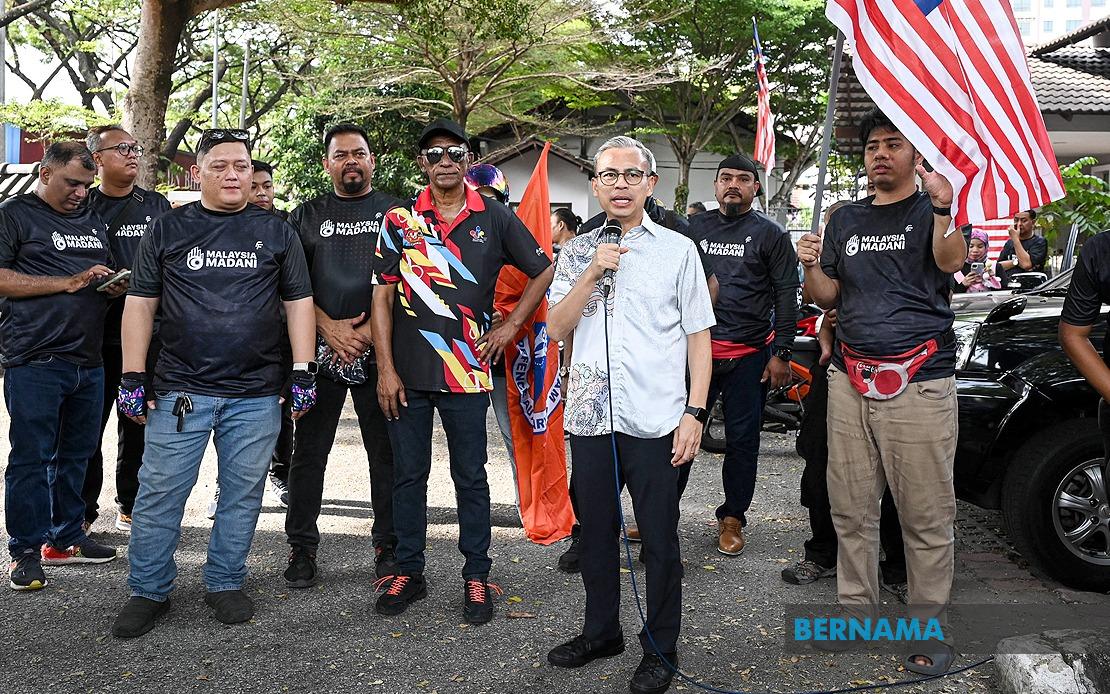
Nearly three hundred motorcyclists converged in Kuala Lumpur on August 30 for the Lembah Pantai Kembara Merdeka Convoy, a significant community mobilisation effort timed to coincide with Malaysia's Independence Day celebrations. The large turnout underscored the appetite among residents to participate in coordinated patriotic activities, particularly in an ethnically diverse parliamentary constituency like Lembah Pantai, where such displays of collective sentiment carry particular symbolic weight.
Communications Minister Datuk Seri Fahmi Fadzil, who represents the Lembah Pantai constituency, framed the event as a deliberate exercise in demonstrating the nation's capacity for social cohesion across different demographic groups. In his remarks at the programme, Fahmi emphasised that the gathering represented a tangible manifestation of Malaysian identity forged through shared civic experience rather than abstract rhetoric alone. The convoy served as a practical platform for residents of varying ethnic and religious backgrounds to participate alongside one another in a structured, high-visibility activity.
The minister's messaging centred on a fundamental proposition about Malaysian pluralism: that the country's diversity constitutes an asset rather than an impediment to national progress. Fahmi specifically highlighted the composition of Lembah Pantai's electorate and neighbourhood networks, arguing that residents already maintain friendships and daily interactions that transcend communal boundaries. The convoy, in this interpretation, functioned as an institutional mechanism to translate informal social bonds into public, organised expression.
The route design reflected strategic thinking about the geographic and demographic makeup of the constituency. The convoy originated at Taman Seri Sentosa and proceeded through five designated stops, incorporating Kampung Pasir, IWK Eco Park, and Vista Angkasa in Kampung Kerinchi before concluding at Bangsar LRT station. This carefully choreographed itinerary ensured visibility across multiple community clusters and neighbourhood centres, maximising exposure to the patriotic message within the Lembah Pantai electoral boundaries.
At each pit stop along the route, organisers conducted a symbolic ritual whereby motorcyclists transferred Jalur Gemilang flags to representatives of the Resident Representative Council and community organisations. This ceremonial element transformed the convoy from a mere visual spectacle into a structured civic action designed to distribute patriotic insignia throughout community leadership structures. The gesture carried implicit messaging about the transfer of national sentiment through formal and informal community channels.
Fahmi's closing remarks shifted focus toward institutional sustainability, expressing hope that the interpersonal bonds and cooperative spirit demonstrated during the convoy would crystallise into ongoing community activities. Rather than positioning the event as a singular occasion, he articulated a vision of continuous civic engagement anchored in the relationships forged during the day's activities. This framing suggested an understanding that periodic patriotic events require embedding within broader frameworks of routine community participation to maintain their political and social effectiveness.
The minister explicitly invited continued participation in multiple formats: from contribution and assistance initiatives addressing social welfare concerns to future Merdeka observances and additional programmes yet to be specified. This multi-dimensional approach reflected recognition that patriotism, if presented solely through annual ceremonial vehicles, risks appearing disconnected from residents' daily material concerns and preoccupations. By linking Merdeka celebrations to ongoing social support activities, Fahmi implicitly constructed a narrative where national unity and community welfare reinforced one another.
For Malaysian political observers and readers in the region, the Lembah Pantai convoy exemplified a particular governance strategy increasingly visible across urban constituencies in Southeast Asian democracies: the mobilisation of civil society around patriotic occasions as a mechanism for strengthening governmental and parliamentary legitimacy. The targeting of motorcyclist communities, a demographic typically engaged in informal-sector economic activities and neighbourhood-level social networks, suggested intentional outreach toward constituencies sometimes underrepresented in formal political participation structures.
The event also reflected contemporary anxieties about social fragmentation and polarisation within plural societies navigating rapid urbanisation. By orchestrating a large, visible gathering of residents from different backgrounds participating in coordinated activity, local political leadership generated visual evidence of working harmony and shared national purpose. Such demonstrations carry particular resonance in Malaysia's political environment, where narratives about communal division and intercommunal mistrust periodically dominate public discourse.
The choice to emphasise Lembah Pantai's particular character as a multi-ethnic neighbourhood with deep community networks suggested implicit acknowledgement that national unity campaigns require locality-specific framing to resonate authentically. Rather than generic patriotic messaging, Fahmi's address drew specifically on residents' lived experience of plural daily interactions, lending concrete, relatable dimensions to abstract principles of Malaysian identity.
The convoy's timing, occurring during the Merdeka eve period when media attention and public engagement with national symbolism peaks, maximised the political and communicative value of the initiative. The visual spectacle of hundreds of motorcyclists decorated with national colours and flags, traversing through multiple neighbourhood centres, generated accessible imagery that transcends formal political narratives and appeals directly to popular understanding of patriotism as collective action and visible display.

