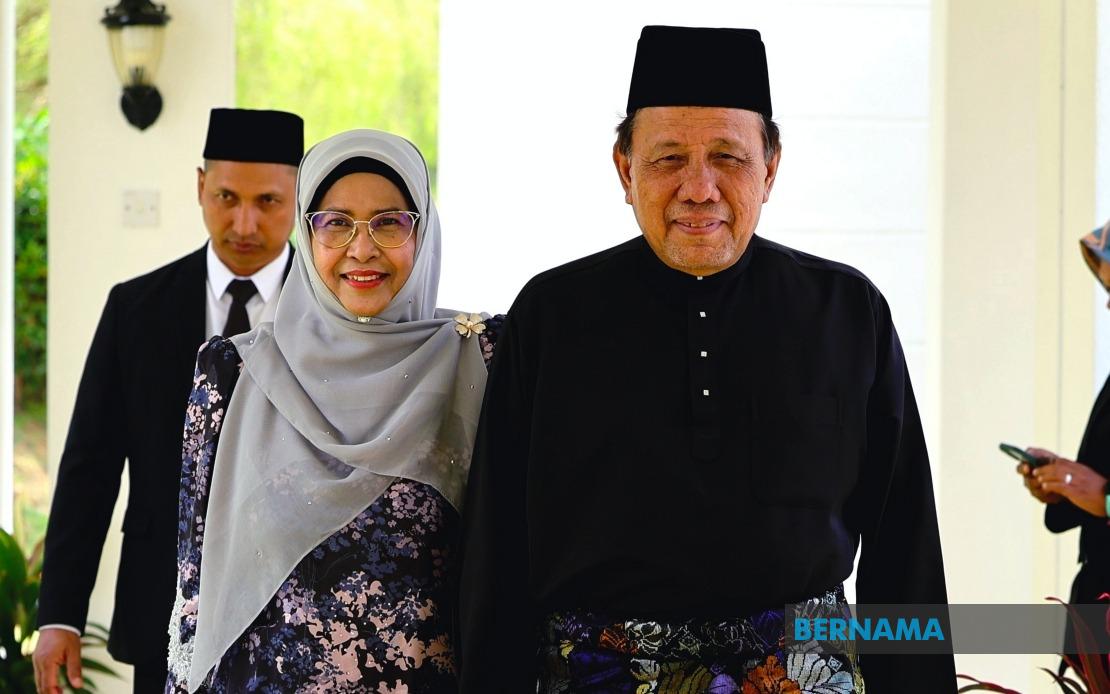
Negeri Sembilan has been granted an additional public holiday on August 3, marking a gesture of goodwill from the newly appointed state leadership following the completion of the 16th state election. The announcement came from Menteri Besar Datuk Ismail Lasim during his inaugural press conference held in Kuala Pilah after his swearing-in ceremony, signalling an early priority for the incoming administration to acknowledge public participation in the electoral process.
The decision to declare the optional holiday received formal approval from Tuanku Muhriz Tuanku Munawir, the Yang Dipertuan Besar of Negeri Sembilan. Ismail, 67, expressed his gratitude to the state's constitutional ruler for consenting to both his appointment and the announcement of the special holiday. This dual approval underscores the collaborative relationship between the executive and the palace in state governance, a feature particularly important in Malaysia's constitutional monarchy system where such ceremonial endorsements carry symbolic weight in legitimising government actions.
Ismail's reasoning behind the holiday reflected pragmatic governance concerns. He acknowledged that many participants in the election process—from voters to election officials and campaign workers—remained fatigued following the polling day. Providing citizens with an additional day of rest represented a tangible way for the new administration to demonstrate responsiveness to public welfare concerns during the immediate post-election period. This approach also serves as a subtle signal of the incoming government's people-centric orientation during its opening days in office.
The election itself concluded with results that consolidated considerable political strength for the incoming state government. Barisan Nasional secured 18 of the 36 contested state assembly seats, while Perikatan Nasional claimed seven seats. This combined tally of 25 seats delivers a decisive two-thirds majority, providing the coalition government substantial legislative power to advance its agenda without relying on independent assemblymen or opposition support. Such a comfortable margin is particularly significant in state-level politics, where coalition stability can be challenged by defections or shifting alliances.
The electoral contest involved 103 candidates competing across the 36 state constituencies, indicating a moderately competitive political landscape where multiple parties fielded candidates despite the eventual dominance of the BN-PN coalition. The scale of candidate deployment reflects the political importance of Negeri Sembilan within broader Malaysian politics, occupying a strategic position in the Klang Valley region and serving as a important testing ground for national coalition policies and strategies.
Ismail's swearing-in ceremony at Istana Besar Seri Menanti represented the formal constitutional culmination of the electoral process. The location itself carries historical weight, as the palace serves as a symbol of Negeri Sembilan's constitutional framework and the institution of the Duli Yang Maha Mulia. The ceremony's conduct before Tuanku Muhriz established the constitutional legitimacy of the new administration and fulfilled the procedural requirements governing the transition of executive power within the state.
For Malaysian readers, this development illustrates how state elections cascade into practical governance decisions that affect daily life. The holiday declaration, while seemingly symbolic, demonstrates how newly elected administrations calibrate their initial actions to build public confidence and appreciation. This is particularly relevant in Negeri Sembilan, where the state government's policies on economic development, infrastructure, and social services directly impact the quality of life for residents across its districts.
The two-thirds majority achieved by the BN-PN coalition holds substantial implications for Negeri Sembilan's legislative agenda over the coming term. With such a secure parliamentary position, the state government can pursue constitutional amendments if necessary, pass legislation without obstruction, and implement policies with minimal opposition interference. However, this concentration of power also places heightened responsibility on the coalition to deliver on electoral promises and maintain accountability to voters who granted them such a decisive mandate.
From a broader Southeast Asian perspective, Negeri Sembilan's election result reflects Malaysia's ongoing political evolution. The performance of these coalitions in state elections serves as a barometer for national sentiment and political direction. The substantial support indicated by the seat distribution suggests voter confidence in the BN-PN coalition's platform, though the continued opposition presence and the competitive nature of individual constituencies demonstrate that Malaysian voters retain considerable agency in determining political outcomes at the state level.
Ismail's immediate declaration of a public holiday also carries administrative signalling value. It establishes his administration's willingness to prioritise recognition of institutional participation and public input, potentially setting a collaborative tone for relations between the state government and civil society. The timing—within hours of assuming office—suggests that the new Menteri Besar is oriented toward quick decision-making and public engagement, characteristics that may shape the character of his administration during its tenure.
The election concluded successfully without reported major incidents, a fact worth noting given Malaysia's complex electoral history and the competitive nature of state politics. This peaceful transition reflects the maturity of Malaysia's electoral institutions and the commitment of all participating parties to respect democratic processes, even in hotly contested races. Negeri Sembilan's election cycle thus contributes positively to Malaysia's overall democratic credentials and demonstrates the resilience of institutional procedures.
Looking forward, the new state government's ability to translate its electoral mandate into tangible improvements in public services and economic performance will determine public satisfaction and its prospects in future electoral cycles. The holiday declaration serves as an opening chapter in what will be a lengthier narrative of governance, where administrative competence and responsiveness will ultimately matter far more than symbolic gestures. For Negeri Sembilan residents, the coming months will reveal whether the coalition government can effectively convert its legislative supermajority into substantive benefits for the state's economy and society.

