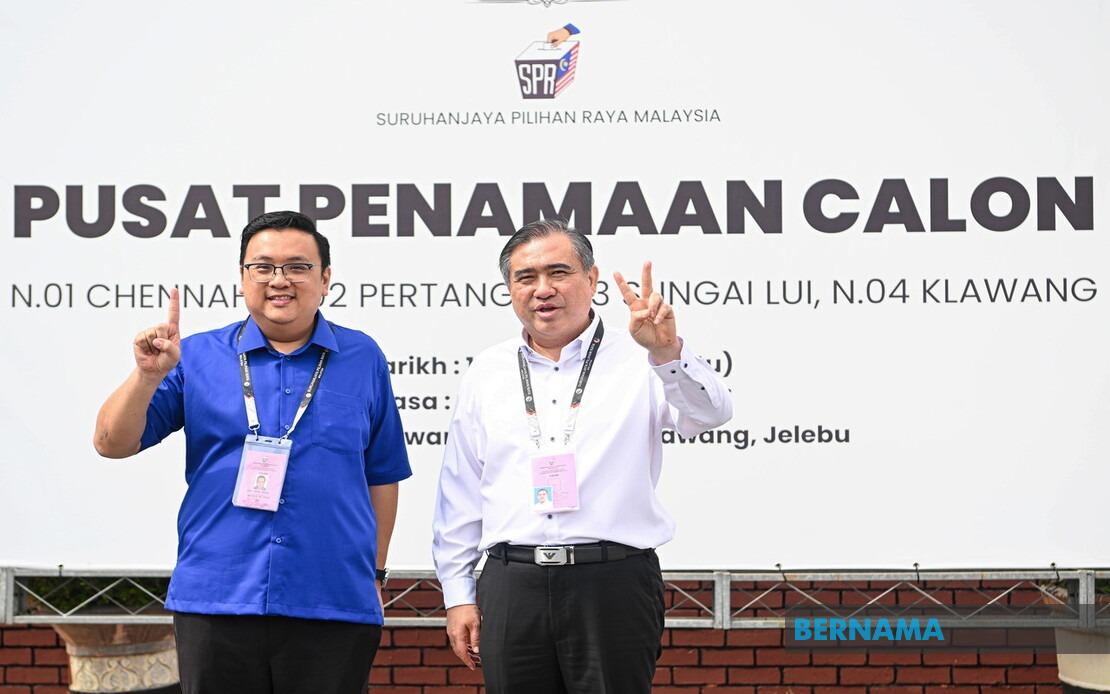
The 16th Negeri Sembilan State Election on August 1 will present one of Malaysia's most fractured electoral landscapes, with straight fights becoming increasingly rare while three-cornered and multi-way contests dominate the contest for 36 assembly seats. The composition of contests reveals not merely a shift in numbers but a fundamental transformation in how voters will choose their representatives, reflecting the splintering of Malaysia's political coalition structure and the emergence of splinter parties challenging established blocs.
Straight fights, which once dominated electoral contests, have contracted sharply to just 11 constituencies—representing less than 31 per cent of all seats—down precipitously from 27 seats in the 2023 state election. This contraction signals that the era of two-party bipolar contests has largely passed in Negeri Sembilan, replaced by a messier electoral environment where voters must navigate crowded ballots and divided opposition forces. Among these remaining direct duels, high-profile names underscore the competitive stakes: Transport Minister Anthony Loke contests Chennah as the DAP standard-bearer against Barisan Nasional's Siow Kong Choon, while Foreign Minister Mohamad Hasan defends Rantau for UMNO against Pakatan Harapan challenger Dr Azizul Hakim Mahdi.
Three-cornered contests have surged dramatically to 21 seats, nearly tripling from the seven constituencies featuring three-way races in 2023. This explosion reflects the persistent vitality of Parti Pribumi Bersatu Malaysia and other third forces as genuine electoral players rather than peripheral challengers. The Menteri Besar himself, PKR vice-president Aminuddin Harun, faces a three-way tussle in Linggi where Bersatu's Zamri Md Said will compete alongside Barisan's Datuk Mohd Faizal Ramli, demonstrating how even the state's most senior leader cannot command an uncontested mandate. Similarly, UMNO's Jalaluddin Alias in Pertang must navigate challenges from both Pakatan and Bersatu candidates, illustrating how the traditional two-bloc framework has splintered into a genuinely multi-polar political space.
The emergence of four-cornered contests in two constituencies represents a new layer of electoral complexity. Jeram Padang pits incumbent Mohd Zaidy Abdul Kadir against challengers from Pakatan Harapan, Bersatu, and the Parti Orang Asli Malaysia, adding indigenous representation concerns to the traditional urban-rural and peninsular divisions. Rahang similarly features four contestants including a Parti Sosialis Malaysia representative, suggesting that ideological diversity rather than mere coalition competition now characterises the contest.
Most strikingly, two constituencies will witness unprecedented five-way contests in a state election setting. Nilai seat incumbent J. Arul Kumar of Pakatan Harapan faces competition from Barisan's Lai Chien Kong, Bersatu's Datuk V. Saravana Kumar, Berjasa's Zamani Ibrahim, and independent candidate Omar Mohd Isa. The Sri Tanjung seat presents a similarly crowded ballot with five competitors including incumbent Dr G. Rajasekaran of Pakatan Harapan, Barisan's A. Achuthan, Bersatu's M. Leevineshwaraan, and two independent candidates. These five-way contests represent a marked departure from the 2023 state election, which recorded no such contests, underscoring rapid political realignment within just two years.
The rise of independent candidates and smaller parties reflects broader voter sentiment that neither traditional coalition fully represents their interests, particularly in seats with significant ethnic plurality or specific local grievances. The appearance of Parti Orang Asli Malaysia, Parti Sosialis Malaysia, and Berjasa signals that voters increasingly perceive political choice extending beyond the Pakatan Harapan versus Barisan Nasional versus Perikatan Nasional framework that has dominated recent Malaysian elections.
Election logistics reflect the scale of this contest. The Election Commission has scheduled early voting for July 28, with polling day set for August 1. A total of 889,490 eligible voters will cast ballots, comprising 867,151 ordinary voters, 16,884 military personnel and their families, and 5,455 police personnel. This electorate size places Negeri Sembilan's state election as a significant barometer for national political sentiment, given the state's diverse demographic composition and relatively balanced urban-rural geography.
For Pakatan Harapan, the fragmentation presents both opportunity and threat. While party figures like Aminuddin Harun and Rajasekaran hold incumbency advantage, their contests have transformed from likely victories into genuinely competitive three and five-way battles where vote splitting could cost them seats despite plurality support. Bersatu's expanded candidacy across multiple constituencies reflects the party's determination to establish itself as a genuine third force rather than a temporary protest vehicle, particularly following its exit from Perikatan Nasional in several contexts.
Barisan Nasional enters the election with significant institutional advantages but faces the same fragmentation challenge as other established blocs. The presence of Perikatan Nasional candidates like Danni Rais in Klawang demonstrates how the Malay-Muslim vote—historically Barisan's strongest base—has bifurcated, with Bersatu and PN drawing away voters disappointed with UMNO's recent trajectory.
For Malaysian political observers and Southeast Asian analysts, Negeri Sembilan's electoral transformation offers crucial insights into whether Malaysia's political system is genuinely shifting toward a multi-party landscape. Previous state elections have sometimes suggested this trend, only for bipolar competition to reassert itself when national tides shifted. If Negeri Sembilan consolidates multi-cornered contests as the norm, Malaysia may be entering a genuinely different political era—one where coalition arithmetic becomes vastly more complex and where regional factors matter more than national swings.
The presence of ideologically distinct parties and candidates also carries implications for policy formation. A Negeri Sembilan state government composed of representatives holding more diverse political philosophies would face greater challenges in implementing coherent policy agendas, potentially leading to either greater contestation within the state legislature or compromise-driven incrementalism. Conversely, it might force parties toward more concrete policy differentiation, as traditional symbols and rhetoric alone become insufficient in crowded contests.

