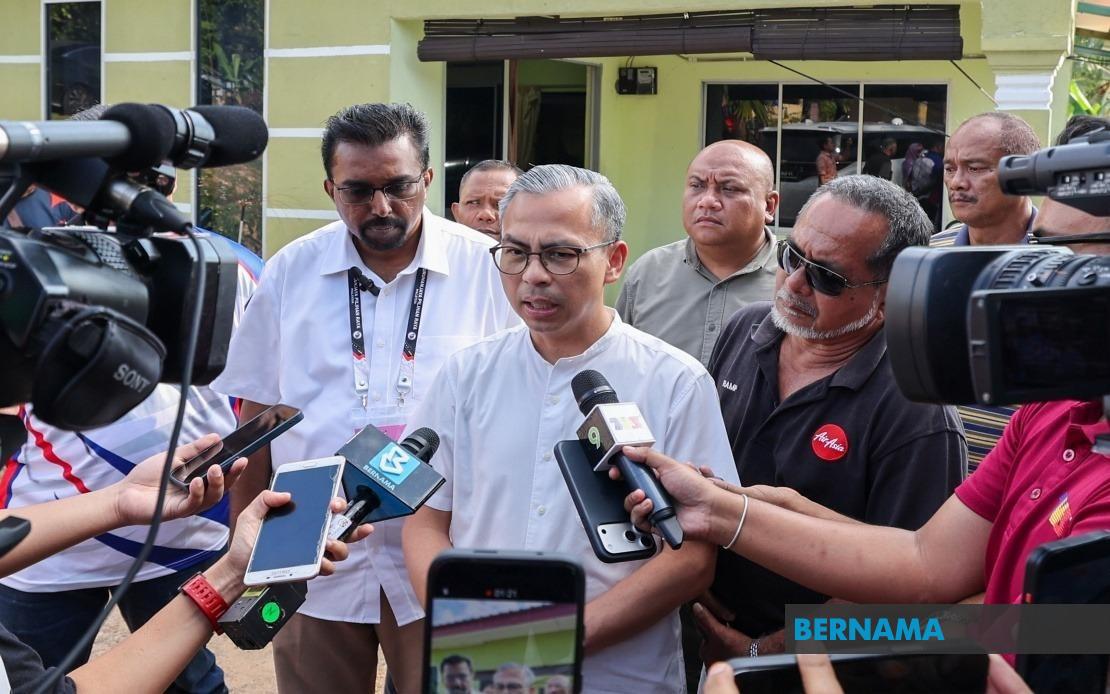
The digital landscape surrounding Negeri Sembilan's imminent state election appears relatively clean, according to Communications Minister Datuk Seri Fahmi Fadzil, who highlighted that online campaigning has generated minimal regulatory concern in the opening phase of the contest. Speaking during a visit to Felda Palong 1 on the sixth day of campaigning, Fahmi reported that the Malaysian Communications and Multimedia Commission had fielded only 16 complaints since the election drive commenced, suggesting a marked degree of discipline among political parties and their supporters on digital platforms.
The nature of complaints received tells a reassuring story. Of the 16 notifications submitted to MCMC, fourteen stemmed from ordinary telecommunications disruptions—network outages or service degradation affecting ordinary Malaysians' ability to stay connected—rather than content violations or coordinated misinformation campaigns. The remaining two grievances involved the more concerning category of fraudulent social media profiles, a practice that has plagued electoral contests across Southeast Asia in recent years. This breakdown suggests that while technical infrastructure challenges persist, deliberate attempts to pollute the information environment through fake accounts remain marginal, at least through the campaign's initial week.
Fahmi nevertheless struck a cautious tone about the weeks ahead, particularly cognisant of patterns observed in previous electoral cycles. He acknowledged that the critical final stretch—the last three to four days before voting—traditionally sees a dramatic acceleration in social media traffic, with all manner of content flooding feeds as campaigns reach fever pitch and supporters mobilise to their maximum extent. During these compressed timeframes, the volume and velocity of online activity can make oversight substantially more challenging, creating openings for false narratives to proliferate faster than fact-checkers can counter them. The minister consequently appealed to the public to remain vigilant and report suspicious content directly to social platforms, escalating to MCMC only if platform responses prove inadequate.
The election timetable itself offers limited runway for such concerns to crystallise. Voting day is set for August 1, with early voting opportunities available on July 28, meaning the campaign period spans roughly two weeks from commencement. With only seven or eight days remaining at the time of Fahmi's remarks, the critical final push could commence within days, potentially catching regulators and platforms at their most stretched. This compressed cycle contrasts with federal elections and underscores the heightened vulnerability of state contests to last-minute information shocks that voters may have insufficient time to properly evaluate.
Beyond electoral propriety, Fahmi pivoted to a separate but tangential infrastructure challenge that emerged during his Felda visit: internet connectivity gaps affecting rural settlement access. Notably, the problem does not appear to originate within the Felda Palong 1 residential compounds themselves, where network coverage appears serviceable, but rather along the major thoroughfares and trunk roads providing access to multiple settlement schemes. This geographic pattern suggests that coverage rollout has prioritised population concentration points whilst neglecting the connective tissue linking them—a classic development imbalance in telecommunications infrastructure that disproportionately affects peripheral rural economies.
The minister framed this challenge as a fundamental public good issue, articulating a straightforward principle: wherever a road exists, internet access should logically follow. This formulation carries particular resonance in Malaysia's rural context, where inadequate connectivity correlates with reduced economic participation, poorer access to government services, and diminished educational opportunities for younger populations. The connectivity deficits therefore extend well beyond convenience, potentially amplifying existing structural inequalities between urban and peripheral constituencies. Fahmi's directive to MCMC to prioritise urgent remediation reflects government recognition of these broader implications.
Addressing the bottleneck requires a multi-pronged approach that extends beyond the immediate election context. Telecommunications operators signed a network-sharing memorandum of understanding the previous year, intended to optimise resource deployment and reduce duplicative infrastructure buildout, yet implementation has proceeded sluggishly. Fresh construction of telecommunications towers in low-coverage zones represents the most permanent solution but entails capital expenditure and regulatory approvals that telecommunications firms have been reluctant to advance aggressively. Optimising existing infrastructure—upgrading backhaul capacity, enhancing transmitter specifications, repositioning antennae—offers quicker gains but faces diminishing returns in truly remote zones.
A more novel dimension of the remediation strategy involves interim deployment of satellite internet services, explicitly Starlink, to bridge connectivity gaps whilst terrestrial infrastructure catches up. This approach reflects growing pragmatism around deployment timelines and recognises that satellite solutions, while constrained by latency and capacity relative to fibre or cellular networks, provide meaningful connectivity expansion at relatively compressed implementation timeframes. The Malaysian government's increased openness to satellite supplementation marks a subtle shift in infrastructure philosophy, acknowledging that perfection cannot impede progress and that interim solutions serving interim needs represent legitimate policy tools.
Telecommunications firms have simultaneously been instructed to strengthen customer feedback mechanisms governing complaint tracking and resolution. Fahmi specifically flagged artificial intelligence applications enabling users to independently monitor complaint status, signalling intent to reduce information asymmetries between operators and subscribers. This represents a consumer protection dimension to the broader connectivity initiative, recognising that infrastructure expansion means little if users cannot effectively escalate grievances or understand why problems persist. AI-powered status tracking also reduces operational friction within telecom customer service departments, freeing human agents to focus on substantive technical troubleshooting rather than inquiry management.
The convergence of electoral integrity concerns and infrastructure deficiency in Fahmi's remarks illustrates the interconnectedness of digital governance challenges. Connectivity gaps create information vacuums that misinformation can exploit, as isolated voters lacking reliable internet access become reliant on rumour mills and informal information networks. Simultaneously, poor digital infrastructure undermines government service delivery and economic participation, exacerbating underlying rural grievances that political actors exploit during campaigns. Resolving these challenges requires simultaneous movement on multiple fronts: regulatory oversight of electoral content, infrastructure investment to universalise connectivity, and consumer protection mechanisms holding operators accountable.
For Malaysian voters and policymakers, the Negeri Sembilan contest offers a real-time testing ground for these integrated challenges at state level. The election's compressed timeframe and apparent early discipline provide provisional evidence that coordinated regulatory frameworks—combining MCMC oversight, platform accountability, and public vigilance—can constrain misinformation at scale. However, the acknowledged risks posed by late-campaign surges and the persistent connectivity inequalities affecting remote populations suggest that sustainable solutions require sustained investment beyond the election cycle itself. As polling day approaches on August 1, with early voting commencing July 28, regulators and platforms will face their most intensive scrutiny precisely when managing complex information environments is most critical.

