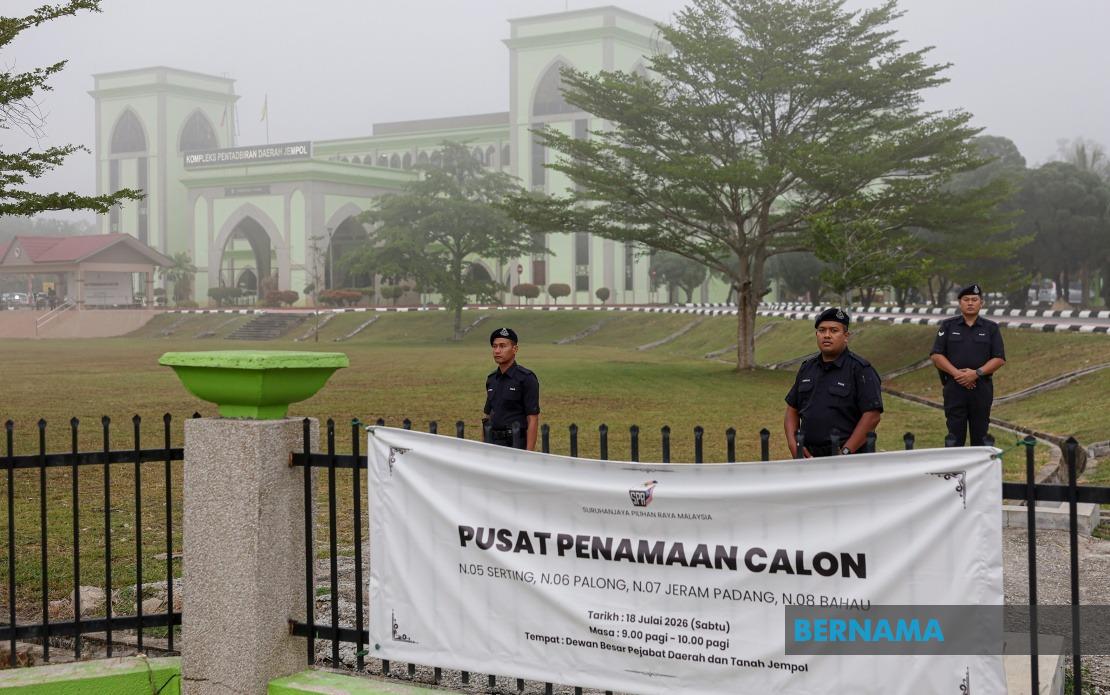
The 16th Negeri Sembilan state election formally commenced on Thursday morning as all eight nomination centres across the state opened their doors at 9 am to receive candidate applications. The simultaneous opening of polling infrastructure across seven districts underscored the Election Commission's coordination in managing the electoral process, with returning officers positioned to verify and validate nominations before announcing the final list of eligible contenders. The compressed one-hour nomination window, concluding at 10 am, reflects standard electoral procedures designed to maintain tight administrative control and prevent last-minute complications that could delay the campaign timeline.
Following the completion of the nomination process, the 14-day campaign period will commence immediately, running until 11.59 pm on July 31. This timeframe gives political parties and independent candidates roughly two weeks to canvas voters, hold rallies, and articulate their policy positions across the state. The condensed campaign schedule creates intensity in the electoral competition, requiring parties to deploy resources efficiently and prioritise key constituencies where voter sentiment remains fluid. For smaller political organisations and independent candidates, the compressed timeline presents particular challenges in building campaign infrastructure and generating media visibility.
Weather conditions proved cooperative throughout the nomination process, with meteorological observations confirming favourable atmospheric conditions across all districts. Such environmental stability facilitates voter participation and removes weather-related disruptions that could hamper the administrative machinery. The absence of adverse weather also supports the deployment and mobility of security and election personnel tasked with managing polling operations.
Security arrangements were substantially reinforced to ensure the integrity of the nomination process. Negeri Sembilan police chief Datuk Alzafny Ahmad disclosed that 2,393 police personnel were strategically distributed across all eight nomination centres, tasked with maintaining order and preventing any disruptions that might compromise the democratic process. This deployment level—equivalent to roughly 300 officers per centre on average—reflects law enforcement assessments of potential risk factors and the general security posture surrounding state-level elections in Malaysia's current political environment.
The election was formally triggered on June 5 following the dissolution of the Negeri Sembilan State Legislative Assembly, which occurred after receiving the consent of Tuanku Muhriz Tuanku Munawir, the Yang Dipertuan Besar of Negeri Sembilan. This constitutional procedure demonstrates the formal mechanisms through which Malaysian state elections are initiated and underscores the role of the constitutional monarchy in sanctioning electoral processes at the state level. The interval between dissolution and nomination—approximately six weeks—provided sufficient administrative and logistical preparation for the Election Commission.
The composition of the current state assembly reflects the outcome of the 2023 elections, which delivered control to Pakatan Harapan with 17 of 36 seats. Barisan Nasional captured 14 seats while Perikatan Nasional secured five, creating a fragmented political landscape where no single opposition coalition achieved majority control. The 2026 election presents opportunities for political realignment, particularly given shifting voter preferences in recent federal and state contests across Malaysia. Changes in Negeri Sembilan's political alignment could signal broader developments in peninsular Malaysian politics, especially if either the ruling coalition or opposition groupings achieve significant gains or losses.
The Election Commission designated August 1 as polling day, preceded by early voting on July 28. The early voting provision accommodates military personnel, their spouses, and police officers whose operational duties may prevent attendance on the regular polling date. This staggered approach to voting has become standard practice in Malaysian elections, recognising the legitimate accommodation needs of uniformed personnel while maintaining electoral transparency and security protocols.
The electoral roll registered 889,490 qualified voters as of June 4, with the bulk—867,151—classified as ordinary voters eligible to vote on August 1. An additional 22,339 voters comprising military personnel, their spouses, and police officers would cast ballots through the early voting mechanism. This overall voter population represents the franchise across Negeri Sembilan's 36 state constituencies, with varying demographic compositions that influence campaign strategies and party resource allocation. The voter register's currency ensures that the electoral exercise encompasses current residents and reflects recent population movements within the state.
Negeri Sembilan's political trajectory carries significance beyond its borders. As a mid-sized state with moderate voter populations, it serves as a microcosm of broader Malaysian electoral dynamics. The outcome may provide early indicators of voter sentiment on national issues, the durability of Pakatan Harapan's governing coalition, and the viability of opposition alternatives. Media organisations and political analysts typically scrutinise state elections as barometers of public opinion between federal electoral cycles, making this contest particularly consequential for understanding the political landscape heading toward subsequent major elections.
The successful commencement of the nomination process without significant disruption or irregularities reflects institutional maturity in electoral administration. The Election Commission's ability to coordinate multiple nomination centres simultaneously, deploy adequate security resources, and manage administrative procedures efficiently demonstrates the accumulated expertise within Malaysia's electoral bureaucracy. For voters in Negeri Sembilan, the next fortnight will determine which parties and candidates advance competing visions for state development, governance priorities, and policy directions across issues ranging from economic development to education and healthcare provision.

