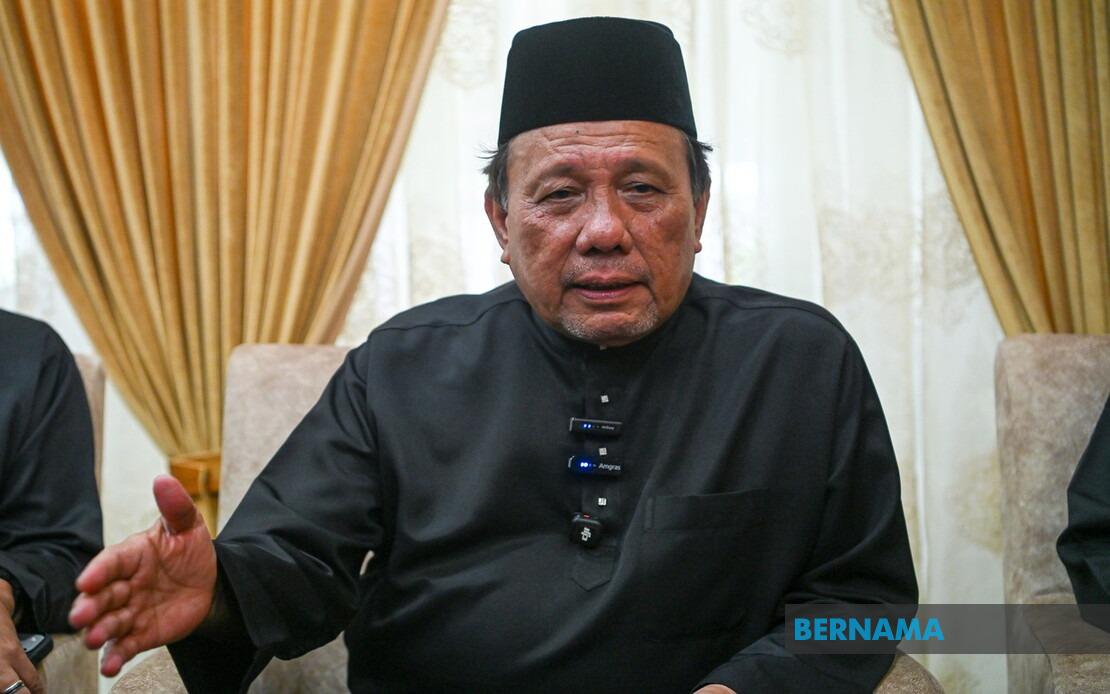
Datuk Ismail Lasim, the Menteri Besar of Negeri Sembilan, has taken the helm as chairman of Negeri Sembilan Football Club (NSFC) following the departure of Datuk Seri Aminuddin Harun. The appointment, which became effective immediately on August 14, marks a significant development in the governance structure of the state's premier football entity and underscores the government's commitment to professionalising the sport at the state level.
The transition was announced by Tunku Besar Tampin Tunku Syed Razman Tunku Syed Idrus Al-Qadri, president of the Negeri Sembilan Football Association (PBNS), who emphasised that Ismail's deep roots within the state's football community position him uniquely to lead the organisation through a critical phase of development. The appointment reflects a deliberate strategy to leverage political leadership for administrative stewardship of the club, a model increasingly common among Malaysian state football bodies seeking stability and resources.
Ismail's football credentials span more than two decades. He served as manager of the Negeri Sembilan state team during the 1990s and early 2000s, a period that saw him intimately involved in player recruitment, team strategy, and the day-to-day operations of competitive football in the state. This hands-on experience, coupled with his tenure as vice-president of PBNS in 2010, provides him with both practical knowledge of grassroots football development and understanding of the association's institutional framework. For Malaysian football observers, this represents a rare instance of leadership continuity where administrative decisions can be informed by genuine competitive experience rather than purely political appointment.
The PBNS president's public statement highlighted confidence in Ismail's ability to drive the club toward professional standards. Ismail's experience in team management, according to Tunku Syed Razman, equips him with insight into the specific values and identity that characterise Negeri Sembilan football, an important consideration for a club that serves as the state's cultural and sporting ambassador. This emphasis on cultural identity reflects broader recognition within Malaysian football that clubs cannot succeed purely as commercial enterprises disconnected from their communities and historical contexts.
Moving forward, NSFC under Ismail's leadership is expected to pursue what has been described as strategic direction that strengthens institutional cooperation. The PBNS president outlined an ambitious framework encompassing collaboration between NSFC, the football association, the state government, and various stakeholders invested in football development. This multi-layered approach suggests recognition that professional club football in Malaysia, particularly at the state level, requires coordination across public sector agencies, community organisations, and private sector partners. For Negeri Sembilan, a state without the commercial football infrastructure of Selangor or Kuala Lumpur, such coordination becomes particularly crucial.
The club's stated priorities under the new leadership focus on establishing NSFC as a sustainable and competitive entity. This involves deliberate investment in player development pathways, a structural concern that has plagued Malaysian football clubs historically. Many state clubs have struggled to identify, nurture, and retain talented young players, with pathways often leading away to larger clubs or international opportunities. NSFC's recommitment to this area suggests an understanding that long-term competitiveness depends on building from within rather than relying solely on recruited talent.
Commercial development represents another strategic pillar for the restructured club. Malaysian state football clubs have traditionally operated with limited commercial revenue streams, relying heavily on government funding and sponsorship from state-linked entities. Ismail's appointment, given his position as Menteri Besar, may facilitate improved commercial partnerships and more sophisticated revenue generation approaches. However, this also introduces potential complications regarding governance separation between the political executive and the sporting institution, a tension that Malaysian sports bodies continue to navigate.
Community and supporter relations have been explicitly flagged as priority areas for NSFC's development. State football clubs serve important functions beyond match results, acting as focal points for regional identity and community engagement. Negeri Sembilan, a state with strong football traditions, has a supporter base that remains emotionally invested despite periods of competitive underperformance. Strengthening these relationships, particularly through organised supporter engagement and community outreach, can provide both emotional sustenance for the club and practical benefits through ticket sales and sponsorship cultivation among grassroots supporters.
The timing of this appointment coincides with broader discussions within Malaysian football about governance standards and institutional professionalism. The Malaysian football ecosystem has increasingly recognised that state clubs require professional administrative structures, transparent financial management, and strategic planning frameworks. Ismail's appointment, while politically significant, suggests that Negeri Sembilan is attempting to combine governmental support and political backing with sports management experience. Whether this model proves sustainable depends partly on Ismail's ability to balance his menteri besar responsibilities with active engagement in club affairs, a challenge faced by other political figures holding sports leadership positions across Asia.
For Malaysian football more broadly, the NSFC transition reflects continuing efforts to strengthen the domestic game below the elite level of the Malaysian Super League. State clubs serve as important development pathways for younger players and provide competitive football opportunities that feed into national team selection processes. Ismail's appointment, therefore, carries implications beyond Negeri Sembilan itself, contributing to broader ecosystem health as these state-level clubs function as feeders for elite competition and national representation.
The success of this appointment will ultimately be measured by tangible improvements in NSFC's competitive performance, financial sustainability, and developmental infrastructure over the coming seasons. Malaysian football observers will be watching whether Ismail's experience and political position translate into concrete improvements, or whether the appointment represents another cycle of leadership change without corresponding transformation in the institutional fundamentals that have constrained state club development.

