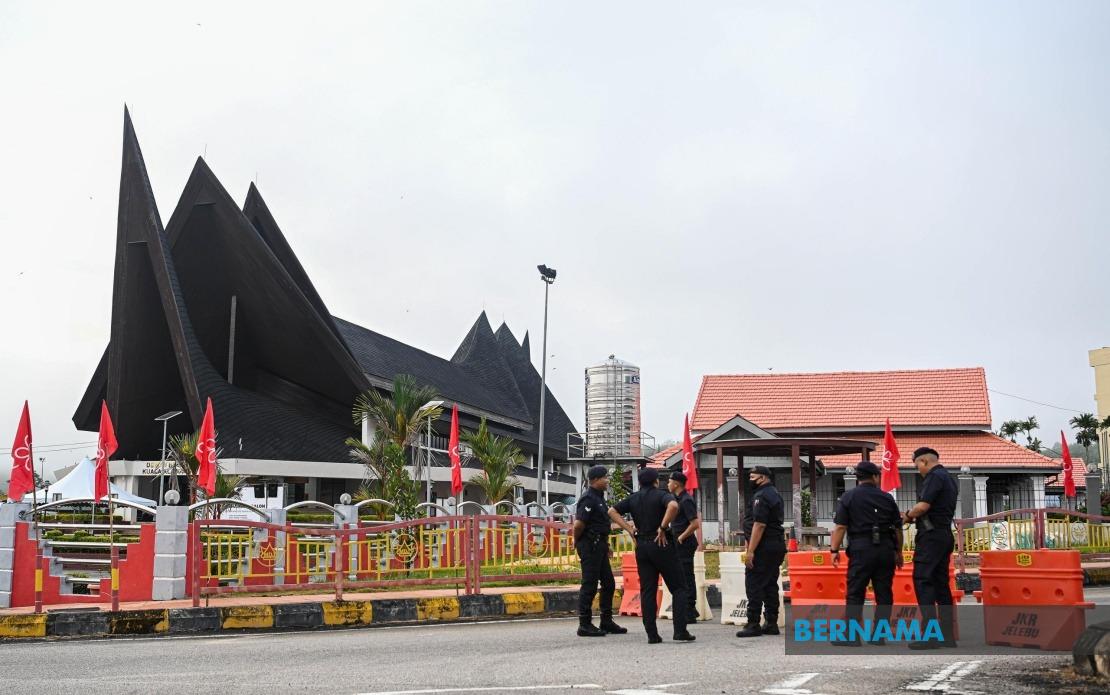
The Negeri Sembilan State Election moved into its critical nomination phase on July 18, with clear skies and benign weather conditions facilitating orderly proceedings across eight designated nomination centres throughout the state. The favorable atmospheric conditions set an encouraging tone for what promised to be a structured, incident-free day as the Election Commission fielded teams to process candidate registrations beginning at 9 am sharp and concluding at 10 am. Election officials were observed completing final logistical preparations in the early morning hours, ensuring that nomination procedures would flow seamlessly despite the compressed one-hour window allocated for the entire process.
The statewide nomination day drew considerable attention from the political establishment and media organisations, with journalists and photographers positioning themselves at nomination centre compounds from as early as 7 am to document candidate submissions and capture the emerging contours of the electoral battle. Party supporters likewise began arriving in steady numbers, their presence underscoring the competitive intensity surrounding this election cycle. The gathering of partisan crowds and media personnel reflected the significant stakes involved in what constitutes a test of political momentum heading into the 2025 general election window.
The electoral landscape for Negeri Sembilan's 36-seat state assembly has undergone noteworthy reconfiguration since the previous 2023 contest. Pakatan Harapan has adopted an expansionist posture, throwing its full organisational weight behind all 36 seats, signalling confidence in the coalition's ability to consolidate and expand its 2023 performance. Barisan Nasional, by contrast, has contracted its ambitions to 25 seats, a strategic retreat that may reflect either internal capacity constraints or a calculated decision to avoid three-cornered contests in select constituencies. Perikatan Nasional maintains a focused footprint with 11 seats, while smaller players including Parti Sosialis Malaysia, Parti Orang Asli Malaysia, and Berjasa contest individual seats.
The entry of Parti Pribumi Bersatu Malaysia as a solo contender represents a significant wrinkle in the state's political fabric. Bersatu's decision to contest 24 seats, incorporating two seats under the Urimai banner that will utilise the Bersatu logo, demonstrates the party's determination to establish itself as a meaningful player in Negeri Sembilan politics. This move suggests internal strategic calculations within the Malay-Muslim political constituency and may signal shifts in inter-coalition dynamics that extend beyond the state election itself. For Malaysian observers tracking the broader trajectory of post-2023 political realignment, Bersatu's aggressive posture in Negeri Sembilan warrants close monitoring.
The election itself comes amid significant demographic and political participation trends. Negeri Sembilan's voting roll encompasses 889,490 eligible voters, comprising 867,151 ordinary voters alongside 16,884 military personnel and their spouses and 5,455 police personnel. These figures establish a substantial electoral base that will determine outcomes on August 1, with the inclusion of uniformed service voters adding particular significance to security and nation-building narratives that traditionally resonate in military constituencies. The size and composition of the voter roll suggests that ground campaigns will require comprehensive geographic and demographic targeting strategies.
Pakatan Harapan's dominant performance in the 2023 contest, when it secured 17 of 36 seats, established the coalition as the incumbent administration. Barisan Nasional's contraction to 14 seats represented a significant erosion from historical expectations, reflecting broader national patterns of BN's diminished electoral purchase in urban-leaning constituencies. Perikatan Nasional's more modest haul of five seats nonetheless positioned the Islamist-oriented coalition as a relevant player. These 2023 patterns provide crucial context for interpreting how significantly the electoral landscape may shift in this fourth consecutive state election since the 2022 constitutional reforms that regularised fixed election schedules.
The Election Commission's decision to schedule early voting for July 28 and general polling for August 1 reflects standardised electoral procedures established across Malaysia's reformed electoral calendar. This compressed campaign timeline—spanning barely two weeks between nomination and polling day—concentrates political messaging and intensifies ground operations. For campaigns operating with limited resources or nascent ground organisations, such compressed schedules present particular challenges in reaching dispersed rural populations across Negeri Sembilan's constituent districts. Conversely, established parties with existing machinery gain inherent advantages under expedited election schedules.
The timing of the Negeri Sembilan election also situates it within a broader pattern of state-level elections preceding the anticipated 2025 general election. Political analysts view state elections as laboratories for testing messaging, organisational capacity, and voter sentiment heading into the general election cycle. Results in Negeri Sembilan will therefore carry implications extending far beyond the state's 36 assembly seats, offering early indicators of shifting voter preferences and coalition dynamics as Malaysia approaches a consequential federal poll.
Mediapart participation in nomination day proceedings underscores the competitive nature of contemporary Malaysian state politics and the intensity with which electoral contests are now covered. The early arrival of journalists reflected recognition that nomination processes frequently generate newsworthy moments, whether through contentious candidate selections, internal coalition tensions manifested through contest distributions, or symbolic gestures by party leadership. The visible media presence also served to legitimise the proceedings and reinforce the significance of the electoral process to broader public consciousness.
With the nomination phase now progressing, the campaign proper will intensify over the coming two weeks. Party machines across the political spectrum have begun mobilising volunteers, organising ceramah and engagement events, and saturating social media platforms with campaign messaging. The weather conditions that facilitated orderly nomination proceedings on July 18 set an auspicious tone for what promises to be a closely watched and competitively contested state election, one that will generate important signals for national political trajectories and inter-coalition positioning in the months preceding Malaysia's next general election.

