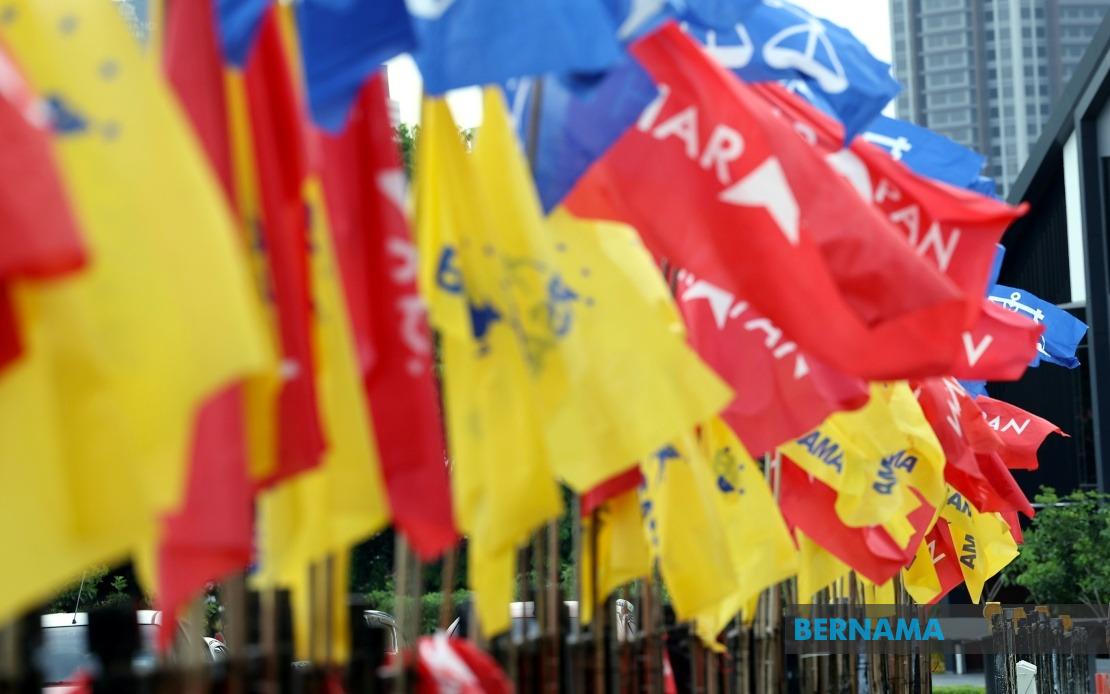
The Negeri Sembilan Palace has issued a stern warning to all political parties participating in the 16th state election, instructing them to maintain a clear separation between campaign activities and the royal institution. In a formal statement released today, the comptroller of the Negeri Sembilan Royal Household emphasized that the monarchy's sacred role as a unifying symbol transcends partisan politics and must be protected from exploitation for electoral advantage.
Datuk Azizi Mohamad Ali, the comptroller, underscored that the royal institution operates on strict principles of political neutrality and maintains no alignment with any political party or political activity whatsoever. This declaration serves as both a reminder to candidates and a reassurance to the electorate that the palace remains above the fray of competing political interests, preserving the constitutional role of the monarchy in a parliamentary democracy.
The palace's intervention reflects growing concerns about the instrumentalization of royal symbols in electoral contests across Malaysia. The comptroller made clear that any public claims, statements, images, videos, or other materials suggesting a connection between the Negeri Sembilan Palace, His Royal Highness the Ruler, or members of the royal family and any political party are categorically false. Such misrepresentations can undermine public confidence in both democratic institutions and the monarchy itself, potentially creating constitutional complications in a sensitive political environment.
The appeal extends to broader principles of electoral conduct, with candidates specifically advised to avoid exploiting sensitive issues that span religion, royalty, and race—collectively referred to as the 3R framework in Malaysian political discourse. This framework has historically been recognized as a potential flashpoint for communal tension, and the palace's guidance reflects established norms intended to keep state elections focused on policy platforms and administrative records rather than identity-based appeals.
Furthermore, the comptroller urged all contesting candidates to conduct their campaigns with prudence, ethical standards, and strict adherence to electoral law. Such conduct is framed not merely as legal compliance but as essential to preserving the Negeri Sembilan's social harmony and stability—values that transcend any single election cycle. The palace's language implies that electoral malpractice could damage the foundational consensus upon which the state's political system rests.
The palace also expressed appreciation for the cooperation of political parties in respecting and protecting the royal institution from misinterpretation or abuse for political purposes. This diplomatic tone suggests that the statement is partly an acknowledgment of responsible behavior by most parties, while simultaneously drawing a firm line against any violations. The implicit message is that parties which disregard this guidance will face reputational consequences and loss of legitimacy in the eyes of the palace and, by extension, the broader public.
In an era of rapid information dissemination through social media and messaging platforms, the palace took the additional step of urging the public to remain vigilant against unverified claims and misinformation. Citizens are encouraged to rely exclusively on the Negeri Sembilan Palace's official communication channels for authentic updates and clarifications. This guidance reflects the reality that false narratives can spread rapidly during heated election periods, potentially inflaming tensions or creating confusion about the monarchy's actual position.
The timing of this statement is significant, as the Negeri Sembilan State Legislative Assembly was dissolved on June 5 following the completion of its term, clearing the way for the 16th state election. Early voting is scheduled for July 28, with the main polling day set for August 1, meaning the palace's warning arrives at a critical moment when campaign activities are intensifying and media coverage is at its peak.
For the broader Southeast Asian context, Malaysia's approach of having the palace explicitly warn against politicization demonstrates the institutional safeguards that exist to protect constitutional monarchy from partisan capture. Unlike some democracies where the head of state remains largely ceremonial and silent on political matters, Malaysian constitutional arrangements vest the monarchy with custodial responsibilities over national unity and religious affairs, necessitating such interventions when those roles are perceived as threatened.
The palace's statement also carries implications for how electoral conduct standards are enforced in Malaysia. While the Election Commission bears formal responsibility for administering elections, the palace's moral authority adds weight to expectations of propriety among candidates and parties. Violations may not result in legal sanctions directly, but they can damage a party's standing and trigger public criticism that affects electoral fortunes.
For Malaysian voters in Negeri Sembilan, the palace's clear articulation of neutrality provides reassurance that the electoral process remains fair and that the monarchy will not be weaponized to favor any contestant. This institutional clarity is foundational to democratic legitimacy, particularly in a multi-ethnic, multi-religious society where communal confidence in neutral institutions is essential.
The palace's call for ethical campaigning reflects broader anxieties about electoral standards across the region, where campaigns increasingly test the boundaries of what is acceptable in pursuit of political advantage. By establishing and publicizing clear expectations, the Negeri Sembilan Palace is setting a benchmark for responsible democratic conduct that other state governments may find instructive as they approach their own electoral cycles.

