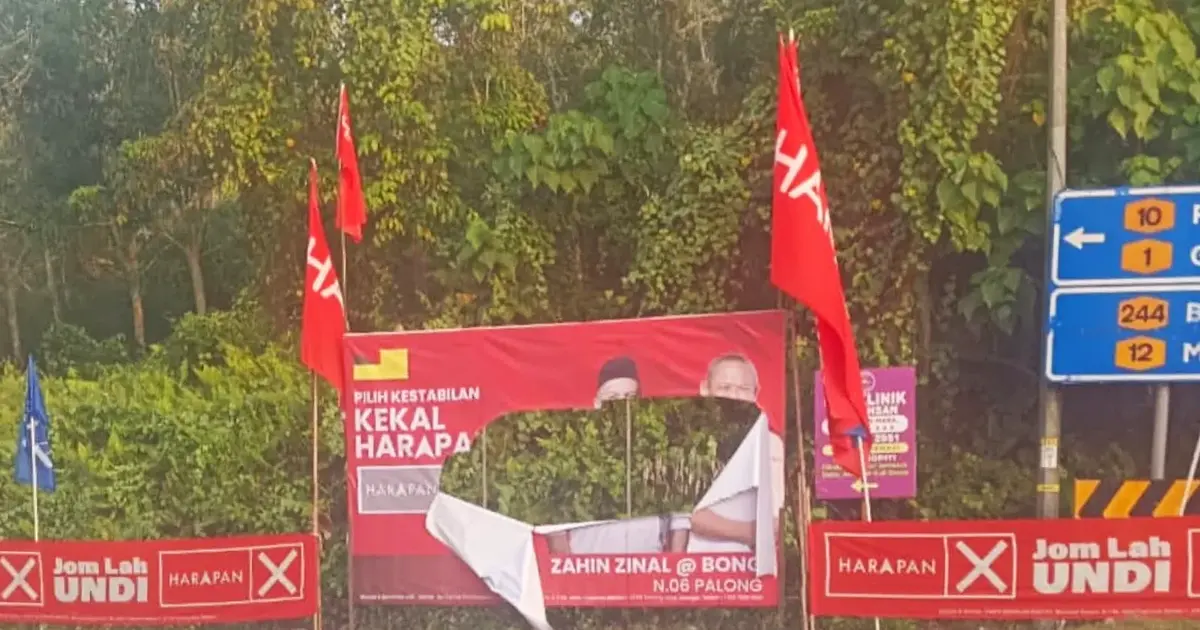
Police authorities in Negeri Sembilan have initiated formal investigations into fourteen separate incidents classified as election-related offences, marking a significant enforcement response to violations during the electoral period. The range of cases encompasses activities that breach electoral conduct regulations, reflecting broader concerns about maintaining order and civility during campaigns across the state.
The documented offences include the deliberate burning of party flags, which represents a form of political expression deemed illegal under electoral law. Such incidents have historically generated considerable tension during campaign periods, as supporters of different political factions occasionally resort to provocative gestures that escalate tensions at the grassroots level. The destruction of party insignia is particularly sensitive as it can quickly escalate into broader community conflict and undermine the stability of the electoral environment.
Beyond flag-related incidents, investigators are examining cases involving the destruction and defacement of campaign materials strategically positioned throughout the state. Vandalised campaign banners and damaged billboards form a substantial portion of the caseload, indicating that property damage targeting political messaging has been a recurring problem during this electoral cycle. Such actions, whether motivated by political opposition or simple mischief, constitute offences under regulations designed to protect the sanctity of the campaign process.
The opening of these investigation files demonstrates the state police's commitment to enforcing electoral regulations impartially across all parties and candidates. Election-related offences, though sometimes dismissed as minor infractions by the public, carry important implications for democratic conduct. When left unchecked, such violations can create an atmosphere where physical intimidation and property destruction become normalised campaign tactics, potentially discouraging legitimate political participation and voter engagement.
The geographic spread of these fourteen cases across Negeri Sembilan suggests that election-related violations are not isolated incidents confined to a single locality but rather a statewide pattern requiring systematic attention. This distribution indicates that various constituencies and campaign zones have experienced similar challenges in maintaining campaign decorum. For election observers, such widespread incidents raise questions about the effectiveness of local-level campaign monitoring and community cooperation in self-regulating political behaviour.
Police investigations into these matters typically involve reviewing surveillance footage, interviewing witnesses, and gathering physical evidence from the scenes where violations occurred. The forensic documentation of campaign material damage and evidence collection surrounding flag-burning incidents can be technically complex, requiring cooperation between different police departments and sometimes specialists in identifying perpetrators. Each investigation file represents distinct resource allocation and procedural steps towards establishing liability and eventual prosecution.
For political parties operating in Negeri Sembilan, these enforcement actions carry dual significance. While investigating violations against their own campaign materials demonstrates evenhandedness, parties must also ensure their own supporters do not engage in retaliatory actions that could generate additional cases. The investigation landscape creates an environment where all participants have strong incentives to monitor and restrain their respective supporters' conduct, as violations generate negative publicity and potential legal consequences for party members.
The implications extend beyond immediate electoral considerations to shape perceptions of democratic health in the state. Voters observing widespread campaign material vandalism and property destruction may become disenchanted with the political process, viewing elections as occasions for unruly behaviour rather than serious policy deliberation. This erosion of confidence in electoral civility can have long-term consequences for voter turnout and participation, particularly among segments of the electorate already skeptical of political institutions.
Regionally, Negeri Sembilan's experience with election-related offences mirrors patterns observed elsewhere in Malaysia and Southeast Asia, where rapid urbanisation and political intensity can sometimes translate into heated campaign environments. The state's approach to investigation and enforcement will likely be studied by other jurisdictions seeking to balance electoral freedom with the maintenance of public order. Finding this equilibrium remains one of the persistent challenges facing democratic systems across the region.
Moving forward, the outcomes of these fourteen investigations will likely influence how political actors in Negeri Sembilan calibrate their campaign strategies and supporter mobilisation efforts. If investigations result in convictions and meaningful penalties, future candidates and parties may invest more substantially in campaign conduct guidelines and supporter discipline mechanisms. Conversely, if enforcement proves inconsistent or penalties appear lenient, perpetrators may calculate that the risks of election-related violations remain acceptably low.
The police's transparent acknowledgment of these investigation cases demonstrates institutional recognition that electoral integrity depends partly on addressing conduct violations promptly and visibly. Whether these fourteen files ultimately proceed to prosecution and court proceedings, their opening signals to all political stakeholders that electoral authorities maintain an active enforcement posture. This visibility itself can serve a deterrent function, reminding participants that campaigns operate within legal boundaries even when political passion runs high.

