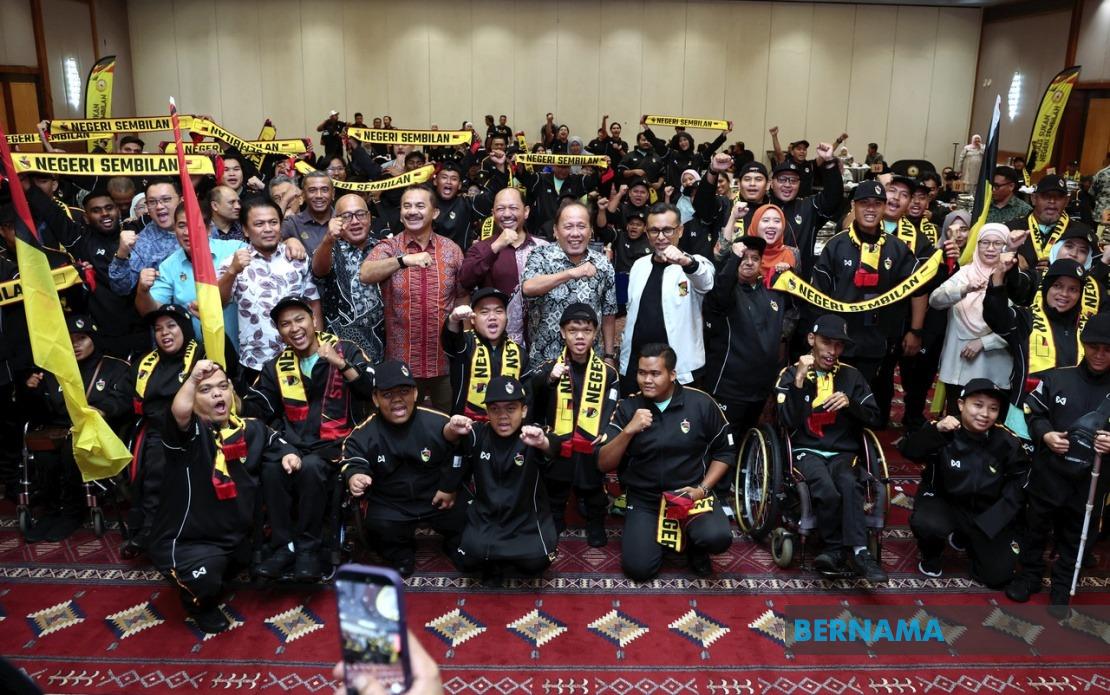
Negeri Sembilan's leadership has unveiled an ambitious medal target ahead of the 2026 Para Malaysia Games, scheduled to commence on September 5 in Selangor. The state has committed to winning 12 gold medals from its contingent of 80 para athletes, marking a concerted effort to restore pride following a difficult showing at the regular SUKMA 2026 competition, which concluded earlier in the week. Menteri Besar Datuk Ismail Lasim articulated the significance of this objective during a flag handover ceremony for team officials, emphasizing that the target represents far more than a statistical ambition.
The broader context reveals a noticeable decline in Negeri Sembilan's competitive standing. At SUKMA 2026, the state's contingent captured merely seven gold medals from a total haul of 48 medals, a sharp contraction compared with the nineteen gold medals and fifty-six total medals garnered two years earlier at the same biennial championships. This regression has prompted state officials to redirect focus toward the Para SUKMA platform, where the state has demonstrated greater competitive strength. The 2024 Para SUKMA Games in Sarawak saw Negeri Sembilan's para athletes secure fourteen gold medals alongside nineteen silver and twenty bronze medals, establishing a credible benchmark for future performance.
Datek Ismail Lasim conveyed his conviction that the twelve gold medal target remains realistic and achievable, contingent upon rigorous preparation and unwavering commitment from individual athletes. He addressed the assembled contingent and officials, underscoring that this objective serves as a measure of collective discipline, training rigour and professional dedication undertaken throughout the preparatory phase. The Menteri Besar's remarks reflected an understanding that para athletes operate within distinct frameworks requiring specialized coaching, infrastructure and psychological support distinct from mainstream sporting pathways. He characterized each para athlete as an individual possessing extraordinary resilience and fighting spirit, capable of elevating the state's competitive reputation through exceptional performance.
Incentive structures have been incorporated into Negeri Sembilan's strategy to motivate medal-winning performances. State officials have pledged to distribute monetary and other rewards to athletes who successfully capture medals at the Para SUKMA Games, aligning financial encouragement with performance outcomes. This approach reflects broader Southeast Asian practices where medal incentives have become standardized within competitive sports ecosystems, serving both motivational and recognition functions within state-level sporting apparatus.
The timing of these preparations carries particular significance within Malaysia's sporting calendar. Para SUKMA represents a dedicated platform for athletes with physical, sensory and intellectual disabilities, operating under classifications and frameworks established by international para sports governance bodies. The biennial schedule provides structured competitive opportunities and exposure for elite para athletes who might otherwise encounter limited domestic competition. For Negeri Sembilan, which maintains proportionally smaller para athlete development infrastructure compared with larger Malaysian states, the Para SUKMA platform offers a critical venue for demonstrating competitive capability and justifying continued investment in para sports programming.
State Youth and Sports Development Action Committee chairman Datuk Mustapha Nagoor and Negeri Sembilan Sports Council director Marhizah Abdul Razak attended the flag handover proceedings, reflecting the multi-level administrative attention devoted to the contingent's preparation. This layered governance structure typifies Malaysian state-level sports administration, where youth development committees, dedicated sports councils and ministerial-level oversight converge to coordinate training regimens, facility allocation and competitive strategy. The presence of these officials at formal ceremonies underscores the official prioritization attached to para sports development within state governance frameworks.
The psychological dimension of recovering from SUKMA disappointment cannot be overlooked. Para athletes often navigate additional barriers—including social attitudes toward disability, accessibility challenges and resource constraints—beyond the typical competitive pressures confronting mainstream sports competitors. Negeri Sembilan's leadership messaging, emphasizing extraordinary fighting spirit and capability to restore reputation, attempts to reframe the recent SUKMA setback as motivational catalyst rather than indicator of diminished competitiveness. This narrative construction serves important morale-building functions within contingent cultures.
From a regional Southeast Asian perspective, Malaysia's Para SUKMA Games operate within broader disability sports movements gaining institutional prominence across the region. While countries such as Thailand and Indonesia have expanded para sports infrastructure in recent years, Malaysia's domestic para sports ecosystem remains concentrated within state-level SUKMA competitions and limited international representation opportunities. Negeri Sembilan's targeting approach reflects pragmatic optimization of available competitive avenues, where para athletics offers comparatively higher prospects for state-level medal success than mainstream SUKMA platforms increasingly dominated by larger, better-resourced states with established elite athlete pipelines.
The twelve gold medal benchmark also reflects realistic assessment of contingent composition and competitive field dynamics. With eighty athletes distributed across multiple disability classifications and sports disciplines, achieving medals across diversified events demands broad-based training excellence rather than concentration in single specialties. Para SUKMA classification systems, adapted from international Paralympic frameworks, segment competitors by disability type and functional capacity, creating specialized competitive tiers. This architecture means that medal prospects depend upon developing competitive depth across multiple classification categories rather than relying upon isolated elite performers.
Implementation of the target will require sustained coordination between multiple stakeholders beyond the formal state sports administration. Athletes require access to appropriate training facilities, specialized coaching expertise, sports medicine support and classification-approved competition preparation. Families and community networks often play critical roles in sustaining athlete motivation and managing logistical demands of intensive training regimens. The success or failure of Negeri Sembilan's twelve gold medal objective will ultimately depend upon ecosystem-level performance rather than isolated official aspirations.
Looking forward, the September 5 commencement date provides approximately one week for final competitive preparations following the flag handover ceremony. This compressed timeframe typically characterizes Malaysian SUKMA competitions, where contingents undertake intensive tapering and technical refinement in pre-competition phases. Negeri Sembilan officials will monitor training outputs closely during this interval, potentially adjusting strategic focus based upon observed athlete form and fitness indicators. The state's competitive performance at the 2026 Para SUKMA Games will provide important indicators regarding trajectory of para sports development within Negeri Sembilan's sporting ecosystem and inform resource allocation decisions for subsequent competitive cycles extending toward 2028 and beyond.

