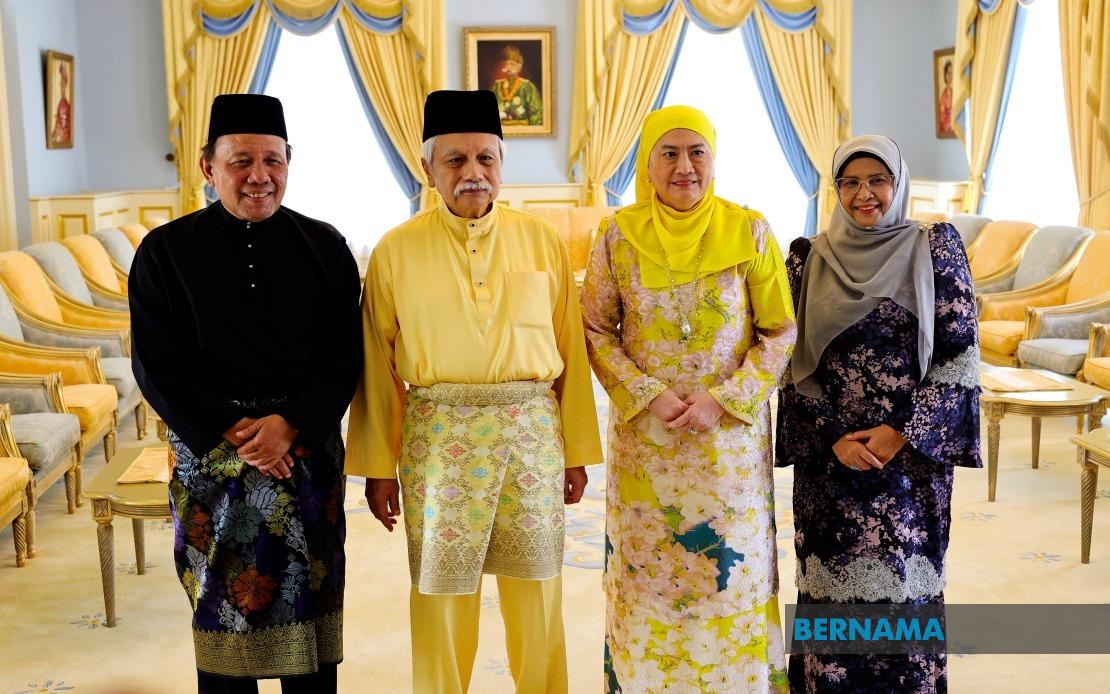
Datuk Ismail Lasim took the oath of office as Negeri Sembilan Menteri Besar on August 2, drawing immediate attention to his administration's foundational priorities. Speaking at a press conference in Kuala Pilah, the newly minted chief minister outlined a governance framework centred on honouring the state's constitutional monarchy and cultural heritage whilst strengthening ties with the federal level. His pronouncements signal continuity in how the state approaches its relationship with the throne and the broader Malaysian political establishment.
The commitment to the royal institution represents far more than ceremonial respect within Negeri Sembilan's political culture. Ismail framed the preservation of the monarchy and customary traditions as essential infrastructure for social cohesion and effective governance. He emphasised that every citizen, not merely government officials, bears responsibility for maintaining this institutional reverence. This emphasis on collective responsibility underscores a traditional view of statecraft wherein the monarchy serves as both symbol and substance of state legitimacy, particularly important in a system where the Ruler retains constitutional powers over executive functions.
Ismail's invocation of customs and traditions merits particular attention in the Malaysian context. Negeri Sembilan possesses a distinctive constitutional arrangement and cultural identity shaped by its historical Minangkabau heritage and unique governance structure. The Menteri Besar's reference to understanding and honouring state-specific customs suggests awareness that legitimacy flows partly from respecting these particularities. This approach aligns with contemporary Malaysian political discourse emphasising federalism and respect for each state's constitutional prerogatives, a theme that resonates across opposition and ruling coalition circles alike.
The new administration's pledge to minimise conflicts whilst upholding the royal institution carries implicit acknowledgment of potential tensions that might arise in state governance. By proactively framing conflict management as a governmental responsibility intertwined with respect for monarchy, Ismail signals intent to navigate sensitive issues through channels respecting constitutional authority. This represents prudent governance given the high-profile nature of royal institution matters in recent Malaysian political discourse.
Ismail's commitment to federal-state cooperation requires examination within the coalition context. Negeri Sembilan operates under Barisan Nasional control within a broader Unity Government framework at the federal level. Ismail's statement that BN remains an integral component of the national Unity Government whilst maintaining state government leadership positions this cooperation as natural and unremarkable. However, his repeated emphasis on the unremarkable nature of this collaboration suggests awareness that such arrangements occasionally attract scrutiny or debate among political actors.
The decision to maintain and improve existing policies from the previous administration demonstrates pragmatic governance philosophy. Rather than pursuing wholesale changes typical of new administrations, Ismail endorses evidence-based policy continuity. This approach potentially smooths transition periods and maintains programmatic momentum on initiatives already delivering measurable benefits. It also suggests confidence that improvements can be achieved through refinement rather than overhaul, a measured stance that may appeal to both government personnel seeking stability and constituencies valuing proven initiatives.
For Malaysian observers, the pattern of Ismail's opening statements reflects broader patterns in how states have approached governance transitions post-2022. The emphasis on institutional respect, federal cooperation, and policy continuity represents a relatively conventional template. However, the explicit framing of these commitments within his first public remarks indicates deliberate prioritisation of messaging around stability and constitutional propriety over transformative agendas.
Negeri Sembilan's position within Malaysian federalism gives particular weight to these early pronouncements. As a smaller state with distinctive constitutional features, its governance approaches attract less sustained scrutiny than larger counterparts, yet the state remains important within BN's overall coalition arithmetic. Ismail's emphasis on people-centred administration and stakeholder harmony attempts to establish consensus-building credentials early in his tenure.
The swearing-in ceremony before Tuanku Muhriz Tuanku Munawir at Istana Besar Seri Menanti completed the formal constitutional processes necessary for his appointment. This ceremonial element provides both legitimation and symbolic grounding for the subsequent policy commitments. The explicit mention of receiving the Ruler's consent underscores that executive authority, whilst exercised by the Menteri Besar, ultimately derives from and remains accountable to constitutional monarchy.
Looking forward, Ismail's stated priorities establish a governance baseline against which his administration will be evaluated. The commitment to royal institution support, federal cooperation, and policy continuity provides little room for radical departures, suggesting the state government will pursue orthodox BN-aligned policies within federally coordinated frameworks. Whether such consensus-oriented governance proves adequate to address state-specific development challenges or generates pressure for more assertive state-level initiatives remains an open question.
The emphasis on harmony between monarchy and administration reflects enduring Malaysian political values. Yet it also acknowledges implicit tensions inherent in Westminster-influenced systems where executive authority requires careful calibration with constitutional head-of-state prerogatives. Ismail's articulation of these concerns suggests sophistication regarding Negeri Sembilan's particular constitutional context and historical relationship between royal institution and administrative authority.

