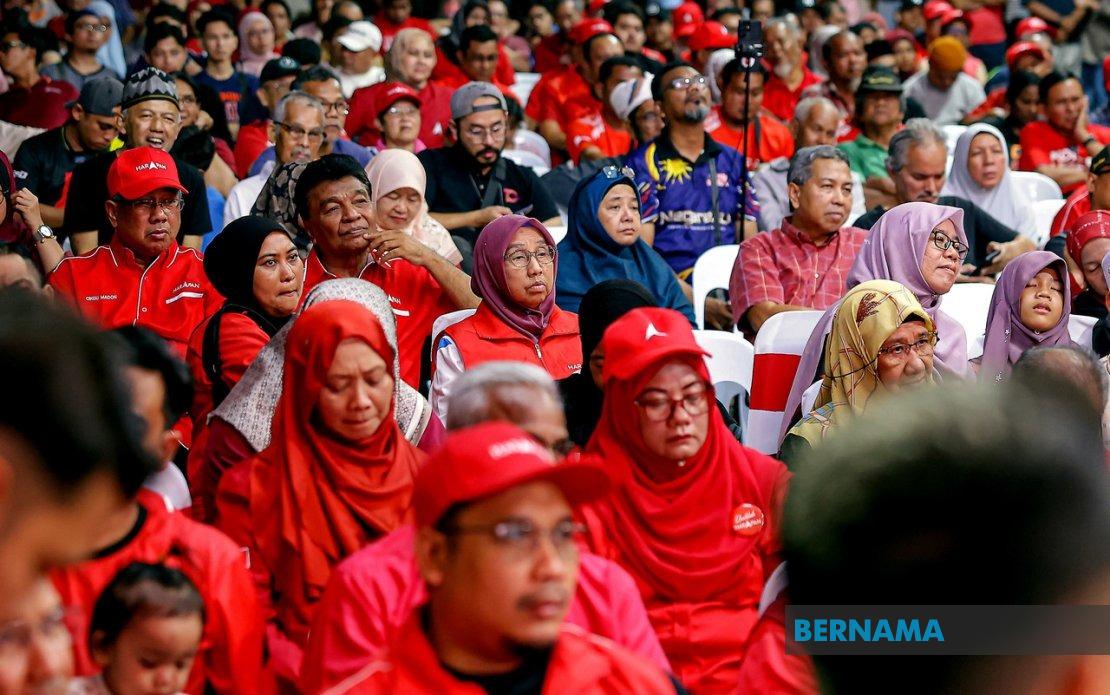
As the campaign for the 16th Negeri Sembilan state election enters its final stretch, a distinct pattern is crystallizing among the electorate: voters are no longer satisfied with politicians who simply relay grievances to the State Legislative Assembly. Instead, they are demanding representatives capable of translating electoral promises into concrete improvements in their daily lives. This shift reflects a broader maturation in how Malaysian voters evaluate their political choices, moving beyond traditional metrics of party affiliation or family connections towards a more pragmatic assessment of leadership effectiveness and personal accessibility.
A systematic survey of Negeri Sembilan residents reveals that accessibility has become as important as competence in determining voter preferences. The electorate is signaling that charisma and local heritage matter little if a candidate proves difficult to reach or engage with once elected. This finding challenges conventional political wisdom in Malaysia, where geographical roots and community ties have historically served as significant electoral assets. The implication is striking: voters increasingly view genuine approachability as a prerequisite for effective representation, recognizing that distance between elected officials and constituents ultimately undermines the entire representative democracy.
Retired educator Kamarulzaman Ab Aziz, 64, articulated this sentiment with clarity, explaining that he would willingly support an external candidate if that person demonstrated authentic engagement with community concerns and maintained an open door to constituent feedback. His perspective underscores a generational shift in political expectations, particularly among older voters traditionally considered more rooted in local community structures. The willingness to look beyond geographic origin signals that Negeri Sembilan voters have moved past parochial considerations, instead prioritizing the individual qualities of candidates regardless of their background.
The cost-of-living crisis emerged as perhaps the most urgent concern among business owners and ordinary households alike. Nurulainee Hamidon, a 37-year-old food trader based in Linggi, Port Dickson, articulated the squeeze facing small business operators with particular urgency. Her description of rising input costs combined with customer resistance to price increases illustrates the impossible position facing Malaysia's micro-enterprise sector. When wholesale costs climb faster than retail prices consumers will tolerate, profit margins compress to the breaking point. For traders like Hamidon, the election represents a referendum on whether the next government will implement meaningful interventions to stabilize business costs and reduce inflationary pressure on essential commodities.
The experience of small business owners like Hamidon carries broader implications for Negeri Sembilan's economic health and competitiveness. When traders cannot profitably operate at current pricing levels, they often reduce inventory, close locations, or exit the market entirely. This creates ripple effects throughout local economies, reducing employment opportunities and commercial activity. Voters understand intuitively that candidates promising immediate relief from price pressures without coherent economic plans cannot deliver meaningful results. The emphasis on this issue suggests that the next state government will face immediate pressure to address inflation through targeted subsidies, business support programs, or regulatory adjustments.
Rural development emerged as a secondary but significant concern, particularly regarding equitable access to infrastructure and opportunity. Housewife M. Manisha, 38, flagged the tendency of state development initiatives to concentrate resources in urban centers while leaving estate communities and remote areas underserved. Her concern reflects a persistent tension in Malaysian governance: urban voters possess greater political organizing capacity and media visibility, while rural populations often constitute numerically significant voting blocs yet receive proportionally fewer resources. The concern suggests that candidates will need to demonstrate specific commitments to rural connectivity, service provision, and economic diversification to capture votes in these communities.
For younger voters entering the electoral process, employment quality and wage adequacy dominate concerns. Mohammad Najmi Aiman, a 22-year-old college student voting for the first time in the Paroi state constituency, emphasized that job availability must improve in tandem with compensation levels that reflect qualifications and skills. His concern reflects Malaysia's ongoing challenge in providing graduate-level employment opportunities that justify the investment in tertiary education. When young people complete degrees but find themselves relegated to positions offering little career progression or wage potential, they perceive a broken social contract. Political candidates addressing youth unemployment must move beyond generic promises to outline specific sectoral strategies and employer engagement initiatives.
The electoral significance of workplace issues extends beyond mere wages to encompass broader questions of economic dignity and opportunity. Young voters are evaluating whether political leadership can facilitate career advancement and skill development, not merely secure entry-level positions. This generational expectation places pressure on candidates to articulate vision for economic transformation rather than simple job creation. Negeri Sembilan's economy, traditionally dependent on palm oil, tin mining, and agriculture, faces structural challenges in generating high-value employment. Candidates unable to address this transformation convincingly risk losing youth support to opposing parties offering more compelling economic narratives.
The tone and conduct of political campaigns themselves emerged as voter concerns, with one private sector employee advocating for respectful, substantive competition untainted by personal attacks or inflammatory rhetoric. Lim Kian, 43, from Port Dickson, articulated a vision of political discourse emphasizing policy substance over character assassination. His perspective suggests that Malaysian voters increasingly value civility and constructive debate as essential components of healthy democracy. The concern reflects broader regional anxiety about political polarization and the erosion of shared civic norms. By explicitly valuing campaign maturity, voters signal that they hold all candidates accountable for maintaining ethical standards regardless of partisan advantage.
Electoral logistics and scale provide context for understanding the significance of these voter concerns. The Election Commission has registered 889,490 eligible voters across Negeri Sembilan, comprising 867,151 regular voters supplemented by 16,884 military personnel and their spouses plus 5,455 police officers and their spouses. This electorate will determine representation across 36 state seats contested by 103 candidates, with early voting scheduled for July 28 and polling day set for August 1. The relatively high number of candidates per seat suggests competitive contests across most constituencies, potentially allowing voters to exercise meaningful choice among differentiated platforms and personalities.
The voter priorities articulated across Negeri Sembilan reflect broader patterns observable throughout Malaysian politics. Electorate demands for accessibility, practical problem-solving capacity, and policy focus on bread-and-butter issues suggest that voters have moved beyond purely identity-based or personality-driven voting. This evolution creates opportunities for candidates willing to develop detailed, locally-responsive policy platforms addressing specific community challenges. The emphasis on approachability simultaneously rewards candidates investing in sustained community engagement over purely campaign-period visibility. For political parties, the message is equally clear: the electorate will reward representatives who maintain genuine connections with constituents and produce measurable results addressing the concrete challenges of daily life.
The intersection of these voter priorities with Malaysia's broader political dynamics carries implications extending beyond Negeri Sembilan. If voters throughout the country increasingly emphasize accessibility, economic problem-solving, and campaign civility, political parties nationwide will face pressure to adjust recruitment, training, and campaign strategies accordingly. The Negeri Sembilan election provides a testing ground for whether Malaysian politics can accommodate this shift toward substantive, issue-focused competition. The results will likely influence political strategizing throughout the peninsula, determining whether the nation moves toward more service-oriented, constituency-responsive governance or reverts to traditional approaches emphasizing party machinery and personality politics.

