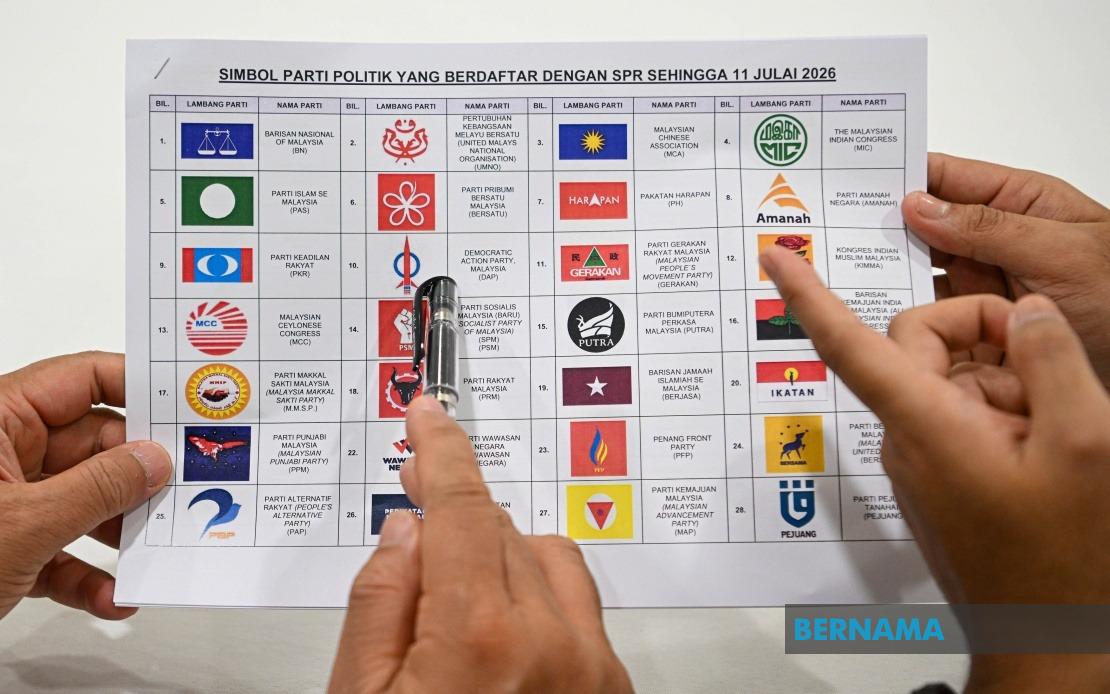
The 16th Negeri Sembilan state election formally commenced on July 18 with nomination proceedings held simultaneously across eight designated centres throughout the state from 9 am, marking the official beginning of the contest to determine the new state government. Prospective candidates were required to lodge their nomination papers with the Returning Officer before the 10 am deadline, after which the Election Commission would release the complete roster of eligible contenders. This administrative milestone signals the transition into the competitive campaign phase, which the Election Commission has allocated a 14-day window spanning until 11:59 pm on July 31.
The electoral timetable shows early voting scheduled for July 28, with the main polling day set for August 1. This timeline follows the June 5 dissolution of the Negeri Sembilan State Legislative Assembly, which occurred with the formal consent of Tuanku Muhriz Tuanku Munawir, the Yang Dipertuan Besar of Negeri Sembilan. The dissolution marked the conclusion of the previous assembly's term and triggered the constitutional process for holding the new election.
Demographic data underscore the scale of this electoral exercise. A total of 889,490 voters are registered to participate, comprising 867,151 ordinary voters alongside 16,884 military personnel and their family members, and 5,455 police officers and their spouses. This electorate will determine the composition of the 36-seat state assembly. In the immediate lead-up to nomination day, the Election Commission reported that 464 nomination forms had been purchased, while 70 prospective candidates had paid their election deposits, confirming their intention to contest.
The party landscape reflects Negeri Sembilan's competitive political environment. Pakatan Harapan fields candidates in all 36 seats, positioning itself as seeking a comprehensive mandate. Barisan Nasional contests 25 seats, while Perikatan Nasional has fielded candidates in 11. Beyond these major coalitions, smaller parties including Parti Orang Asli Malaysia, the Socialist Party of Malaysia, and Parti Barisan Jemaah Islamiah Se-Malaysia each put forward one candidate. Parti Pribumi Bersatu Malaysia, contesting 24 seats under its banner including two candidates from Parti Bersepakat Hak Rakyat Malaysia using the Bersatu logo, demonstrates the complex alliance arrangements shaping this election.
These candidate strategies reflect lessons from the previous 2023 state election, where Pakatan Harapan secured 17 of 36 seats, Barisan Nasional won 14, and Perikatan Nasional obtained five. That outcome revealed a competitive three-way contest without a clear dominant force, setting expectations for substantial political competition in this round. The parties have balanced fielding incumbents with introducing new candidates, suggesting attempts to refresh their images while retaining experienced legislators.
Security arrangements underscore the Election Commission's commitment to ensuring orderly proceedings. The Negeri Sembilan police have mobilised 4,800 officers and personnel, supplemented by an additional 1,373 personnel deployed from Bukit Aman headquarters. This substantial security presence reflects standard election protocols designed to prevent disruptions and maintain public order during the nomination process, which typically attracts large gatherings of party supporters and political figures accompanying their candidates to nomination centres.
The Election Commission issued formal reminders to all candidates and their supporters emphasising strict compliance with electoral rules and the necessity of avoiding any conduct that could provoke disorder during the nomination proceedings. These directives form part of the regulatory framework governing Malaysian elections and seek to ensure that the democratic process unfolds peacefully and transparently across all nomination centres.
Weather conditions played a minor consideration in nomination day logistics. The Malaysian Meteorological Department forecast generally fair conditions across most areas during morning hours, though Port Dickson and Seremban were expected to experience rainfall. Afternoon thunderstorms were predicted statewide, potentially affecting candidate movements and supporter gatherings throughout the day. Despite these meteorological factors, the nomination process proceeded according to schedule.
For Malaysian readers and regional observers, Negeri Sembilan's election carries broader significance within the federation's political landscape. As one of Malaysia's smaller states, electoral outcomes here often signal shifting voter sentiment and provide bellwethers for national political dynamics. The competitive three-way race established in 2023 persists, with no coalition appearing positioned to secure an overwhelming mandate. This suggests that post-election coalition negotiations and government formation discussions could prove complex, potentially requiring coalition-building among parties that secured multiple seats.
The 14-day campaign period beginning after the official candidate announcement represents the intensive phase where parties will mobilise supporters, conduct rallies, and present policy proposals to voters. Campaign dynamics in Negeri Sembilan often reflect broader national political conversations while addressing state-specific concerns around economic development, infrastructure, and governance. The early voting opportunity on July 28 caters to military and police personnel whose duties may preclude voting on polling day.
The 889,490 eligible voters represent the ultimate arbiters of Negeri Sembilan's political direction over the coming term. Turnout patterns and swing voting in specific constituencies could significantly determine which coalition or arrangement ultimately forms the next state government. Given the established competitive balance, individual state seat contests may prove decisive in determining overall assembly composition and the resulting political coalitions required for governance.

