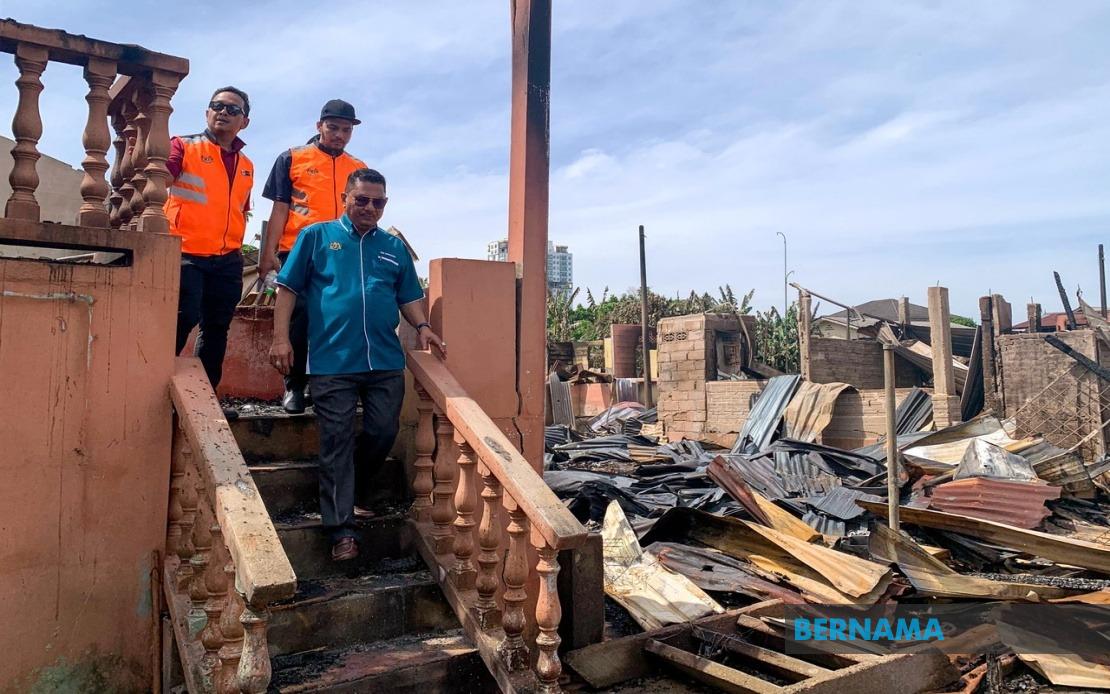
Investigators have determined that the destructive fire that consumed 27 houses in Kampung Gok Kapur on June 8 began with someone burning a pile of papers in a kitchen using an open flame. The Kelantan Fire and Rescue Department (JBPM) revealed the findings following a comprehensive forensic examination of the incident scene and witness accounts. The investigation concluded that the fire originated from a deliberate act involving a gas lighter applied directly to papers in the kitchen of one residential unit, an action that would ultimately prove catastrophic for the entire settlement.
Kelantan JBPM director Farhan Sufyan Borhan elaborated on the sequence of events that unfolded once the initial flame caught the papers. The ignition immediately spread to nearby combustible materials within the kitchen area, and the rapidly growing fire subsequently breached the confines of the originating house. From there, the flames consumed adjacent structures in swift succession, demonstrating how a single moment of carelessness in one dwelling could devastate an entire neighbourhood. The speed at which the fire advanced across the kampung underscores the particular vulnerability of densely packed residential areas to rapid conflagration once an initial blaze establishes momentum.
What renders this incident especially significant is the official determination that negligence played a central role. The person responsible for igniting the papers was conducting the burning activity without adequate precautions or consideration for fire safety protocols. This classification as negligence, rather than accident or mechanical failure, carries implications for potential legal proceedings. The JBPM has indicated that the investigation report will be forwarded to police and other relevant authorities to assess whether criminal charges or other formal action should follow. Such determinations often depend on the jurisdiction's interpretation of culpable negligence and the degree of recklessness involved.
The human cost of the incident extended far beyond the destruction of property. A total of 110 villagers from Kampung Gok Kapur were rendered homeless by the blaze, forced to evacuate with whatever possessions they could hastily gather. These residents subsequently sought temporary shelter at the Mukim Banggol Mosque, which opened its facilities to accommodate the displaced families. While the community rallied to provide immediate sanctuary, the longer-term challenges of rebuilding homes and lives remained daunting for families who lost everything in the span of hours. The psychological impact on residents who witnessed their neighbourhoods consumed by flames, combined with the practical difficulties of temporary displacement, represents a dimension of fire disasters often overlooked in initial incident reports.
The fortunate absence of fatalities in this incident represents a critical distinction from many other major residential fires across Southeast Asia. Had the blaze occurred during night hours when residents were sleeping, or had it spread with even greater rapidity, the casualty toll could have been substantially different. The fact that all 110 displaced persons survived highlights both the element of timing and the effectiveness of evacuation efforts, though it does not diminish the severe disruption to their lives. The psychological trauma of near-disaster experiences frequently leaves lasting effects on survivors, particularly children and elderly residents unprepared for sudden displacement.
The JBPM has seized this incident as an opportunity to issue broader public safety guidance to Kelantan residents and Malaysians nationwide. Officials stressed the critical importance of exercising extreme caution whenever open flame sources are employed in domestic settings. The department specifically cautioned against conducting any burning activities inside homes or in proximity to residential areas, highlighting the inherent risks such practices pose to entire communities. This messaging reflects a growing emphasis in Malaysian fire safety protocols on preventing the human behaviours and decisions that, while individually rational in isolated contexts, create systemic dangers when practised in densely populated residential environments.
The kampung setting of Kampung Gok Kapur introduces additional complications typical of rural Malaysian communities. Houses in such settlements are frequently constructed in close proximity to one another, with shared building materials and limited space between structures. This architectural reality means that fires spreading from one house automatically threaten multiple neighbouring dwellings almost simultaneously. The wooden construction common in many kampung houses, while traditional and culturally significant, also presents particular fire propagation challenges. These structural and material factors transform what might be a contained house fire in a modern suburban setting into a neighbourhood-wide disaster in a traditional village context.
Investigators employed forensic methodologies to reconstruct the incident's progression, examining physical evidence at the scene and collecting recorded statements from witnesses and residents. The precision with which they identified the gas lighter as the specific ignition source demonstrates the sophistication of modern fire investigation techniques available to Malaysian authorities. Such detailed analysis allows investigators to move beyond speculation and establish factual cause-and-effect chains, information essential both for accountability purposes and for informing public safety campaigns. The methodology employed here could serve as a reference point for training other regional fire services in Southeast Asia facing similar investigative challenges.
For Malaysian residents contemplating the implications of this incident, several practical lessons emerge. Burning papers or other materials in kitchen areas represents an extraordinarily hazardous practice that combines confined spaces, proximity to flammable household items, and potential for rapid flame propagation. Cultural or practical reasons that might motivate such burning activities—whether disposing of sensitive documents, preparing traditional materials, or other purposes—pale in comparison to the catastrophic risks involved. The incident serves as a stark reminder that individual household safety decisions possess externalities that extend far beyond the immediate decision-maker to affect entire communities dependent on shared proximity.
Moving forward, the JBPM's handover of findings to police will likely trigger an official review process determining appropriate enforcement action. Malaysia's fire safety regulations prohibit precisely the type of activity that sparked the Kampung Gok Kapur disaster, though enforcement of such regulations in residential areas remains inconsistent across different states and municipalities. This incident provides an opportunity for state and federal authorities to reinforce fire safety compliance messaging and consider whether existing penalties adequately deter the type of negligent behaviour that caused this conflagration. The displacement of 110 residents serves as a sobering metric of the genuine human consequences flowing from inadequate fire safety awareness and practice in Malaysian communities.