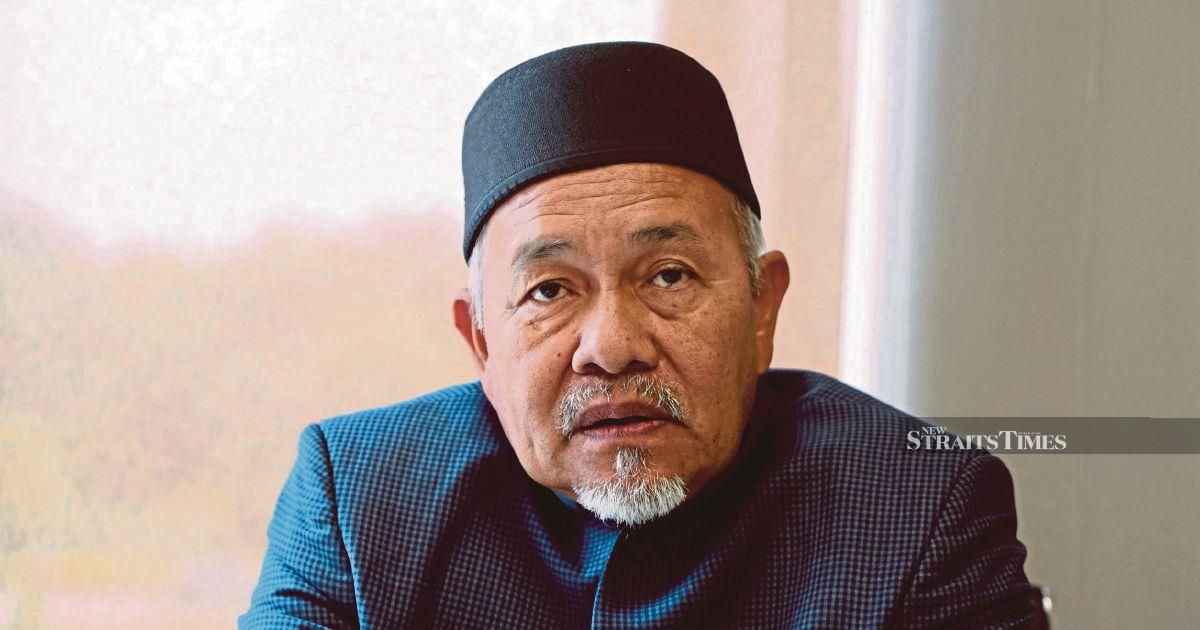
The Perikatan Nasional coalition is set to unveil its manifesto for the upcoming Negri Sembilan state election, and party leadership indicates the document will find considerable common ground with Barisan Nasional's policy agenda. Tuan Ibrahim, speaking in Seremban, highlighted the surprising degree of alignment between the two coalitions' visions for the state, a development that underscores shared priorities despite their political rivalry.
The acknowledgement of these similarities reflects a broader reality shaping Malaysian electoral politics: both major coalitions have converged around core demands from voters seeking economic stability, improved public services, and better governance. Rather than representing a breakdown in political differentiation, this convergence speaks to the effectiveness of cross-coalition dialogue and the maturation of policy platforms across Malaysia's political spectrum. Negri Sembilan voters will find themselves choosing between coalitions that broadly accept many of the same foundational objectives, shifting the contest toward questions of implementation, trustworthiness, and leadership capability.
Historically, Negri Sembilan has been a battleground state where both BN and opposition coalitions have held sway. The state's socioeconomic profile—a mix of urban centres, agricultural hinterland, and industrial zones—means its electorate demands attention to diverse constituencies with varying interests. Mining heritage, rubber estates, palm oil production, and manufacturing all shape local concerns, while the state capital Seremban's urbanisation creates constituencies focused on commerce, education, and modern infrastructure. This diversity typically forces coalitions to articulate inclusive manifestos addressing rural and urban needs simultaneously.
The timing of Tuan Ibrahim's statement carries strategic weight. By acknowledging substantial policy overlap before formally presenting PN's manifesto, the coalition subtly shifts debate away from competing policy lists toward qualitative dimensions: which team can deliver these shared promises more effectively? This rhetorical move allows PN to position itself as ideologically serious rather than merely oppositional, even as it contests against a BN that has dominated Negri Sembilan through much of Malaysia's electoral history. It also potentially inoculates PN against accusations of offering voters nothing substantially different from the incumbent coalition.
For Malaysian voters fatigued by increasingly personalised political campaigns that prioritise coalition leaders' characteristics over substantive governance differences, the emergence of policy convergence could prove either reassuring or troubling. The reassurance lies in recognising that mainstream Malaysian political forces—whether PN or BN—have internalised voter demands for institutional competence, economic fairness, and transparent administration. The concern centres on whether real ideological differences persist or whether strategic positioning has hollowed out political choice into a contest between essentially similar offerings presented under different banners.
Negri Sembilan's electorate will likely focus on implementation records and local track records when manifestos are released. Voters have experienced both BN and opposition governance in recent years, allowing them to evaluate claims against performance. The state's experience with different administrations provides a basis for assessing whether coalition promises translate into tangible improvements in infrastructure, services, education quality, and economic opportunity. This empirical grounding tends to cut through manifesto rhetoric and force coalitions toward genuine accountability.
The convergence Tuan Ibrahim describes may also reflect pressure from Negri Sembilan's specific demographic and economic circumstances. A state facing competition for investment against Selangor, facing demographic shifts toward younger, more mobile populations, and experiencing infrastructure pressures demands pragmatic rather than ideologically rigid approaches. Both BN and PN, recognising these realities, have likely arrived independently at similar policy conclusions about what Negri Sembilan requires.
International observers monitoring Malaysia's democratic development will find significance in this convergence. It suggests that despite Malaysia's coalition-based political system and occasional zero-sum competition, sufficient institutional maturity exists for major coalitions to occupy overlapping policy space. This represents a departure from earlier periods when Malaysian political competition sometimes involved starkly contrasting visions. The emergence of consensus around important governance and economic issues indicates that Malaysian voters have successfully educated their political representatives about non-negotiable baseline expectations.
The PN manifesto launch itself will provide crucial detail about where genuine differentiation lies beneath the acknowledged similarities. Coalition positioning on fiscal policy, education priorities, healthcare expansion, and development strategies will reveal whether the shared ground extends to implementation approaches or remains confined to broad aspiration statements. Voters will scrutinise how PN proposes achieving jointly-endorsed objectives differently from BN, and whether resource allocation priorities diverge meaningfully between the coalitions.
Negri Sembilan's voters face an election where the fundamental choice has shifted somewhat from ideological opposition toward comparative evaluation of competing teams' competence and trustworthiness in delivering shared objectives. This evolution in Malaysian electoral dynamics—marked by policy convergence rather than fundamental disagreement—suggests voter expectations have fundamentally reshaped what Malaysian coalitions must offer to succeed electorally.

