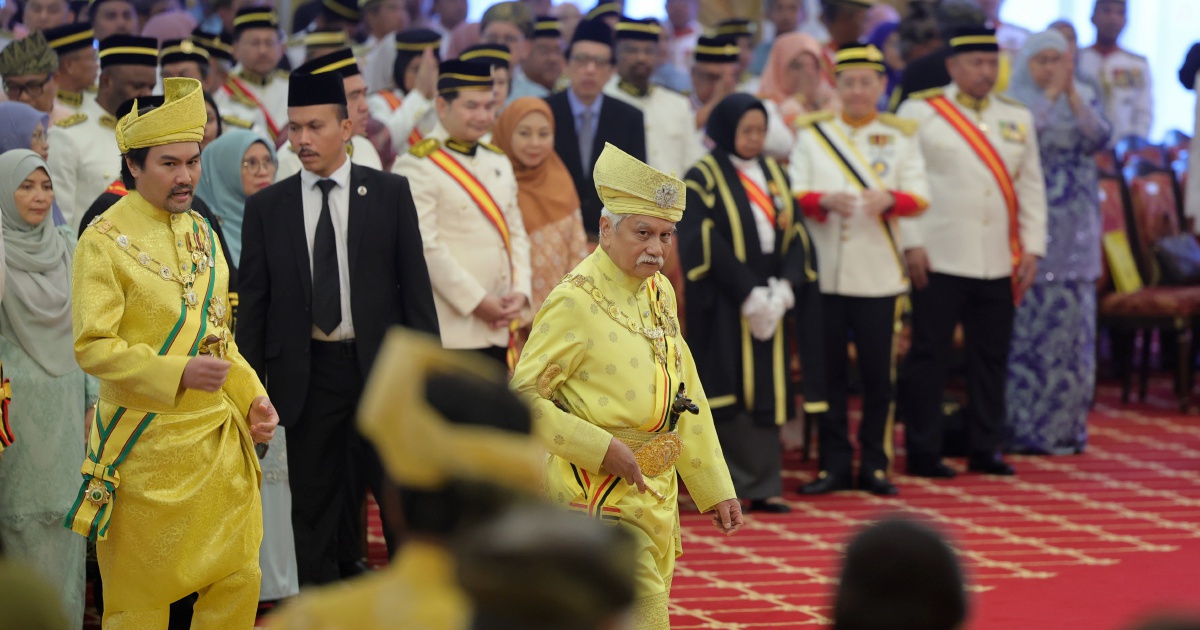
The Negri Sembilan Palace has issued a formal reminder to all political parties contesting the state elections to maintain clear boundaries between the royal institution and campaign activities. The admonition reflects growing concern about the politicisation of monarchy in Malaysia, particularly during periods of intense electoral competition when candidates and organisations may seek to leverage the prestige and symbolic authority of the crown for partisan advantage.
This cautionary statement underscores the constitutional principle that the Malaysian monarchy operates as an institution above partisan politics. The palace's intervention signals that party operatives have either explicitly referenced royal patronage or implicitly associated themselves with the institution in ways that breach customary protocol. Such transgressions, however well-intentioned by campaigners hoping to enhance their legitimacy, threaten the carefully cultivated political neutrality that protects the institution's standing and public acceptance across diverse communities.
The timing of the palace's reminder is particularly significant given Negri Sembilan's status as a constitutional monarchy where the Yang di-Pertuan Besar holds considerable symbolic and formal authority. Elections in the state carry heightened sensitivity around royal prerogatives, as any erosion of institutional boundaries can reverberate through Malaysia's wider constitutional architecture. Other states may scrutinise how Negri Sembilan manages this tension between electoral freedom and institutional respect, potentially influencing standards applied elsewhere.
Political parties in Negri Sembilan must recalibrate their campaign strategies to comply with the palace's expectations. This means avoiding campaign rhetoric that invokes royal approval or blessing, refraining from displaying the royal standard or symbols in partisan contexts, and ensuring that public events do not create impressions of royal endorsement for particular candidates or policies. Campaign machinery must be instructed that proximity to royal persons or institutions does not constitute a form of electoral asset to be exploited for competitive advantage.
The palace's intervention also reflects lessons from regional experience. Across Asia, repeated instances of political actors attempting to weaponise royal symbols or claim royal support have damaged both electoral integrity and public confidence in institutions. Malaysia's constitutional settlement depends fundamentally on the monarchy remaining demonstrably above the electoral fray, serving as an impartial arbiter and symbol of national unity rather than a partisan tool.
For Malaysian voters and observers, this statement reaffirms an important principle: that democratic elections must be decided through competition among parties' policy platforms, leadership quality, and track records, not through perceived proximity to unelected institutions. The separation of royal authority from electoral campaigning strengthens democracy by ensuring that voters base decisions on substantive political considerations rather than being swayed by association with inherited prestige or formal office.
Negri Sembilan voters, particularly in constituencies where such boundary violations may have occurred, deserve reassurance that the palace takes institutional separation seriously. The formal reminder itself serves this purpose, establishing a clear record that the royal institution has set expectations and will likely monitor compliance. This transparency helps restore confidence that electoral processes respect constitutional limits on royal involvement.
The palace's stance also carries implications for candidate training and party discipline. Larger, more established parties typically have institutional capacity to brief candidates on protocol and enforce compliance. Smaller parties, newer political movements, or independent candidates may lack such apparatus, potentially leading to inadvertent violations. The reminder thus implicitly places responsibility on all parties to develop internal mechanisms ensuring their representatives understand and respect boundaries between royalty and campaigning.
Looking forward, this cautionary message from Negri Sembilan serves as a benchmark for electoral conduct across Malaysia. State palaces elsewhere may reference it when addressing similar concerns, effectively establishing an informal standard that protects all royal institutions from politicisation during election periods. The uniformity of such expectations across states strengthens the principle nationally and makes it harder for ambitious politicians to justify violations on grounds of uncertainty or regional variation.
The palace's intervention ultimately protects not only the institution of monarchy but also electoral democracy itself. When royal symbols and associations become tools in campaign competition, they become contested and divisive rather than unifying. By clearly separating these spheres, the Negri Sembilan Palace preserves the dignity and acceptability of both the electoral process and the crown, benefiting Malaysia's broader constitutional settlement and social cohesion.

