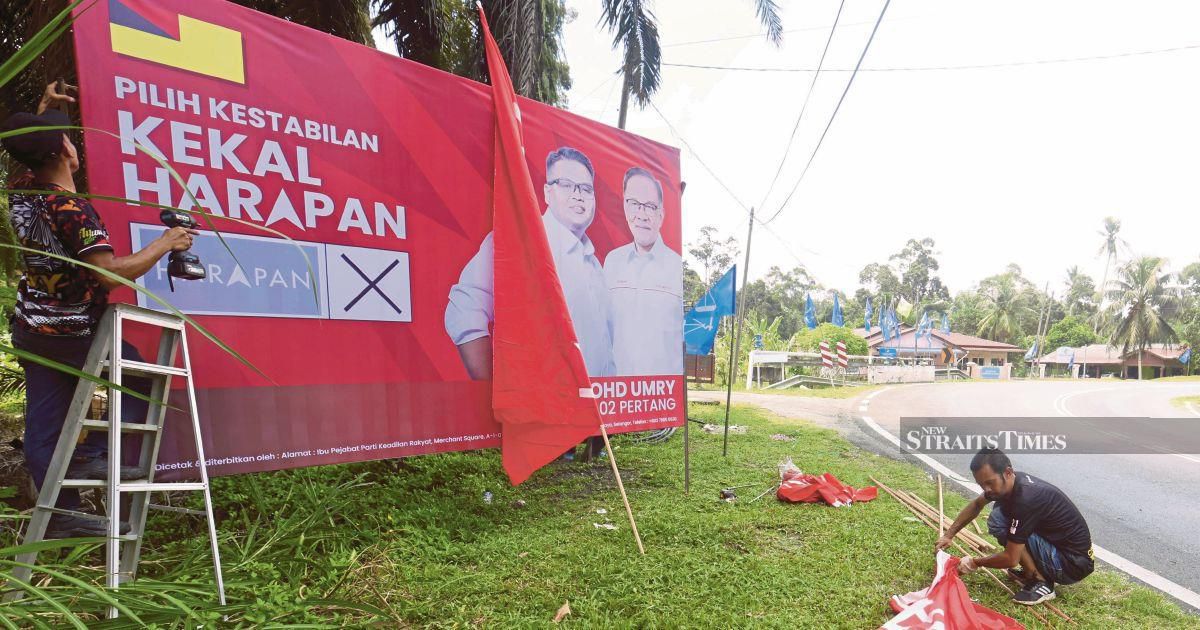
Negri Sembilan's state election represents a pivotal moment for Malaysian coalition politics, as 103 candidates compete for the 36 assembly seats that will determine the state's direction for the next five years. The contest carries particular significance for Bersatu, the Malay-Muslim focused party that must navigate the complex dynamics created by deepening collaboration between Barisan Nasional and Perikatan Nasional at the federal level.
The field of candidates reflects a three-way contest that will test the durability of recent political alignments. Barisan Nasional, led by UMNO and anchored by its traditional coalition partners MCA and MIC, enters with institutional advantages built from decades of governance experience in Negri Sembilan. Perikatan Nasional, strengthened by its role in the federal government following the 2023 general election, brings momentum and resources to challenge the traditional ruling coalition. Bersatu, however, occupies the most ambiguous position, attempting to maintain influence within both major blocs while demonstrating sufficient independence to retain party identity and supporter loyalty.
Bersatu's dilemma reflects broader tension within Malaysian politics. The party originally broke from UMNO and formed the initial core of Perikatan Nasional, but has gradually shifted toward cooperation with Barisan Nasional at federal and increasingly state levels. This repositioning has created internal contradictions that become particularly visible during state elections, where the party must either commit fully to Barisan Nasional or reassert its distinct role within Perikatan Nasional. Negri Sembilan voters will observe closely whether Bersatu candidates campaign as independent voices or as de facto UMNO proxies.
The 36-seat legislature of Negri Sembilan makes this competition especially consequential. With such a compact assembly, winning a small number of additional seats compared to rivals can determine control of the state government. A single-digit swing across the state could easily produce vastly different outcomes, elevating the stakes for marginal contests and making seat allocation among coalition partners unusually significant. The manner in which Barisan Nasional and Perikatan Nasional candidates are distributed across constituencies will reveal the genuine strength of their cooperation and whether genuine electoral strategy drives seat divisions or merely factional accommodation.
Bersatu's position within this framework deserves particular scrutiny. Unlike MCA and MIC, which have secure positions within Barisan Nasional's structure, Bersatu has never fully integrated into the traditional coalition architecture. The party brings substantial Malay voter support, particularly in rural constituencies, but risks alienating this base if it appears subordinate to UMNO. Conversely, maintaining aggressive independence risks alienating federal partners whose support Bersatu requires for ministerial positions and cabinet influence at the national level. Negri Sembilan provides a testing ground for whether this balancing act remains sustainable or whether the party must make clearer strategic choices.
The election also mirrors wider transformations in Malaysian electoral behaviour. Voters increasingly view state contests not merely as local affairs but as expressions of preference regarding federal political directions. The Negri Sembilan result will be interpreted nationally as a barometer of whether the current federal government enjoys solid popular support or faces erosion of its coalition base. This telescoping of local elections into national narratives adds pressure on all three competing camps to frame their campaigns in terms that resonate beyond state boundaries.
Geographic and demographic considerations shape the competitive landscape. Negri Sembilan's economy depends significantly on agriculture, mining heritage, and increasingly on suburban development spilling from the Klang Valley. Rural constituencies respond to Malay-Muslim concerns regarding religion, subsidy policies, and traditional governance approaches, while growing urban areas show more diverse voter interests. Bersatu traditionally performed well in rural areas, but faces challenges in suburban constituencies where UMNO and Perikatan Nasional's more established presences provide voter anchors. The distribution of candidates across urban and rural seats will reflect each coalition's assessment of which constituencies can be won or defended.
Previous state elections have demonstrated that the BN-PN cooperation agreed at federal level does not always translate smoothly to state contests. Voters in some states have punished parties perceived as arrogant or complacent, while rewarding those demonstrating local responsiveness and genuine concern for state-specific issues. Negri Sembilan residents will evaluate candidates not primarily on their national alignment but on perceived ability to address state concerns including education facilities, healthcare access, infrastructure maintenance, and employment opportunities. Parties that maintain focus on these local imperatives throughout their campaigns will likely outperform those treating the election as merely an extension of federal positioning.
Bersatu enters Negri Sembilan facing perhaps its most fundamental question: whether it has evolved into a permanent junior partner within Malaysian coalition politics or retains capacity for independent political influence. The party's performance here will inform decisions within both Barisan Nasional and Perikatan Nasional regarding future seat allocations and policy roles. A strong showing would strengthen Bersatu's negotiating position for future contests, while a weak result could accelerate gradual absorption into larger coalition partners' shadow structures. Consequently, this election determines not merely Negri Sembilan's state government but also trajectories for Bersatu's long-term political viability.

