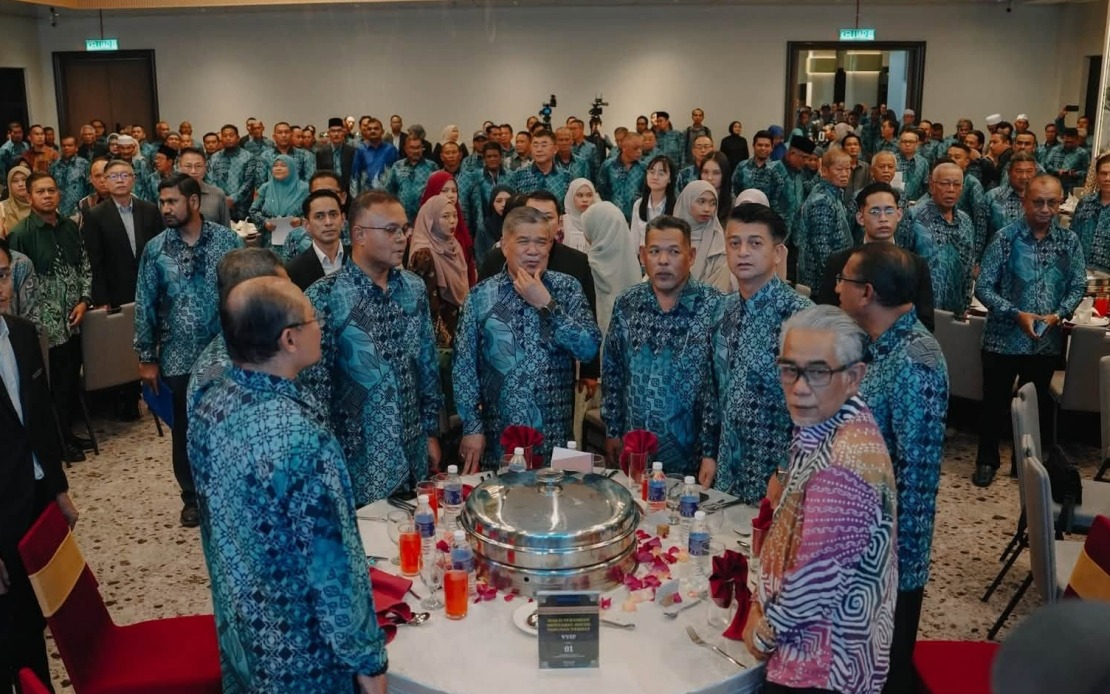
The National Fishermen's Association (NEKMAT) has significantly strengthened its financial position, recording a profit exceeding RM25 million in 2025, a remarkable turnaround from the RM11 million achieved in 2024. The near-threefold expansion signals not merely improved bottom-line performance but a fundamental shift in operational capability within Malaysia's fishing industry governance structure. Agriculture and Food Security Minister Datuk Seri Mohamad Sabu attributed this performance surge to rigorous management practices and the organisation's unwavering dedication to bolstering the nation's fisheries sector during remarks at NEKMAT's 41st Annual General Meeting in Kuala Lumpur on July 28.
The profitability gains carry deeper implications for Malaysia's fishing communities, as NEKMAT has institutionalised a practice of channelling earnings directly into welfare and educational programmes targeting fishermen across the country. This distribution mechanism ensures that operational success translates into tangible community benefits rather than remaining isolated within corporate accounts. Mohamad specifically highlighted this commitment as evidence that NEKMAT possesses both the financial muscle and social conscience necessary to advance sectoral interests comprehensively, suggesting a model that other cooperative structures might emulate across Malaysia's agricultural and resource-dependent industries.
NEKMAT's board chairman Abdul Hamid Bahari disclosed that the enhanced profitability enabled the association to increase dividend distributions to state-level fishermen associations, with payouts rising from nine per cent to fifteen per cent of earnings. This substantial increase in returns to constituent bodies demonstrates how central organisation fiscal health directly improves conditions for regional affiliates, creating a multiplier effect throughout Malaysia's fishing community. Such improved distribution capacity ultimately enhances the financial resilience of individual fishermen's organisations nationwide, allowing them greater flexibility in addressing local priorities and challenges.
The operational diversification underpinning NEKMAT's financial expansion extends across multiple revenue streams beyond traditional fishing-related activities. The association now operates wholesale and retail diesel distribution networks, ice production facilities, shrimp farming ventures, transportation services, marketing operations, and fishermen's housing development projects. This portfolio approach reduces dependence on any single income source whilst creating vertical integration across the supply chain. By controlling inputs such as diesel and ice whilst simultaneously managing downstream activities including marketing and distribution, NEKMAT has systematically reduced transaction costs and captured margins that formerly flowed to external intermediaries.
The organisation's leadership has signalled continued confidence in sustained growth trajectories, with Abdul Hamid expressing expectations that 2025's performance will subsequently be surpassed in coming periods. Such projections rest on continued business expansion and operational optimisation rather than speculative ventures, suggesting a management team focused on incremental but reliable improvements rather than dramatic pivots. For Malaysian fishermen and stakeholders monitoring sectoral health, this measured optimism indicates stability and forward momentum within crucial governance structures.
Minister Mohamad identified significant policy development potential emerging from NEKMAT's enhanced financial capacity. The organisation's management previously presented comprehensive proposals for fisheries development programmes and infrastructure projects targeting fishermen's associations throughout Malaysia, with allocations totalling tens of millions of ringgit. Mohamad committed to elevating these proposals during forthcoming Budget 2027 discussions with the Finance Ministry, potentially securing government co-investment in initiatives directly benefiting fishing communities. This engagement signals recognition at ministerial level that NEKMAT's improved operational standing positions the association as a credible partner for scaling sectoral development interventions.
Beyond profit metrics, NEKMAT has achieved a significant breakthrough in social protection coverage through collaboration with the Social Security Organisation (PERKESO). A newly introduced protection scheme specifically designed for fishermen now features government subsidisation, reducing individual annual contributions from the full rate of RM231.20 to a nominal RM70 payment. Importantly, this scheme imposes no age restrictions and includes mortality benefits of RM3,000 alongside additional coverage, addressing a long-standing gap in security provision for workers in Malaysia's fishing industry. The July 2025 introduction represents a policy achievement reflecting both NEKMAT's advocacy capacity and government responsiveness to sectoral needs.
During the annual general meeting, NEKMAT formalised a memorandum of understanding with Green Borneo Eco Land Sdn Bhd, signalling potential expansion into environmental sustainability and land-based ventures aligned with contemporary green economy positioning. Simultaneously, the association presented contributions to the Malaysian Fishermen's Foundation (YANEM), reaffirming its commitment to philanthropic engagement within fishing communities. These parallel developments illustrate NEKMAT's evolution beyond purely commercial concerns toward broader stakeholder value creation encompassing environmental stewardship and social responsibility.
The attendance of senior government officials including KPKM secretary-general Datuk Seri Isham Ishak and Malaysian Fisheries Development Authority (LKIM) chairman Mohd Faiz Fadzil underscores the political and administrative significance accorded to NEKMAT's annual proceedings. Such high-level participation reflects recognition that fisheries sector governance directly impacts rural livelihoods, food security, and regional economic stability across Malaysia's coastal communities. The convergence of ministerial, bureaucratic, and sectoral leadership during this gathering creates opportunities for integrated policy development addressing interconnected challenges spanning production, welfare, sustainability, and market access.
For Malaysian stakeholders and regional observers, NEKMAT's financial trajectory carries implications extending beyond profit documentation. The association's success in simultaneously achieving profitability whilst maintaining welfare commitments and expanding business diversification suggests feasible pathways for other primary sector organisations seeking sustainable competitive positioning within increasingly complex markets. As Malaysia navigates economic transition emphasising high-value agriculture and resource efficiency, NEKMAT's demonstrated capacity to generate community benefits from commercial operations offers instructive precedent for structuring primary sector governance in alignment with both profitability imperatives and social responsibilities that legitimise institutional authority within dependent communities.

