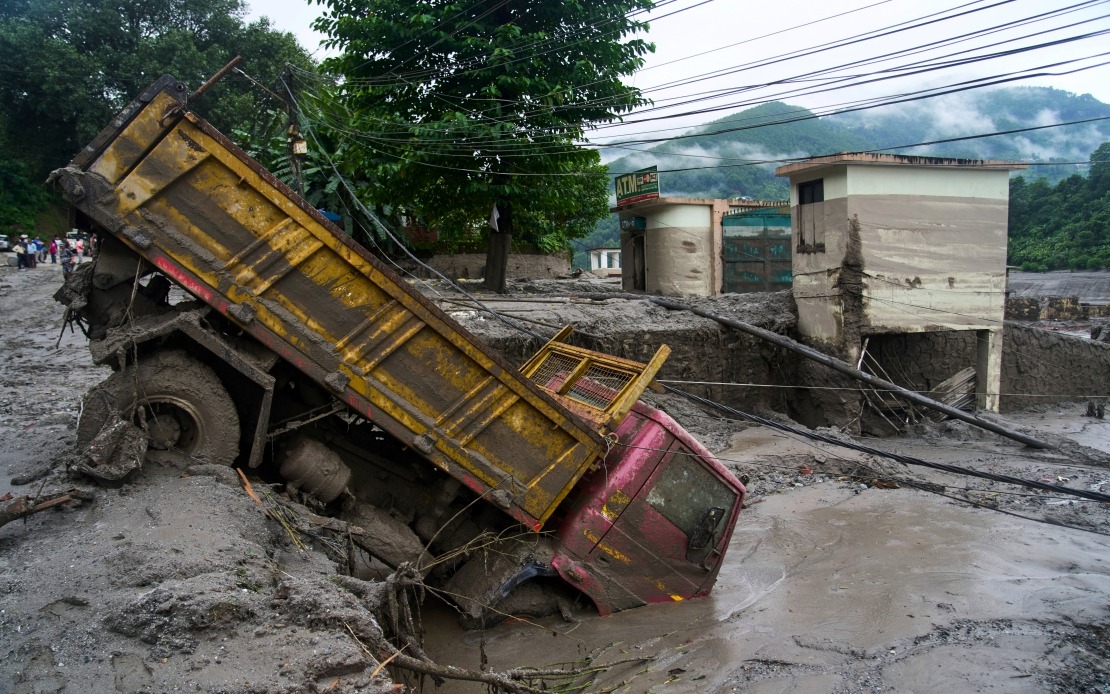
Nepal's disaster management authorities have sounded fresh alarm over the Bhote Koshi River, warning of imminent flood danger in the same stretch that witnessed a devastating flash flood just two days earlier. The National Disaster Risk Reduction and Management Authority (NDRRMA) released an urgent notice on Friday alerting rescue teams and residents to the alarming resurgence of water flow combined with debris and mud in the Rasuwa district waterway, signalling that the threat from these mountain rivers remains acute and unpredictable.
The warning underscores the volatile hydro-meteorological conditions persisting across Nepal's high-altitude watersheds. The Bhote Koshi, which originates in the Himalayas and flows through Rasuwa before joining the Trishuli River, has demonstrated the capacity for sudden and catastrophic surges that catch even experienced mountain communities off guard. The fact that heightened flows are recurring within such a short timeframe suggests either continued heavy precipitation in upstream areas or the destabilisation of glacial and snow-melt patterns—both alarming indicators of the region's vulnerability to cascade disasters.
For rescue and relief personnel already stretched thin from the previous deluge, the fresh alert demands renewed vigilance and preparedness. The NDRRMA's explicit directive for all workers engaged in search and recovery operations along both the Bhote Koshi and its confluence with the Trishuli to maintain heightened caution reflects institutional anxiety about the unpredictability of mountain hydrology during monsoon season. Any fresh inundation could rapidly overwhelm teams still engaged in body recovery and survivor searches in lower-lying areas, potentially sweeping away both rescuers and the evidence of previous casualties.
The authority has instructed all personnel and residents in vulnerable zones to relocate immediately to elevated ground should they detect any warning signs—rising water levels, unusual noise from upstream, or a sudden surge in debris. Such directives, whilst standard in disaster protocols, carry particular weight given the documented human cost of the Wednesday calamity. The speed and intensity of flash floods in confined river valleys leave minimal reaction time, and the psychological toll on communities that have already suffered mass casualties can hinder rapid evacuation responses.
The death toll from the Wednesday flash flood has climbed to 475, with search operations still hunting through debris fields and downstream channels for hundreds reported missing. Nepali rescue teams, supported by military and civilian volunteers, continue to comb riverbanks and ravines across multiple districts. The missing persons remain distributed across various locations along the flood path, complicating identification and accounting efforts. Families awaiting news face the grim reality that many bodies may never be recovered from deep river gorges or may be swept far downstream beyond the reach of organised search teams.
The recurring flood threat carries profound implications for the stability of local communities and infrastructure. Bridges, roads, and hydropower installations remain at risk from renewed surges. The cumulative impact of successive inundations within days can compound disaster effects—eroding riverbanks further, washing away temporary shelters erected for displaced persons, and destroying supplies stockpiled for relief operations. Agricultural lands in the valleys face repeated waterlogging and crop loss, exacerbating the economic fallout for farmers already struggling with monsoon-season uncertainties.
For the broader South Asian region, Nepal's repeated flood crises underscore the transnational dimensions of mountain river management. The Trishuli and Bhote Koshi systems flow toward India, and uncoordinated management of upstream dams and reservoirs can amplify flood risk downstream. Nepal's capacity to monitor upper tributaries and provide early warning to India depends on functional hydro-meteorological systems and cross-border communication protocols that remain underdeveloped despite repeated disasters. Southeast Asian nations with similar Himalayan river systems—particularly Thailand, Laos, and Myanmar—face comparable challenges and could learn from Nepal's experience in building resilient early warning networks.
The NDRRMA's public warnings, whilst necessary, also reflect institutional limitations in predicting mountain flood behaviour with precision. Automated sensor networks at key river points and improved weather forecasting for high-altitude zones could narrow the warning window, but Nepal has struggled to develop such infrastructure comprehensively. The reliance on ground-level observations and community reports means that isolated upstream communities may have no awareness of impending danger until water reaches their settlements.
Climate change has intensified the unpredictability of Himalayan monsoon patterns, with glacial systems destabilising and precipitation patterns becoming more extreme and concentrated. The frequency of multi-hazard sequences—such as back-to-back floods or floods following landslides—has increased across the region. Nepal's disaster response capacity, though improving, remains reactive rather than preventive, addressing crises after they strike rather than reducing risk through sustained infrastructure and land-use planning investments.
The fresh alert also carries implications for regional labour migration and economic activity. The Bhote Koshi valley hosts several hydropower projects and smaller industrial facilities that depend on the river for operations and water access. Renewed flooding could disrupt these economic activities, affecting employment and investment confidence. Moreover, the psychological impact of living in perpetually threatened areas drives out-migration, particularly among younger populations seeking safer livelihoods—a brain drain that further weakens local disaster preparedness capacity.
As rescue operations continue and the immediate crisis unfolds, Nepali policymakers face mounting pressure to accelerate investment in structural flood mitigation—embankment improvements, better drainage systems, and more strategically sited settlements away from flood plains. The current approach of issuing warnings and evacuating after-the-fact, though lifesaving when executed well, treats symptoms rather than causes. Sustained political commitment and international development financing will be necessary to shift Nepal's disaster profile from reactive emergency response to proactive risk reduction.
The Friday warning represents another chapter in an ongoing narrative of climate-driven hydro-hazards confronting Himalayan nations. As long as precipitation patterns remain volatile and monitoring systems incomplete, communities in valleys like Rasuwa will face cyclical threats that test human resilience and institutional capacity. The challenge now is learning from each disaster to build systems that can contain or redirect flood waters, rather than simply warning people to flee them.

