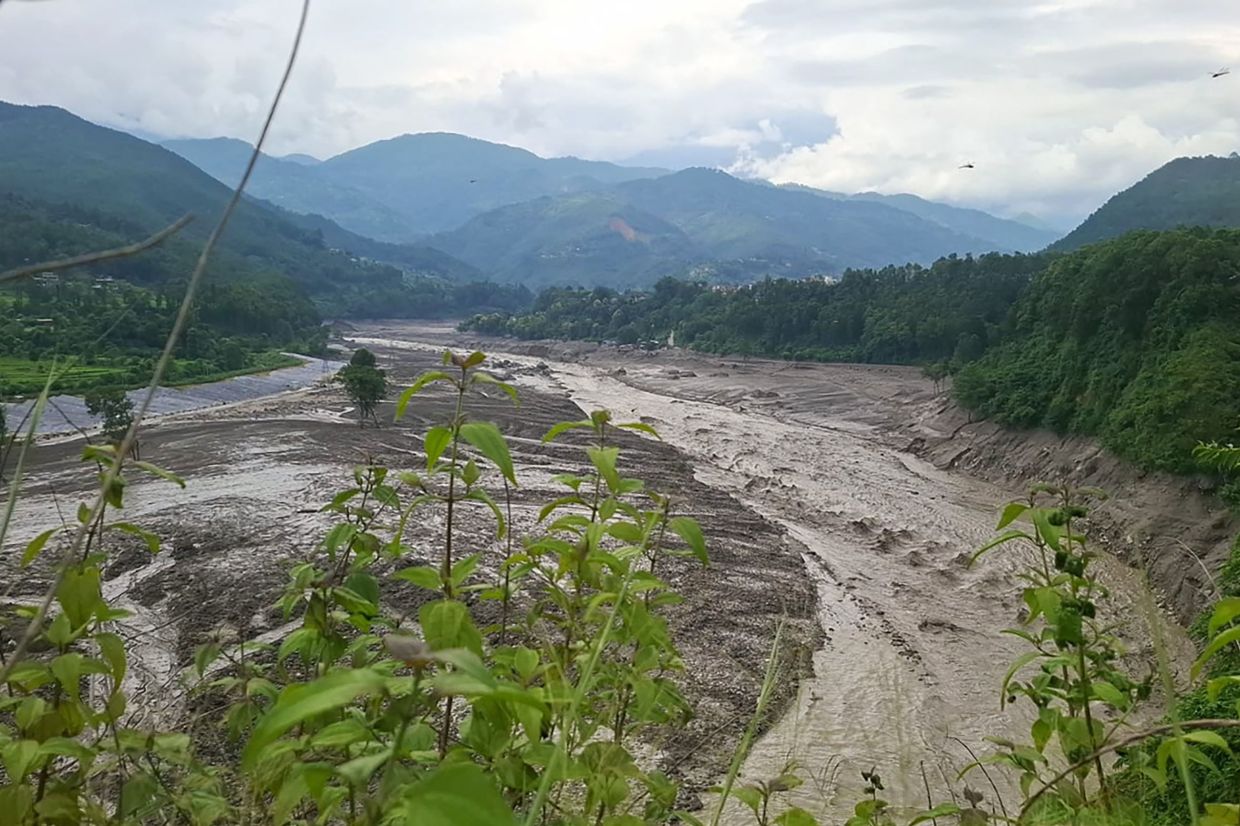
A devastating torrent swept through Nepal on Wednesday, killing at least 22 people and leaving hundreds unaccounted for across multiple districts in one of the region's most severe hydrometeorological disasters in recent years. The calamity unfolded when massive flash floods from the Bhotekoshi River inundated communities around 9am local time, destroying villages, critical infrastructure, and sweeping away vehicles and buildings in its path. The scale of the disaster has triggered an urgent regional response, with neighbouring countries mobilizing rescue teams and offering humanitarian support to overwhelmed local authorities.
Among those reported missing are 384 tourists caught in the deluge, a figure that underscores the unpredictability and ferocity of the disaster. Of these, 291 individuals hail from multiple nations including India, the United States, the United Kingdom, and Malaysia, many of whom were engaged in religious pilgrimage or employment when the floods struck. The composition of the missing reflects Nepal's position as a major destination for both spiritual tourism and infrastructure development projects that draw workers from across Asia and beyond. The tourism board has indicated that many of the foreign nationals were journeying to Mount Kailash in Tibet, a site of profound religious significance for Hindu pilgrims, when they became trapped by rapidly rising waters.
Malaysia's Foreign Ministry has confirmed that its embassy in Kathmandu received alarming reports from travel agencies regarding 11 Malaysian nationals believed to be stranded in the Rasuwa district, one of the most severely affected zones. The incident represents a direct human toll on Malaysian citizens abroad and has prompted diplomatic engagement to coordinate rescue operations. Regional cooperation has emerged as essential, with Nepal's government explicitly requesting assistance from both India and China. The spokesperson for the Nepali government, Sasmit Pokharel, indicated that bilateral and multilateral rescue efforts are now underway, reflecting the transnational nature of both the crisis and its resolution.
Nuwakot district emerged as particularly devastated, where multistorey structures, commercial vehicles, and heavy machinery disappeared beneath mud and debris. Authorities have issued urgent advisories to residents across multiple districts to avoid the banks of the Bhotekoshi, Trishuli, and Narayani rivers, recognizing the continued hazard posed by unstable water levels and terrain. South Korean government sources disclosed that workers employed on hydropower construction projects within Nepal are among those unaccounted for, indicating that development initiatives in the region carry substantial occupational risks during extreme weather events. The cascading destruction of hydropower installations compounds the disaster's economic ramifications, potentially affecting energy supply across the region.
Indian Prime Minister Narendra Modi and Nepal's Prime Minister Balendra Shah held discussions regarding coordinated assistance, with Modi pledging comprehensive humanitarian support. India's willingness to mobilize relief teams reflects both regional solidarity and practical recognition that such disasters transcend borders in mountainous terrain. Chinese President Xi Jinping similarly ordered escalated search and rescue operations within the Tibetan border region of Gyirong, where the disaster's impacts extended into Chinese territory. These coordinated efforts demonstrate how extreme weather events necessitate rapid diplomatic coordination and cross-border resource mobilization in the Himalayan context.
Scientists at the Kathmandu-based International Centre for Integrated Mountain Development have attributed Wednesday's catastrophe to a glacier avalanche that dislodged massive ice and rock into the Lhende Khola River, a tributary of the Bhotekoshi. This mechanism mirrors the patterns observed during comparable flooding events in the region. Saswata Sanyal, a disaster risk reduction specialist at the research group, emphasized that the Lhende Khola had flooded twice within fourteen months, with the latest event stemming from an ice-rock avalanche originating from the Nepali side that temporarily obstructed the river before releasing an overwhelming surge downstream. This recurring pattern within such short intervals signals systemic vulnerability in the mountain hydrology of the region.
The broader context reveals that the Himalayan region faces accelerating climate pressures distinct from global averages. The Hindu Kush Himalaya zone experiences warming rates substantially exceeding the planetary mean, driven by anthropogenic climate change. Research completed earlier this year documented that glaciers throughout this vast region are losing ice at rates that have doubled since 2000, primarily attributable to rising atmospheric temperatures. Consequently, the potential for glacier-dammed lakes, sudden avalanches, and consequent outburst floods has intensified markedly. This trajectory suggests that communities and infrastructure across Nepal, India, Bhutan, and neighbouring territories face mounting exposure to cascading hydrological hazards.
The August 2023 precedent remains instructive. The identical geographic zones experienced comparable flooding when a glacial lake in neighbouring Tibet overflowed during a period of elevated temperatures, claiming nine lives and destroying critical bilateral infrastructure including a Nepal-China bridge. That the same regions proved vulnerable twice within approximately twelve months demonstrates insufficient intervening mitigation or adaptation measures. The recurrence pattern suggests either that structural vulnerabilities remain unaddressed or that climate-driven frequency of triggering events has outpaced adaptive capacity. For Malaysian tourists and workers operating in the region, this historical precedent underscores the persistent and elevated risk profile of Himalayan travel and employment.
Experts increasingly stress that early warning systems represent the immediate adaptive priority for at-risk communities. Saswata Sanyal's assertion that "early warning is the first line of adaptation" in a warming Himalaya reflects recognition that predictive capacity and evacuation protocols may offer the most practicable near-term protection given the acceleration of underlying climatic drivers. Implementing robust monitoring of glacier stability, river discharge rates, and weather patterns could provide crucial hours for evacuation before disasters strike. However, such systems require sustained technical investment, cross-border data sharing, and institutional coordination that many developing nations struggle to maintain consistently.
The disaster carries immediate implications for Malaysian policy regarding citizen safety in high-risk regions and longer-term strategic considerations regarding climate resilience in mountainous Asia. The incident exemplifies how environmental change in remote mountain zones reverberates through tourism, commerce, and development activities across the region. For Malaysia specifically, the presence of nationals in the affected areas highlights the extent to which citizens operate throughout South and Central Asia in pursuit of economic opportunity and spiritual practice. Regional governments and development partners must grapple with whether current infrastructure standards, disaster preparedness protocols, and early warning mechanisms adequately account for the accelerating frequency and intensity of extreme hydrometeorological events in mountain environments.

