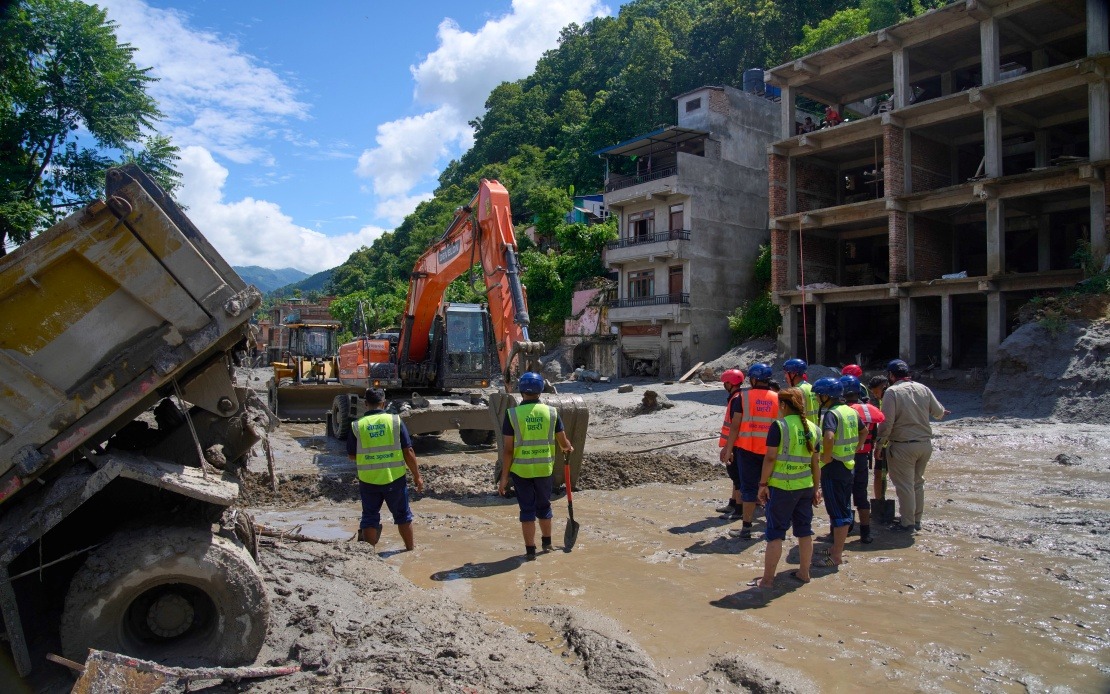
Nepal has mobilised a dedicated Emergency Response Team through its Foreign Ministry to centralise the search for numerous foreign nationals who vanished when the Bhotekoshi River flooded catastrophically in the Rasuwa district. The newly formed coordination unit represents the government's attempt to manage what has become a multinational humanitarian crisis, with families across multiple countries anxiously awaiting news of loved ones caught in one of the region's worst natural disasters in recent years.
The ERT functions as the primary information hub for Nepal's disaster response apparatus, tasked with verifying reports about affected foreign nationals and maintaining communication channels with their home countries. By consolidating efforts across government agencies, rescue teams, and international partners, the structure aims to prevent duplication of search efforts and ensure that every credible report receives proper investigation. This coordinated approach proves essential given the scale of the missing persons crisis—more than 800 individuals remain unaccounted for as of the latest update, many of them international visitors unfamiliar with Nepal's terrain.
Contact channels have been widely publicised to facilitate information gathering, with the ministry accepting reports via telephone hotlines and WhatsApp at +977-9744441227 and +977-9744441228, as well as email submissions directed to [email protected]. This multi-platform approach reflects the reality that families worldwide may be attempting to locate relatives through various means, and the ERT recognises that even fragmentary information could prove vital to pinpointing survivors. The accessibility of these reporting mechanisms underscores Nepal's recognition that international cooperation and public participation are fundamental to resolving the crisis.
The calamity, which struck without warning on Wednesday morning, transformed what should have been a routine tourist experience into a tragedy of overwhelming proportions. As Thursday evening approached, confirmed fatalities had reached 359 according to Nepali authorities, though the true toll may prove higher as rescue teams penetrate remote areas where communication remains sporadic. The Bhotekoshi River, swollen by intense precipitation, unleashed its fury across the Rasuwa district with such force that entire sections of settlements were swept away, leaving survivors and recovery workers to navigate treacherous conditions.
Among the unaccounted for are hundreds of foreign tourists, predominantly nationals of India and Nepal itself, who were exploring the region's natural attractions when the disaster unfolded. The concentration of visitors from South Asian nations reflects Nepal's popularity as a trekking and mountaineering destination, particularly during seasons favourable for high-altitude activities. However, this clustering also means that the disaster has ripple effects across the subcontinent, with multiple governments now engaged in coordinating their own responses.
Malaysia has taken note of the unfolding situation, with Foreign Minister Datuk Seri Mohamad Hasan addressing the status of Malaysian nationals caught in the flooding. The minister acknowledged that the precise number of Malaysians remaining missing has not yet been confirmed through official channels in Nepal, creating uncertainty for Malaysian families awaiting concrete information. This communication gap illustrates one of the immediate challenges facing the ERT: verifying identities and accounting for individuals from dozens of countries when documentation may be lost, destroyed, or absent entirely from rescue scenes.
The establishment of the Emergency Response Team represents a recognition by Nepal's government that this disaster transcends national boundaries and demands a coordinated diplomatic response. Foreign ministries of affected countries maintain direct communication with the ERT, allowing for rapid information exchange and ensuring that families receive timely updates through official channels. This diplomatic architecture becomes especially important for countries with smaller populations in Nepal, where Nepalese authorities might otherwise lack readily available rosters of visitors.
Search and rescue operations continue with intensity, though weather conditions and difficult terrain constrain progress. The 31 individuals rescued thus far offer hope that many missing persons may yet be discovered alive, though the passage of time and harsh mountain conditions work against such outcomes. Recovery teams from Nepal and potentially from other nations operate simultaneously, pursuing leads from survivors' accounts, satellite imagery, and local knowledge of terrain features that may shelter flood victims.
The broader context reveals Nepal's vulnerability to such catastrophes. The nation's geography—mountainous and prone to rapid water runoff—creates conditions where sudden flooding can escalate from localised incident to regional disaster within hours. Climate scientists have noted that extreme weather events appear to be increasing in frequency and intensity across the Hindu Kush Himalayan region, suggesting that Nepal faces mounting exposure to such threats in coming years. The Rasuwa flooding therefore serves as a sobering reminder of the risks faced by both residents and tourists in mountainous South Asia.
For Malaysian visitors and their families, the situation underscores the importance of maintaining communication with diplomatic missions when travelling in remote regions prone to natural hazards. The Foreign Ministry's outreach reflects standard protocols for Malaysian government crisis response, though the uncertainty regarding exact numbers of affected citizens reflects the challenges inherent in disaster coordination across international borders. The eventual resolution of the situation will likely inform how Malaysia and other nations approach crisis management protocols for regional disasters.
As the ERT continues its work, the coming days will prove crucial in determining outcomes for the hundreds still missing. While rescue operations traditionally show diminishing returns after the initial 72-hour window, the specific conditions of this flooding—involving river dynamics and mountain terrain—mean that survivors may be discovered in unexpected locations. The coordination mechanisms now in place position Nepal to mount the most comprehensive search response feasible, though the sheer scale of the disaster means that tragedy remains likely for many families awaiting news.

