Nepal is contending with an extraordinarily severe natural disaster triggered by widespread flooding across the nation, with Prime Minister Balendra Shah describing the unfolding crisis as both unimaginable and deeply tragic. The full extent of the calamity remains unclear as rescue authorities scramble to piece together casualty figures and locate missing persons scattered across affected regions. The deluge has claimed hundreds of lives, though the final death toll appears far from certain given the difficulty in reaching isolated communities and accessing disaster zones.
The scale of this meteorological catastrophe has overwhelmed Nepal's disaster response infrastructure, forcing the administration to acknowledge the extraordinary challenge of coordinating rescue and relief operations across terrain that becomes increasingly inaccessible when inundated by floodwaters. Multiple districts report serious disruption to communication networks, making it extraordinarily difficult for officials to obtain comprehensive casualty data or assess structural damage with any precision. The monsoon-driven flooding represents the kind of natural emergency that tests national resilience, particularly in a country where monsoon rains recurrently trigger seasonal disasters.
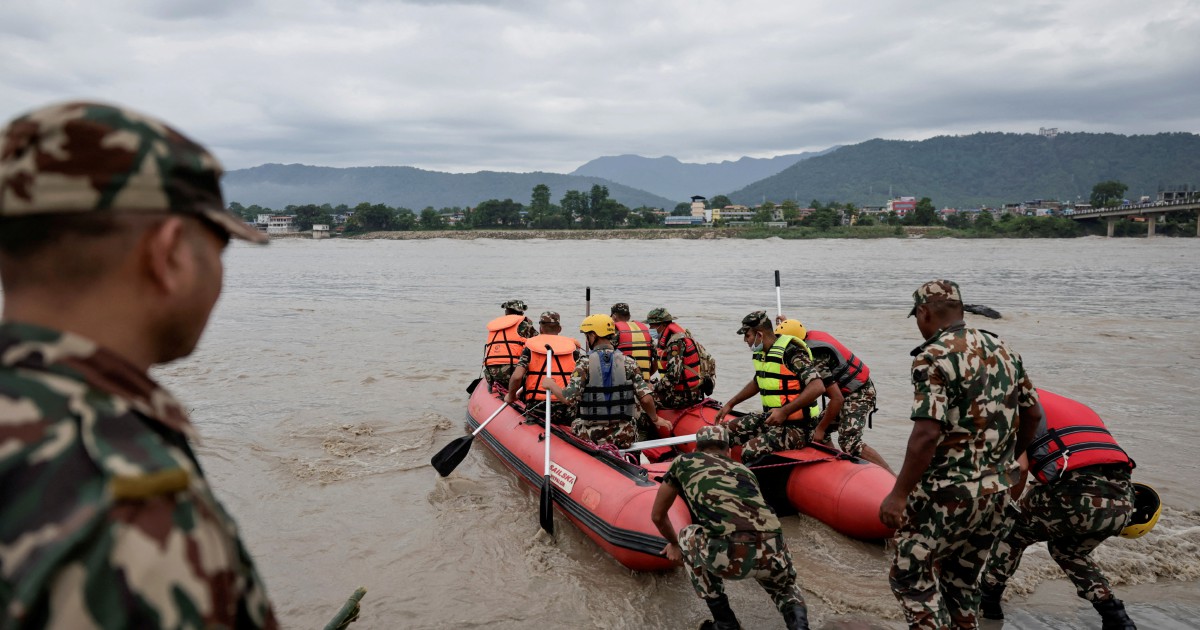
Thousands of individuals have been reported missing by their families, adding an anguished dimension to the ongoing emergency response. The absence of reliable accounting reflects both the geographical challenges inherent in a mountainous nation and the administrative strain of managing simultaneous crises across multiple jurisdictions. Search and rescue teams, working under challenging conditions with limited visibility and dangerous water currents, continue to push into flood-affected areas seeking survivors and recovering bodies.
The disaster strikes Nepal at a moment when the nation has only recently recovered from previous natural calamities. Repeated flooding events in recent years have exposed persistent vulnerabilities in infrastructure resilience and early warning systems. Climate scientists have increasingly linked such intensifying precipitation patterns to broader atmospheric changes, suggesting that Nepal faces not merely a temporary crisis but potentially a recurring pattern of more severe monsoon conditions.
For Southeast Asian observers, the Nepal disaster carries sobering implications. The region's monsoon-dependent nations—from Bangladesh to Thailand and Malaysia—all face similar vulnerabilities to extreme precipitation events. The inability of a centrally-governed state to rapidly assess casualties or coordinate comprehensive rescue responses underscores how vulnerable the Himalayan region remains, particularly in areas where terrain and development patterns concentrate populations in flood-prone valleys.
International aid agencies and neighboring governments have begun mobilizing resources, though the logistics of delivering assistance to Nepal's mountainous regions present substantial difficulties. India, sharing extensive borders with Nepal and experiencing its own monsoon challenges, has historical experience in cross-border disaster response and has traditionally provided crucial assistance during such emergencies.
The broader question for policymakers across South and Southeast Asia concerns whether current infrastructure investments and early warning systems are adequate to address what appears to be an intensifying pattern of extreme weather events. Nepal's current struggle to establish the basic facts of the disaster—how many deceased, how many missing, how extensive the damage—suggests that even fundamental disaster assessment mechanisms require strengthening in the face of increasingly severe natural phenomena.
The psychological toll on surviving communities extends beyond immediate physical losses. Families separated from loved ones, displaced populations seeking temporary shelter, and entire agricultural seasons disrupted by floodwaters create cascading secondary effects that can persist for years after water recedes. Rural economies dependent on seasonal harvests face particular vulnerability when monsoon flooding destroys crops and irrigation infrastructure.
For Malaysia and other Southeast Asian nations monitoring this crisis, the lessons are instructive. While Malaysia's own flood management systems have evolved considerably, the Nepal situation demonstrates that even with governmental commitment, mountainous terrain and extreme precipitation can overwhelm response capabilities. The investment in advanced early warning systems, redundant communication networks, and pre-positioned relief supplies represents critical infrastructure that must continually evolve to match increasingly severe weather patterns.
Prime Minister Shah's characterization of the situation as unimaginable reflects not merely rhetorical understatement but genuine administrative challenge in confronting a disaster of such magnitude. As rescue operations intensify and casualty figures inevitably rise, Nepal faces the immense task of simultaneous response and recovery—attending to immediate lifesaving efforts while beginning preliminary damage assessment that will shape reconstruction efforts for months to come.

