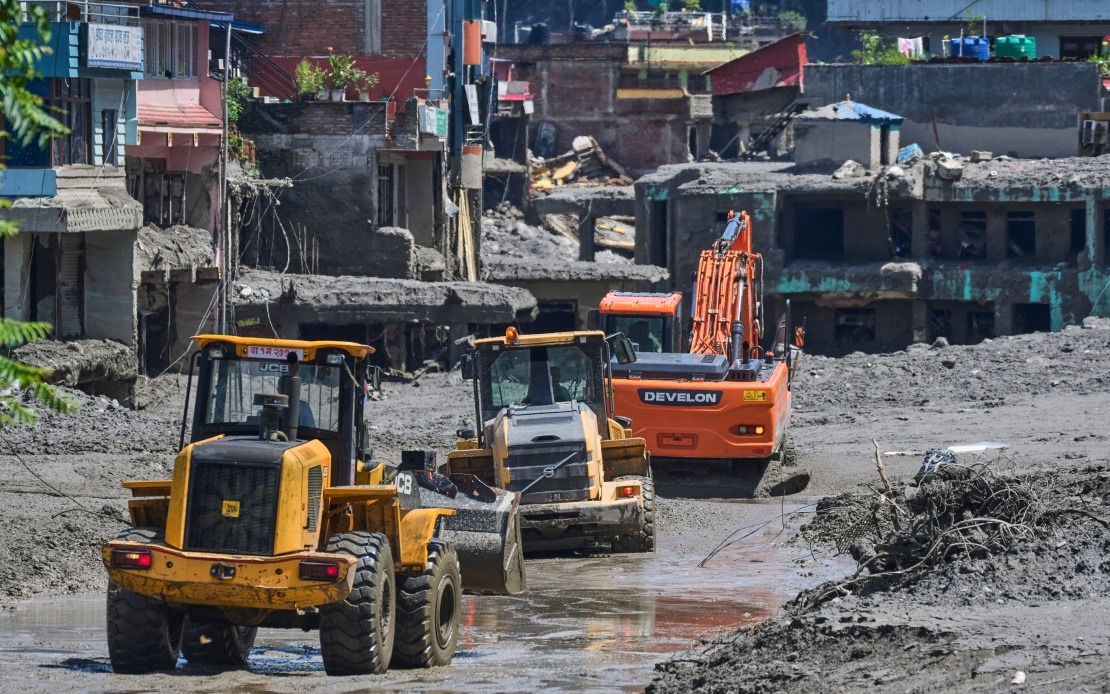
Nepal faces a massive humanitarian crisis following devastating floods that swept through the Bhote Koshi River on Wednesday, prompting the government to mobilise its full emergency response apparatus across affected regions. The calamity has claimed significant lives and inflicted severe structural damage across four key districts, with authorities racing against time to locate survivors and assess the true scale of destruction.
The Rasuwa, Nuwakot, Dhading and Gorkha districts bore the brunt of the disaster, experiencing substantial loss of life alongside widespread devastation to residential areas, agricultural land and critical infrastructure. The flooding has created an immediate humanitarian emergency requiring coordinated intervention across multiple agencies and government departments. Initial assessments indicate that entire communities have been displaced, with homes swept away and essential services severely disrupted or destroyed.
According to a statement from the Embassy of Nepal in Kuala Lumpur released Thursday, rescue teams and security personnel continue intensive operations to locate missing persons and extract those trapped by floodwaters. Simultaneously, authorities are conducting detailed surveys to quantify human casualties and property damage. The government's Emergency Management Division has prioritised establishing temporary shelters, distributing emergency provisions and restoring basic utilities in devastated settlements.
The Prime Minister's office has issued an urgent appeal for financial contributions from domestic and international donors to support immediate relief and long-term reconstruction efforts. This appeal recognises that the scale of the disaster far exceeds what local resources can manage independently, necessitating substantial external assistance to fund the safe relocation of displaced families and facilitate their eventual rehabilitation and full recovery.
For Malaysians with connections to Nepal and the wider Nepali diaspora based in Malaysia, the embassy has made a direct call for support. Nepali nationals, community associations, business leaders and humanitarian-minded individuals have been urged to contribute financially to assist flood victims. The embassy emphasises that donations channelled through official mechanisms will ensure resources reach those most in need efficiently and transparently.
The government has established two primary funding mechanisms through which international and domestic supporters can contribute. The Prime Minister's Disaster Relief Fund and the Prime Minister's Relief Fund both maintain official bank accounts at major Nepali institutions. Rastriya Banijya Bank holds accounts numbered 1130100003762001 and 1130100000006006, while Nepal Bank Limited manages accounts 00211600510039000003 and 00200100510039000001. Each account is designated specifically for disaster response and recovery operations.
To facilitate donations from Malaysia and other countries, the embassy has provided QR codes linked to these official accounts on its Facebook page, streamlining the contribution process for international donors. This digital infrastructure reflects growing recognition that modern disaster relief requires accessible, transparent payment mechanisms enabling rapid fund mobilisation from diaspora communities.
The Bhote Koshi River flooding represents one of Nepal's most significant natural disasters in recent years, occurring amid increasing climate volatility across the Himalayan region. Such extreme weather events are becoming more frequent and intense, straining Nepal's disaster preparedness infrastructure and highlighting the nation's vulnerability to environmental shocks despite substantial recent investments in early warning systems.
For Malaysia's substantial Nepali workforce and business community, the disaster carries both immediate and structural significance. Beyond humanitarian concern for affected relatives and communities, the flooding underscores Nepal's ongoing development challenges and infrastructure fragility—factors that influence regional stability and migration patterns. The success of reconstruction efforts will likely shape economic prospects and livelihood opportunities across Nepal in coming years.
The government's emphasis on coordinated emergency response, transparent fund management and international partnership reflects lessons learned from previous disasters. By establishing clear donation channels, publicly communicating relief efforts and actively soliciting international support, Nepal's authorities aim to demonstrate responsible stewardship of crisis resources while maintaining donor confidence—crucial for sustaining financial flows throughout the protracted recovery process.
For Malaysian readers and institutions seeking to assist, engaging with embassy-verified channels ensures contributions directly support verifiable relief operations rather than becoming dispersed through informal networks. The provision of specific account numbers and QR codes represents official government commitment to accountability, a critical prerequisite for mobilising the substantial resources these devastating floods will require.

