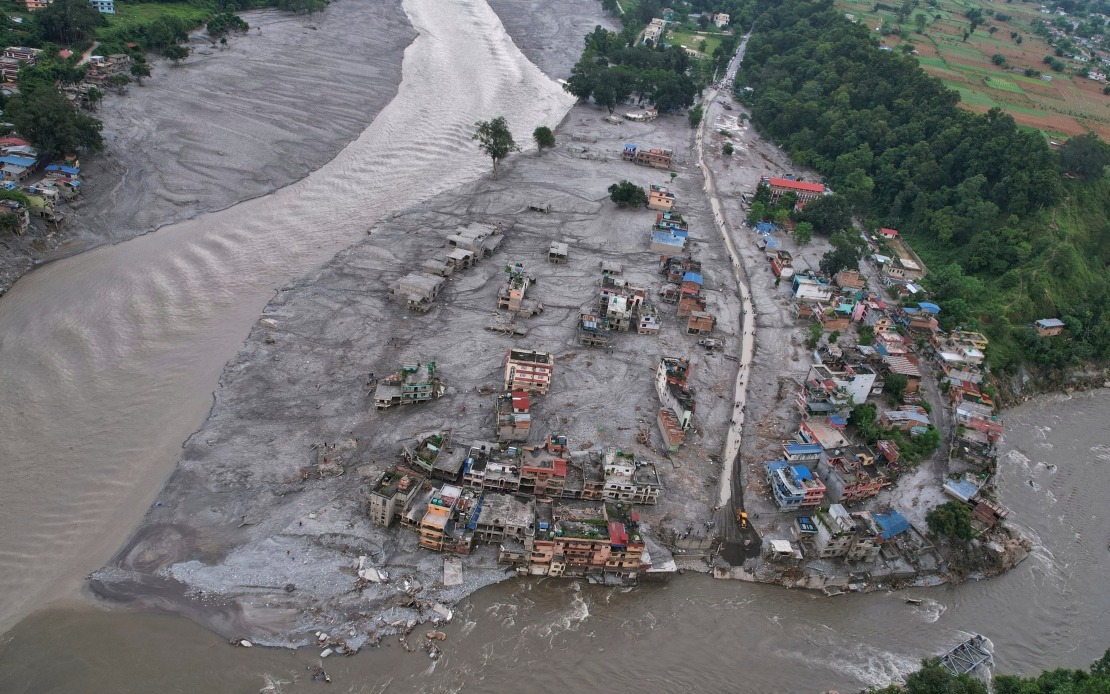
Nepal is proceeding cautiously in its response to offers of international assistance, choosing to assess the full scope of its needs before welcoming search and rescue teams from additional countries. The decision reflects the scale and complexity of the disaster that unfolded on Wednesday when the Bhote Koshi and Trishuli rivers burst their banks, triggering devastating flooding across central and northern regions of the country.
At present, Nepal has confirmed its acceptance of search and rescue operations from four nations: Australia, China, India and South Korea. According to Mohd Firdaus Azman, the charge d'affaires at the Malaysian Embassy in Kathmandu, Nepalese authorities are deliberately taking time to evaluate conditions on the ground before committing to assistance from any additional countries. The measured approach reflects both the logistics of coordinating multiple international teams and the need to understand exactly where rescue efforts can be deployed most effectively.
The particular circumstances that prompted Nepal to accept help from those four countries relate directly to the presence of their nationals working at hydropower facilities struck by the disaster. Many of these installations, including those still under construction, were hit hard by the flooding, leaving workers trapped in underground spaces and tunnel systems. Reports from Nepalese media indicate that more than 900 workers across eleven hydropower projects remain trapped in tunnels and underground powerhouses, creating an urgent and specialised rescue challenge.
Malaysia has joined numerous countries offering to help Nepal navigate this crisis. Prime Minister Datuk Seri Anwar Ibrahim announced that Malaysia is actively coordinating the delivery of relief supplies to the affected nation and is exploring the possibility of deploying the Malaysian Special Search and Rescue Team (SMART) to assist in operations. The SMART unit represents one of Malaysia's most capable rapid-response resources, trained to handle complex rescue scenarios in difficult terrain and conditions.
The scale of the human tragedy continues to mount as authorities piece together the full picture of the disaster. As of Saturday, reports indicated that at least 633 people across Nepal and China had lost their lives in Wednesday's flooding, with nearly 3,000 others unaccounted for. Among the missing are hundreds of foreign nationals, many of them workers at the hydropower facilities or tourists caught in the affected regions. For Malaysian families awaiting news, the situation remained deeply uncertain, with 55 Malaysians in Nepal and 36 Malaysians in China remaining uncontactable as of Saturday evening according to Malaysia's Foreign Ministry.
The decision by Nepal to take a measured approach to additional international assistance underscores the complexities involved in coordinating large-scale disaster response operations. While rapid mobilisation of rescue teams can save lives, deploying multiple international contingents without clear coordination can create logistical bottlenecks and inefficiencies. Nepal's authorities appear to be balancing the urgency of the rescue mission with the practical realities of managing international operations in an extremely challenging environment.
For Southeast Asian nations like Malaysia, the disaster carries particular relevance given the region's vulnerability to similar flood scenarios and the increasing frequency of extreme weather events linked to climate change. The response by Nepal and the international community offers lessons in how developing nations can coordinate disaster relief and when best to accept external support. Malaysia's readiness to provide specialist rescue capabilities through SMART demonstrates the region's growing capacity to respond collectively to major disasters.
The presence of such large numbers of foreign workers at Nepali hydropower projects reflects the growing internationalisation of infrastructure development across South and Southeast Asia. This interconnectedness means that disasters in one country can quickly create humanitarian concerns across multiple nations, requiring coordinated diplomatic and operational responses. The challenge of accounting for and assisting hundreds of foreign nationals scattered across a disaster zone adds another layer of complexity to Nepal's already overwhelming rescue and recovery efforts.
As Nepal conducts its assessment of the situation, authorities must balance immediate rescue needs with the logistics of resource allocation and coordination. The decision to accept assistance from Australia, China, India and South Korea suggests that these nations have particular advantages—whether through geographical proximity, existing diplomatic channels, or the presence of nationals requiring assistance—that make their involvement straightforward. Additional countries offering aid will be evaluated based on similar criteria and the actual capacity that exists for their teams to contribute meaningfully.
The coming days will be critical in determining whether Nepal's measured approach succeeds in channelling international assistance effectively or whether the disaster's scope eventually requires even more widespread international intervention. For Malaysian officials and families with loved ones in Nepal, the focus remains on securing accurate information about the missing and ensuring that rescue teams, whether from Malaysia or other nations, can access the affected areas and conduct operations efficiently. The situation demonstrates how natural disasters transcend borders and require thoughtful, coordinated international responses that balance the desire to help with the practical realities of disaster management.

