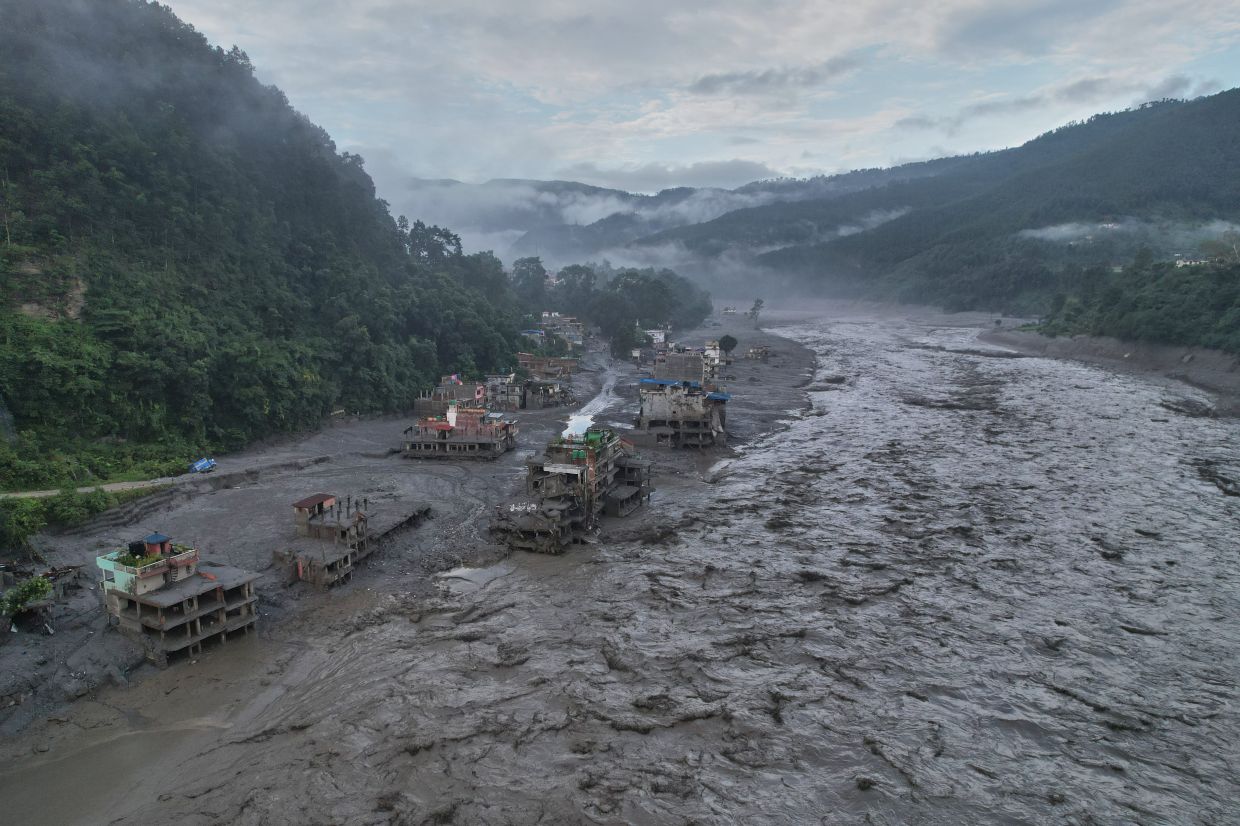
The torrent of water and debris that devastated Nepal last week arrived with almost no forewarning, leaving residents just minutes to flee before their communities were consumed by the deluge. What unfolded as one of South Asia's worst natural disasters in recent years has drawn urgent attention to a fundamental vulnerability in how the Himalayan region monitors and responds to mountain hazards—a gap that threatens not only Nepal but the entire region's exposure to increasingly volatile high-altitude weather patterns.
According to Dharam Raj Uprety, chief executive of Nepal's National Disaster Risk Reduction and Management Authority, the catastrophe highlighted the inadequacy of existing monitoring infrastructure in areas where warnings are most critical. "People even didn't get five minutes of lead time," he explained to Bloomberg, underscoring the razor-thin margin between detection and disaster in these unforgiving terrain. The immediate cause was catastrophic, but the underlying problem runs far deeper: Nepal lacks the foundational weather observation networks needed to detect emerging threats before they materialise into tragedy. Uprety identified insufficient high-altitude monitoring stations as a key deficiency, compounded by the absence of effective mechanisms to share meteorological data across international borders—a particularly pressing issue given Nepal's shared watershed systems with China.
The floods, which claimed at least 800 lives and left more than 3,000 people unaccounted for, were triggered when a glacial mass collapsed, unleashing torrents of ice, rock, mud and water that raced through mountain valleys with devastating force. Eyewitness footage captured the surreal horror of communities caught in the path: walls of water and sediment engulfed buildings whole, severed bridges and power infrastructure, and obliterated everything from vehicles to forests in seconds. Preliminary estimates suggest reconstruction costs could exceed US$5 billion, comparable to Nepal's lengthy recovery from the devastating 2015 earthquake that took nearly seven to eight years to complete, according to Binod Chaudhary, Nepal's sole billionaire and Chaudhary Group chairman.
The disaster exposes a critical paradox affecting mountain economies throughout the Himalayas. While Nepal possesses some monitoring capacity in downstream areas, vast stretches of high alpine terrain remain poorly observed or completely invisible to authorities. The fundamental challenge is economics and logistics: installing and maintaining weather stations at extreme altitude demands extraordinary expense and technical capacity that most developing nations cannot sustain. Temperature sensors, precipitation gauges, and seismic equipment must function reliably in conditions of extreme cold, winds, and isolation. The result is that authorities cannot effectively track the rapid environmental changes that precede disasters—shifting permafrost, destabilising glacier masses, or the formation of dangerous glacial lakes that could fail catastrophically.
Climate science adds another troubling dimension to this picture. Planetary warming is destabilising the Himalayan environment faster than monitoring systems can keep pace. Thawing permafrost weakens the bedrock that binds high-altitude slopes together, while accelerating glacier melt creates unstable lakes that can breach their natural dams. Satellite analysis suggests that bedrock collapse triggered this specific catastrophe, though scientists remain cautious about directly linking it to climate change. Nevertheless, the mechanism is clear: warming weakens the structural integrity of mountains, and without adequate warning systems, such collapses will continue catching communities unprepared.
The cross-border dimension adds geopolitical complexity to what might otherwise be a purely technical problem. China, which shares the Tibetan Plateau with Nepal's northern border regions, possesses weather stations and glacier monitoring networks across its territory. These could provide invaluable early warning data for threats originating upstream. However, formalised mechanisms for real-time information sharing remain limited. Following the disaster, China's leadership called for accelerated glacier surveys across the Tibetan Plateau and ordered stronger monitoring systems, according to state media. The Chinese Embassy in Kathmandu stated that Beijing "has always made every effort, within the limits of existing technologies, to conduct monitoring, assessment and analysis and have shared important information with the Nepali side in a timely manner." Yet the embassy statement notably did not specify whether China had provided advance warning of the August 26 catastrophe.
For Nepal and other Himalayan nations, this raises uncomfortable questions about the adequacy of existing cooperation frameworks. Transboundary disaster management requires not merely goodwill but institutional mechanisms that transcend national borders—something particularly delicate in a region where geopolitical tensions can complicate scientific collaboration. Uprety framed the problem philosophically: "Unless we stop making boundary for climate information, disasters originating in remote mountain areas will remain difficult to anticipate." This appeal captures the essential tension: mountains move water and weather across borders indiscriminately, but bureaucratic and political barriers constrain information flows in ways that leave downstream populations dangerously exposed.
The implications extend beyond Nepal. Across Southeast Asia and South Asia, millions depend on glacier-fed river systems originating in the Himalayas. Bangladesh, India, Pakistan, and downstream Southeast Asian nations all rely on Himalayan snowmelt for agriculture, hydropower, and drinking water. Any failure in cross-border early warning systems affects not just mountain communities but urban populations far from the source. Improved forecasting and earlier warnings could save lives by allowing communities to evacuate, protecting infrastructure investments, and minimising disruption to tourism—a vital economic pillar for Nepal and other mountain nations that generates crucial employment and foreign exchange.
Nepalesecurity authorities are now moving to address these vulnerabilities. The National Disaster Risk Reduction and Management Authority has drafted a comprehensive roadmap focused on strengthening early warning systems and extending lead time for community preparation. However, implementing such systems requires sustained investment that many developing nations struggle to afford. International financing, technical assistance from advanced economies, and cooperative regional frameworks will likely prove essential to closing the gap between current capacity and the scale of threat posed by a rapidly warming climate.
The immediate crisis has catalysed bureaucratic action, but the deeper lesson concerns the structural vulnerability of mountain societies in an era of climate instability. Nepal's tragedy represents not merely a local disaster but a signal that unless monitoring infrastructure and international cooperation improve substantially, similar catastrophes will recur with alarming frequency. The question now is whether governments and international organisations will respond with sufficient urgency and resources to transform that warning into action.

