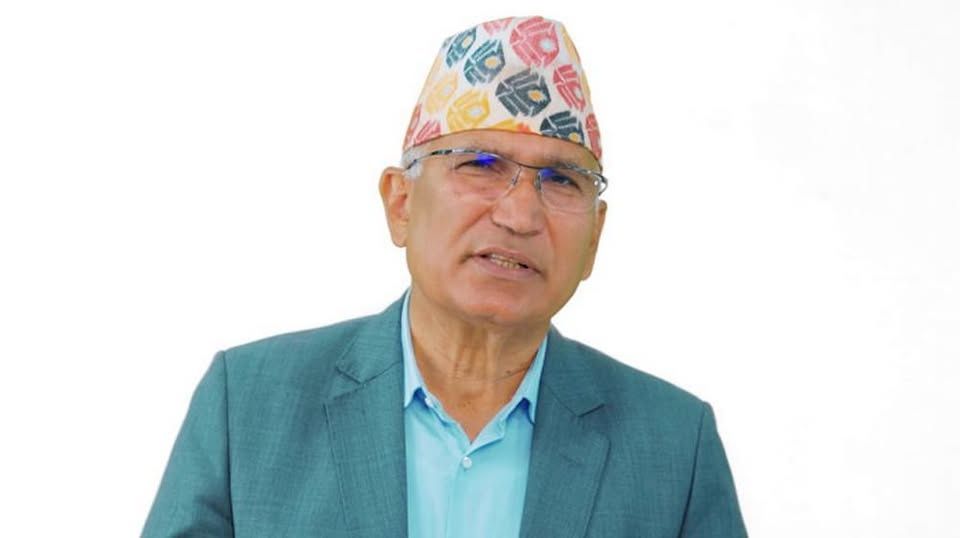
Nepal's authorities have intensified their anti-corruption enforcement by detaining Bishnu Paudel, the country's former finance minister, in connection with alleged money-laundering activities. The arrest on Monday marks a significant escalation in the government's pursuit of senior officials implicated in financial misconduct, according to Nepal Police spokesman Abhi Narayan Kafle, who confirmed that investigators would examine Paudel's involvement in the illegal transfer and concealment of funds.
Paudel held considerable influence within Nepal's political establishment as vice-chair of the Communist Party of Nepal-UML, the party led by former Prime Minister KP Sharma Oli. His detention represents the latest consequence of the nation's turbulent political upheaval in 2025, when widespread public discontent culminated in demonstrations that forced Oli's government from office. The subsequent election in March brought Balendra Shah, a former musician-turned-political leader, to the premiership with an explicit mandate to dismantle entrenched corruption networks that have long plagued Nepal's governance structures.
The arrest has immediately become contentious along political lines, with Oli dismissing the charges as orchestrated persecution rather than legitimate law enforcement. The former premier characterised the detention as a "political stunt" designed to eliminate rivals and claimed that Shah's administration was exhibiting authoritarian governance patterns inconsistent with democratic principles. This accusation reflects deep tensions between Nepal's competing political factions and raises questions about whether anti-corruption efforts can remain impartial in a polarised environment where control of investigative agencies remains concentrated within the ruling coalition.
The Communist party's official response, delivered through publicity department head Niraj Acharya, attempted to maintain an appearance of institutional restraint while signalling underlying grievances. Acharya stated the party would respect judicial processes and that its leadership remained prepared to face whatever investigations might follow, yet simultaneously condemned what he characterised as the government's "discriminatory behaviour" and vowed organised resistance to what the party perceives as selective prosecution. This rhetorical stance reflects the delicate balance opposition parties must maintain between appearing law-abiding and mobilising supporters against what they view as weaponised justice.
Paudel's case follows a troubling precedent established just months earlier when Oli himself and his former interior minister Ramesh Lekhak were apprehended in March, one day after Shah assumed office. Both men were questioned regarding their alleged responsibility for a deadly security force response to civilian protests in 2025, during which at least 76 people died and more than 2,500 sustained injuries. Despite prolonged detention lasting nearly two weeks, neither official faced formal charges, and both continue to deny involvement in the violence. The lack of prosecutorial follow-through in these high-profile cases has fuelled suspicions that the arrests served primarily as political messaging rather than genuine accountability mechanisms.
The underlying trigger for Nepal's 2025 upheaval reveals the complex grievances motivating public anger. Demonstrations initially coalesced around opposition to a social media ban, but rapidly expanded into a broader indictment of systemic corruption and economic mismanagement that had eroded public confidence in state institutions. The government's violent response to these protests—during which security forces killed dozens and wounded thousands over a two-day period—became the defining moment that crystallised public demand for wholesale political change and provided the momentum necessary to unseat the ruling coalition.
Beyond Paudel's detention, Nepal's anti-corruption apparatus is simultaneously pursuing another major investigation involving the nation's passport issuance system. The Commission for Investigation of Abuse of Authority has filed charges against 16 individuals in a procurement scandal centred on digital passport technology, with investigators alleging approximately $66 million in embezzled funds. The conspiracy allegedly involved the passport department's senior leadership and other state officials who exploited their positions to divert public resources through fraudulent contracts. Spokesman Suresh Neupane characterised the probe as focused on "embezzlement in e-passport procurement," indicating systematic plunder of resources designated for upgrading Nepal's identity documentation infrastructure.
These overlapping investigations demonstrate both the prevalence of high-level corruption throughout Nepal's state apparatus and the newly elected government's determination to prosecute cases that previous administrations might have shelved. However, the politicised atmosphere surrounding Paudel's arrest raises uncomfortable questions about whether Nepal can conduct impartial investigations when opposition parties occupy investigative positions through control of the prime minister's office. International observers and domestic civil society organisations will likely scrutinise whether subsequent proceedings maintain procedural fairness and credible evidence standards or devolve into retaliatory cycles of selective prosecution.
For regional observers, Nepal's anti-corruption campaign carries implications extending beyond national borders. Southeast Asian governments wrestling with similar governance challenges will monitor whether Nepal's approach succeeds in dismantling networks of institutional corruption or whether political polarisation ultimately undermines accountability efforts. The comparative outcome of Nepal's anti-graft drive—whether it produces genuine systemic reform or merely reshuffles which faction controls corrupt patronage networks—will influence how neighbouring democracies approach their own corruption crises and the feasibility of post-conflict governments simultaneously pursuing accountability and reconciliation.