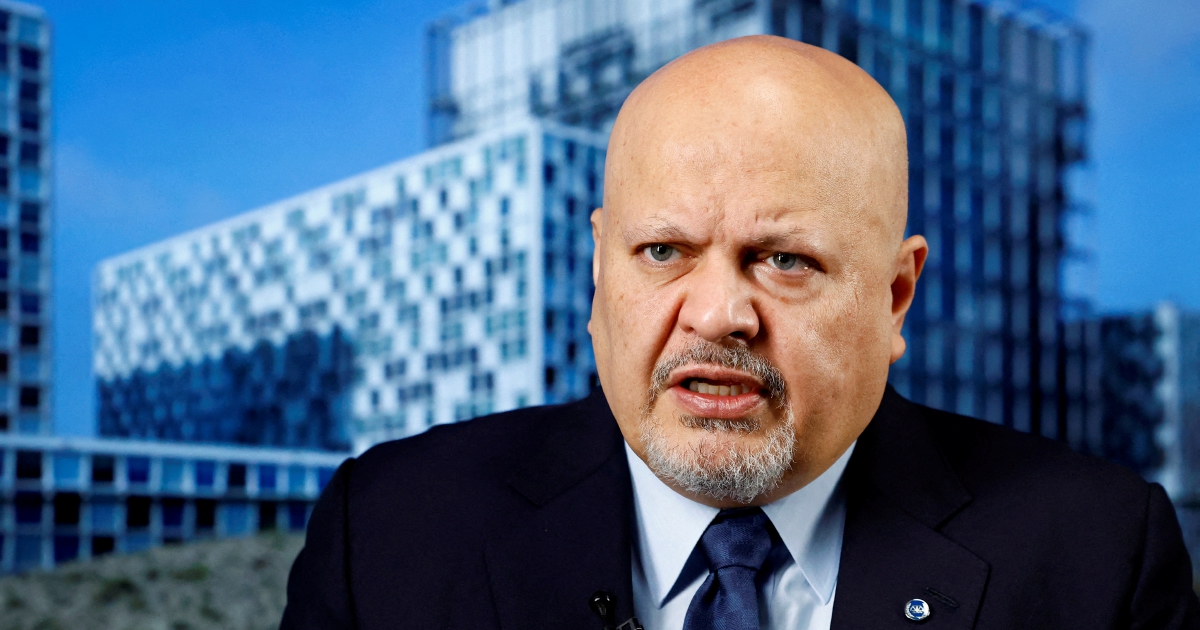
Israeli Prime Minister Benjamin Netanyahu has seized upon the departure of former International Criminal Court prosecutor Karim Khan as vindication, denouncing him on Sunday as a "con job" in the wake of serious allegations of sexual misconduct that precipitated his downfall. The timing of Khan's exit carries particular significance for Netanyahu, who himself faces an arrest warrant issued by the Hague-based tribunal over his conduct in Gaza.
Khan's removal represents one of the most damaging episodes in the ICC's recent institutional history, undermining the credibility of the world's only permanent international criminal court at a moment when it is investigating some of the planet's most politically fraught conflicts. The prosecutor's fall came following allegations that he engaged in sexual misconduct, creating an unprecedented crisis of leadership at an organisation designed to pursue accountability for the gravest crimes against humanity. For Netanyahu, Khan's departure offers a platform to cast doubt on the legitimacy of investigations and warrants that have already strained diplomatic relations between the court and several major powers.
Netanyahu's public criticism reflects a broader strategy by the Israeli government to undermine the ICC's authority and moral standing. By characterising Khan as fundamentally dishonest, Netanyahu connects the former prosecutor's personal conduct to questions about his professional judgment and motivations. This rhetorical approach aims to extend doubts about Khan's integrity to encompass the investigations he oversaw, including those touching on Israeli military operations. The messaging resonates particularly among Netanyahu's political base and international allies who have long questioned the court's impartiality and independence.
The controversy surrounding Khan's conduct also highlights the institutional vulnerabilities of the ICC, an organisation operating without the enforcement mechanisms available to national governments. Khan's position as prosecutor was not merely a legal role but a quasi-political one, given the court's mandate to investigate situations referred by the UN Security Council or member states. His departure leaves a vacuum in an institution already weakened by the withdrawal or non-cooperation of major powers, including the United States, Russia, China, and India.
For Malaysia and other Southeast Asian nations, Khan's removal carries implications beyond Israeli-Palestinian dynamics. The ICC has expanded its reach into the region, with investigations touching on Myanmar's treatment of the Rohingya minority and potential crimes in the Philippines. The institutional crisis triggered by Khan's dismissal may embolden governments in Southeast Asia that have resisted ICC jurisdiction or questioned the court's impartiality. Thailand, Vietnam, and Cambodia—nations with complicated histories regarding international justice—may interpret the prosecutor's fall as evidence that the court is vulnerable to challenges and that non-cooperation carries limited cost.
Khan's successor will inherit an organisation facing questions about prosecutorial judgment, ethical standards, and institutional legitimacy. The new prosecutor must navigate an extraordinarily complex geopolitical environment while rebuilding trust among member states and the international community. This person will confront investigations into situations in Ukraine, Palestine, Libya, and the Democratic Republic of Congo, all of which carry significant diplomatic sensitivities. The loss of institutional credibility stemming from Khan's exit may hamper future prosecutorial efforts, making it harder to secure cooperation from national governments in investigating suspects or gathering evidence.
Netanyahu's response to Khan's removal demonstrates how crises within international institutions can be weaponised for domestic and international political purposes. By publicly celebrating the prosecutor's departure, Netanyahu accomplishes multiple objectives: he strengthens his standing with domestic constituencies opposed to international scrutiny, he signals to allied governments that challenges to ICC authority are viable, and he casts aspersions on the legitimacy of investigations targeting Israeli officials. This approach reflects a broader pattern of Israeli policy toward the ICC, characterised by resistance to jurisdiction and efforts to undermine the court's credibility and independence.
The broader context for understanding Khan's dismissal involves the extraordinary pressures faced by international prosecutors operating in an increasingly polarised world. Khan pursued investigations in situations involving powerful states and non-state actors, navigating competing national interests and geopolitical tensions. The allegations against him, regardless of their merit, reveal the personal toll of serving in such a role and the vulnerabilities of individuals operating in high-stakes international positions. Yet they also expose structural weaknesses in an institution that lacks robust oversight mechanisms and operates in an environment where powerful actors have strong incentives to discredit it.
The ICC's credibility crisis extends beyond the Khan incident to encompass fundamental questions about the court's role and effectiveness. Member states increasingly question whether the institution serves justice impartially or whether it disproportionately pursues investigations in weak states while ignoring allegations involving powerful nations. Netanyahu's rhetorical assault on Khan feeds these existing doubts and suggests that international actors increasingly view the court as an institution whose authority can be effectively challenged. For the court to recover from this crisis, it will require not merely a change of leadership but institutional reforms that address underlying concerns about accountability, independence, and procedural fairness.

