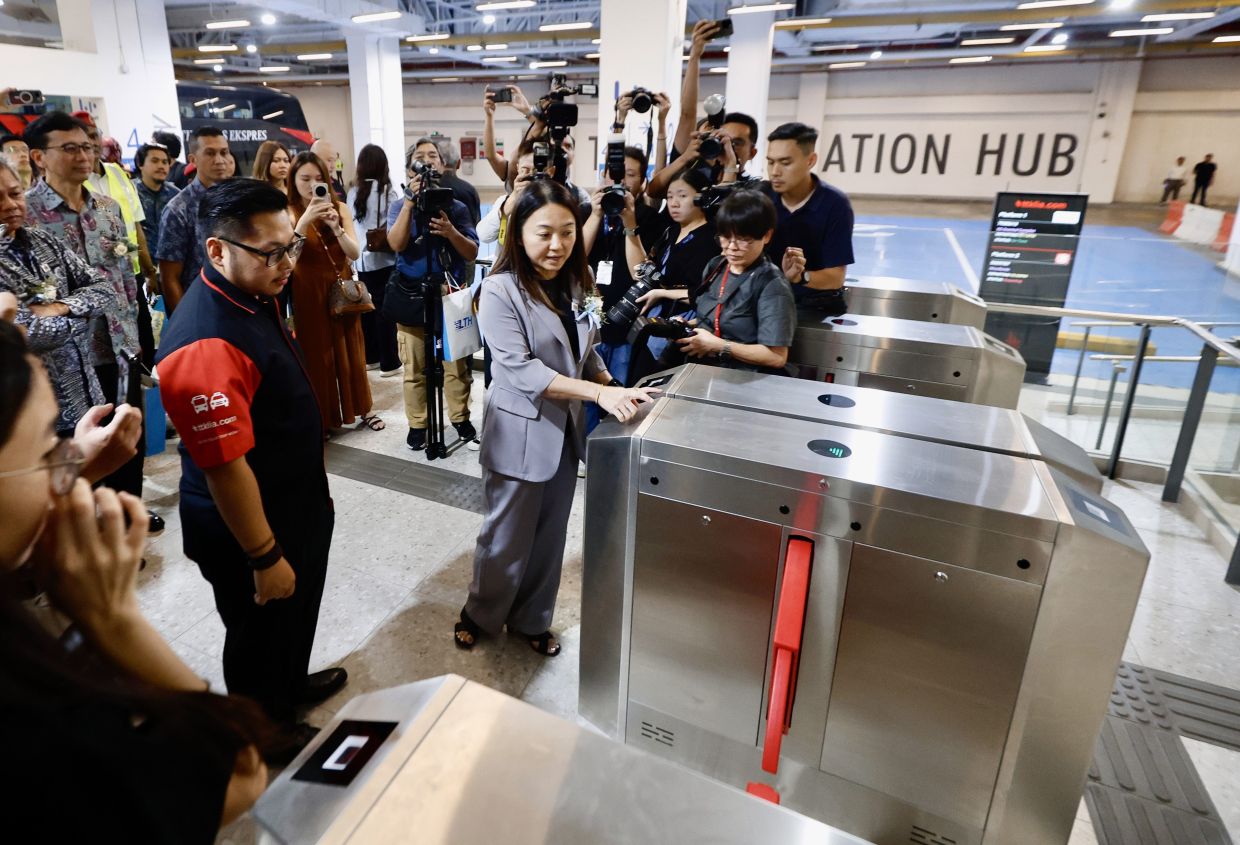
Kuala Lumpur's efforts to ease chronic congestion have reached a significant milestone with the official launch of the LaLaport Transportation Hub, a consolidated transit facility designed to streamline intercity bus operations in Malaysia's capital. Located within the Bukit Bintang City Centre mall at Level LG1's East Atrium, the hub is positioned to accommodate approximately 30 licensed bus operators and process an initial daily passenger load of around 3,000 commuters, with infrastructure capable of scaling to 10,000 passengers daily as demand grows.
Minister in the Prime Minister's Department (Federal Territories) Hannah Yeoh unveiled the facility on Thursday, July 16, emphasizing its strategic role in addressing Kuala Lumpur's transport challenges. The hub represents a coordinated response to the city's mounting mobility pressures, where data from Kuala Lumpur City Hall reveals that the urban core experiences 1.2 million vehicle entries daily alongside 5.5 million individual journeys crossing in and out of the metropolitan area. These statistics underscore the urgency behind consolidating passenger transport infrastructure and providing commuters with organized, accessible boarding and alighting facilities.
Operating under a license from the Land Public Transport Agency (Apad), the transportation hub commenced phased operations in February and has now reached full official status. The facility was engineered with passenger convenience at its core, featuring 11 dedicated bus bays that allow simultaneous boarding and drop-off operations without disrupting surrounding traffic patterns. The hub's internal layout incorporates an air-conditioned waiting lounge, multiple ticketing counters, self-service information kiosks, and digital passenger information screens that display real-time bus schedules, enabling commuters to make informed travel decisions.
The strategic location of the hub within Bukit Bintang City Centre provides significant advantages for multimodal connectivity. Its proximity to the Hang Tuah interchange grants passengers seamless access to the wider rapid transit network through a sheltered pedestrian walkway that connects directly to LRT and Monorail services. This integration transforms the hub from a standalone facility into a genuine interchange node, allowing passengers to combine intercity bus travel with urban rail services and creating a more cohesive public transport ecosystem across the Klang Valley.
Beyond conventional bus services, the hub functions as a comprehensive mobility platform offering diverse transport options tailored to different passenger needs. Shuttle van services connecting to both terminals of KL International Airport represent a critical component, addressing the significant demand from business travelers and tourists requiring convenient airport access. The facility also provisions demand-responsive transport services, which represent an emerging mobility model in Malaysia that allows passengers to book rides dynamically rather than adhering to fixed schedules, particularly beneficial for irregular travel patterns.
The transport hub's inclusion of taxi and e-hailing pick-up and drop-off zones reflects acknowledgment of the transforming transport landscape in Malaysia, where app-based mobility services have fundamentally altered commuter behavior. By providing dedicated areas for these services, the hub avoids competition with conventional buses for curb space while maintaining a unified passenger experience. This integrated approach suggests recognition that modern urban mobility requires accommodation of multiple transport modes rather than siloed operation of traditional services.
For Malaysian travelers accustomed to scattered bus terminals across Kuala Lumpur, the consolidated hub represents meaningful infrastructure modernization. Previously, passengers seeking intercity bus travel would navigate multiple departure points with inconsistent facilities, creating friction in journey planning. The LaLaport facility centralizes this experience, offering climate-controlled comfort and professional service standards comparable to transportation hubs in developed Southeast Asian cities like Singapore and Bangkok.
The phased operational approach since February allowed authorities to test systems and refine passenger flows before full official launch. This incremental rollout, culminating in the public announcement, demonstrates careful management of a complex infrastructure project involving coordination among 30 distinct operators, regulatory agencies, and the private mall operator. Such methodical deployment reduces risks of service disruption that could undermine confidence in the consolidated model.
The hub's design capacity of 10,000 daily passengers suggests ambitions extending beyond current demand, reflecting planners' expectations that consolidation and improved facilities will stimulate passenger growth from intercity bus services. This demand acceleration would require marketing campaigns positioning the hub as a premium travel option compared to fragmented alternatives. Success will partly depend on whether bus operators embrace standardized operations and schedule coordination, transforming the hub into a genuine network rather than merely a shared venue.
For Kuala Lumpur's broader sustainability agenda, the consolidated hub represents progress toward reducing private vehicle dependency. By providing superior facilities and seamless multimodal connections, authorities aim to make intercity bus travel more competitive against private car and ride-hailing options. Each passenger utilizing the hub's services represents one fewer vehicle contributing to the city's congestion and emissions challenges, making the facility's ultimate success measurable in traffic flow improvements across the metropolitan area.
The launch also signals Malaysia's ongoing integration into regional urban mobility standards. Modern consolidated transport hubs have become benchmarks for Southeast Asian cities managing rapid urbanization and congestion, and the LaLaport facility brings Malaysian practices closer to international best practices in passenger amenities and operational efficiency. Success in Kuala Lumpur could catalyze similar developments in other Malaysian cities facing comparable transport pressures.

