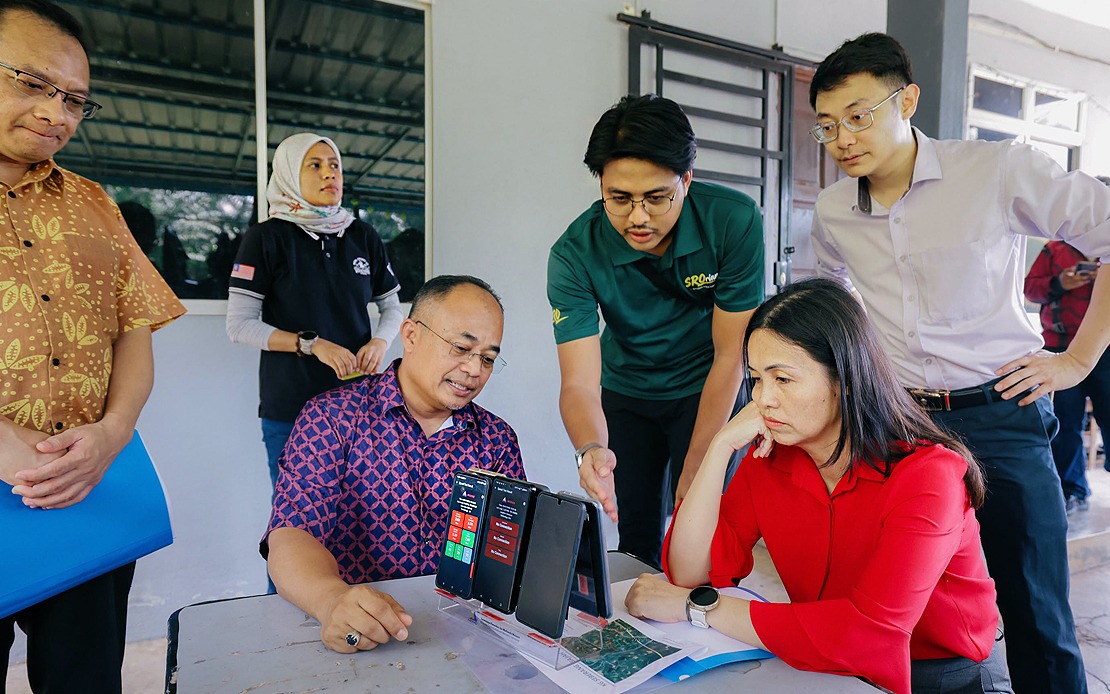
The digital divide affecting residents of Kampung Seberang Gajah in Tangkak is set for resolution with the imminent construction of a dedicated telecommunications tower, addressing a longstanding connectivity problem that has hindered the rural community's access to essential online services. Deputy Communications Minister Teo Nie Ching made the announcement following an on-site assessment of current network performance conducted jointly with the Malaysian Communications and Multimedia Commission (MCMC) and representatives from service providers operating in the area.
The connectivity challenges faced by Kampung Seberang Gajah residents stem not from a complete absence of telecommunications infrastructure but rather from inadequate coverage delivered by two existing towers in proximity to the locality. Despite their presence, these facilities have consistently failed to provide the service levels necessary to meet contemporary demands for reliable internet access, creating a coverage blind spot that has left the community underserved relative to urban standards. This gap between infrastructure presence and actual service delivery represents a common challenge across rural Malaysia, where physical tower placement does not always translate into effective signal penetration across all populated areas.
In response to these deficiencies, the MCMC has taken direct action by mandating telecommunications service providers to undertake construction of a new tower specifically designed to serve the Kampung Seberang Gajah locality. This regulatory intervention reflects growing recognition at the federal level that market forces alone have not adequately addressed rural connectivity gaps, requiring active government direction to ensure equitable service distribution across the nation's disparate regions. The decision underscores the importance placed by communications authorities on achieving digital inclusion objectives embedded in Malaysia's broader development agenda.
The detailed planning phase for the new telecommunications facility has already been completed, with project specifications finalised and design considerations integrated into the construction proposal. The implementation timeline now depends critically on securing formal approval from the relevant local authority, a procedural requirement that must precede any physical groundwork. The construction company responsible for the project currently awaits this critical permit, representing the final administrative hurdle before actual site development can commence. This permitting stage, while necessary for regulatory oversight and community protection, inevitably introduces scheduling uncertainty into the project delivery timeline.
Teo's visit to Kampung Seberang Gajah included engagement with multiple stakeholders representing different levels of government and private sector interests. Present during the telecommunications performance survey were Bukhari Yahya representing the State Affairs Sector, Rizal Abd Malek directing MCMC's Southern Region operations, and officials from various telecommunications companies whose services currently operate within the surveyed area. This multi-agency coordination highlights the complexity inherent in rural infrastructure development, where successful project execution requires alignment between federal regulators, state authorities, and commercial service providers with potentially divergent operational priorities.
The deputy minister specifically called for acceleration of the permit approval process, recognising that administrative procedures, while important, should not unnecessarily delay the delivery of essential connectivity infrastructure to underserved communities. Her directive to expedite both permitting and subsequent construction work reflects political commitment to addressing the rural-urban digital divide as a priority development issue. Such high-level advocacy can be instrumental in removing bureaucratic bottlenecks that sometimes delay infrastructure projects in Malaysia's federated governance system.
The implications of this tower construction extend beyond simple technical enhancement to internet speeds and reliability, though these improvements remain significant. For Kampung Seberang Gajah residents, enhanced connectivity promises improved access to digital government services, online educational resources, and e-commerce opportunities that have become increasingly central to economic participation and social inclusion. Students in the locality will benefit from better capacity for remote learning and online research, while small business entrepreneurs can more effectively leverage digital platforms for marketing and customer engagement. Agricultural producers in the surrounding region may also gain improved capacity for accessing commodity pricing information and market-linked agricultural advisory services increasingly delivered through digital channels.
From a broader Malaysian perspective, the Kampung Seberang Gajah project exemplifies the ongoing challenge of achieving comprehensive digital infrastructure coverage across geographically dispersed and economically diverse regions. While Malaysia has made substantial progress in telecommunications development, pockets of inadequate coverage persist, particularly in areas where terrain or population density make commercial tower deployment economically marginal without regulatory support. The explicit involvement of the MCMC in directing private providers to construct this facility demonstrates recognition that achieving universal service objectives requires regulatory intervention beyond relying on market-driven infrastructure development.
The Tangkak locality's situation also reflects the complexity of telecommunications planning in regions where multiple service providers operate. Rather than redundant competing infrastructure that might prove economically inefficient, the MCMC coordination approach aims to direct development toward filling genuine coverage gaps identified through performance assessment. This targeted infrastructure policy contrasts with both unregulated competition that might produce uneven geographic coverage and monopolistic provision that could constrain service quality improvements. The model reflects evolving international best practices in balancing regulatory oversight with competitive market dynamics.
For Malaysian telecommunications development more broadly, the Kampung Seberang Gajah initiative carries important signals about government commitment to digital inclusion objectives spanning the current decade. As Malaysia progressively transitions toward fifth-generation (5G) networks and subsequent technology generations, ensuring that rural areas receive adequate foundational connectivity becomes increasingly critical. The investment in improved coverage at Kampung Seberang Gajah, though relatively modest in scale, represents commitment to preventing digital infrastructure development from widening existing socioeconomic disparities between urban and rural communities.

