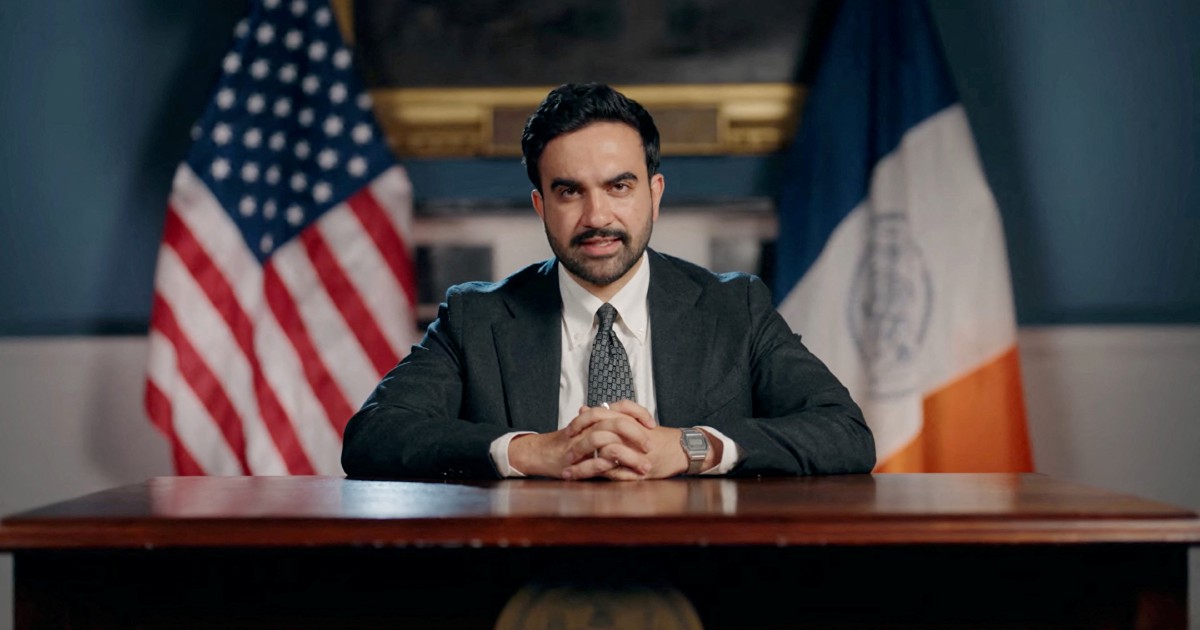
New York Mayor Zohran Mamdani on Tuesday deflected responsibility for enforcing an International Criminal Court arrest warrant against Israeli Prime Minister Benjamin Netanyahu, asserting that municipal authorities do not possess the jurisdiction to make such an arrest. In his statement, Mamdani transferred the burden of action to the federal government, arguing that only national-level officials could legally comply with the ICC's directive.
The ICC issued an arrest warrant for Netanyahu earlier this year as part of its investigation into alleged war crimes during military operations in Gaza. The warrant triggered significant legal and diplomatic complexity, particularly given the United States' historical ambivalence toward the international court and the strong political relationship between Washington and Tel Aviv. The situation placed local officials in an awkward position, caught between international legal obligations and the political sensitivities of hosting a foreign leader on American soil.
Mamdani's position reflects a broader constitutional reality: municipal governments in the United States operate under strict jurisdictional limits. Cities derive their authority from state legislation and have no inherent power to enforce international treaties or court orders unless explicitly delegated such authority. The distinction between local, state, and federal powers has long been a cornerstone of American governance, and arrest warrants originating from international bodies sit squarely within federal jurisdiction. New York City cannot unilaterally decide to arrest a visiting head of government without direct authorization from the federal government.
The ICC warrant places the United States in a delicate diplomatic and legal position. America is not a signatory to the Rome Statute, the treaty that established the ICC, meaning the federal government has not formally agreed to recognize or enforce the court's rulings. However, the statute creates obligations for all countries, signatory or not, to cooperate in certain circumstances. This fundamental tension has left US policymakers debating whether and how to respond to the Netanyahu warrant, with Congress and the Executive Branch facing mounting pressure from various constituencies.
For Malaysia and other Southeast Asian countries observing this situation, the episode underscores the ongoing struggle between national sovereignty and international justice mechanisms. Several ASEAN nations have expressed concern about the ICC's authority and its implications for regional leaders. The Netanyahu case demonstrates how international criminal justice can become entangled with great power diplomacy, potentially undermining both the legitimacy of the court and the effectiveness of international law.
Mamdani's statement also highlights the practical complications that arise when international arrest warrants intersect with ordinary city governance. New York regularly hosts heads of state, particularly given its role as the location of United Nations headquarters. If every visiting dignitary faced potential local arrest based on international warrants, the city would become a flashpoint for diplomatic incidents. The federal government typically manages such situations through security agreements and diplomatic protocols that prevent embarrassing confrontations.
The political dynamics surrounding Netanyahu's status in New York are complex. Pro-Palestinian activist groups have called for enforcement of the ICC warrant, viewing it as a necessary step toward accountability. Israeli supporters and US officials have criticized the ICC's jurisdiction and accused the court of bias. Meanwhile, city officials like Mamdani have tried to navigate between these competing pressures while adhering to constitutional limits on municipal power.
The warrant itself reflects the ICC's investigation into allegations that Israeli military operations in Gaza violated international humanitarian law. The court's prosecutor has presented arguments regarding potential crimes against humanity and war crimes. Netanyahu and Israel have rejected these allegations entirely, contending that their military operations comply with international law and that the ICC lacks proper jurisdiction. Israel is not an ICC member state, complicating questions about the court's authority to prosecute Israeli officials.
Federal authorities in Washington have remained largely silent on how they intend to handle Netanyahu's visits to the United States. Diplomatically, arresting an Israeli prime minister would represent an extraordinary rupture in US-Israel relations. The Biden administration has maintained strong support for Israel throughout the Gaza conflict, though it has occasionally critiqued specific military tactics. An arrest would contradict these policies dramatically, making it virtually unthinkable within current political circumstances.
Mamdani's intervention clarified an important legal point but did little to resolve the underlying dilemma. By explicitly stating that the city has no role in enforcing the warrant, he effectively closed one avenue through which activists might have sought Netanyahu's arrest. This reflects a broader pattern in which major international warrants remain unenforced due to political considerations, undermining the ICC's credibility as an impartial body.
The situation resonates strongly across Southeast Asia, where multiple governments have expressed skepticism about international courts. Vietnam, Thailand, and other regional governments worry that international justice mechanisms could be weaponized against them, particularly by Western powers. The Netanyahu case provides ammunition for those who argue that the ICC selectively prosecutes leaders from weaker nations while powerful countries ignore it with impunity.
Moving forward, the Netanyahu warrant will likely remain suspended in diplomatic limbo. The International Criminal Court has limited enforcement mechanisms and relies fundamentally on state cooperation. Without buy-in from major powers like the United States, enforcement becomes impossible. This structural weakness suggests that the warrant serves primarily as a symbolic statement rather than a mechanism with practical legal consequences, highlighting the limits of international justice when confronted with geopolitical realities.

