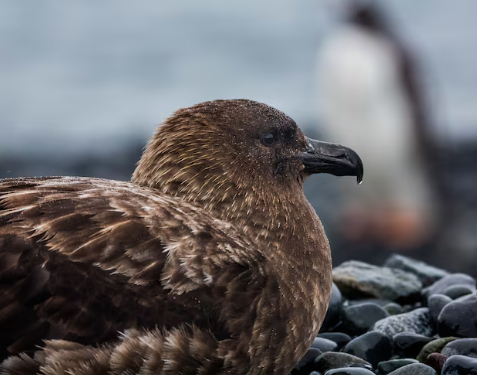
New Zealand has joined the growing list of nations grappling with H5N1 bird flu after Biosecurity Minister Andrew Hoggard announced the detection of the virus in a brown skua seabird discovered on a Wellington beach on Wednesday, July 15. The discovery marks a significant epidemiological milestone, as New Zealand becomes the last continent to report the highly pathogenic strain that has wreaked havoc across global bird and mammal populations for nearly three years.
The brown skua case follows the emergence of H5N1 in neighbouring Australia just weeks prior, where authorities have confirmed 14 instances of the virus across the Tasman by the same date. This pattern of spread underscores how the virus exploits migratory bird networks to traverse vast oceanic distances, turning feathered travellers into vectors for a pathogen that recognises no borders or biosecurity barriers. The timing of detections in both nations suggests that the virus has achieved a troubling foothold across the Australasian region, a development with implications for the entire Indo-Pacific.
Hoggard sought to temper immediate alarm by emphasising that no mass die-offs of wild birds have been recorded in New Zealand and no poultry operations have tested positive. This restraint reflects the government's measured approach, yet the statement also acknowledges the nation's ongoing preparations for exactly this scenario. New Zealand's agricultural and biosecurity sectors have spent months collaborating with poultry producers to fortify defences and develop containment strategies, suggesting officials anticipated the virus's arrival with a degree of certainty.
The concern intensifies when considering New Zealand's singular ecological position. The archipelago's avifauna evolved in isolation for millions of years, developing characteristics that made them evolutionary marvels but ecological liabilities in a modern world. Many native species remain flightless—the takahe, kakapo, and kiwi among them—while others nest on the ground in habits that reflect a pre-mammalian past. This evolutionary history left these birds without the natural defences that flying species or those inhabiting mammal-rich ecosystems developed through ancient arms races. The arrival of introduced stoats, rats, and feral cats already pushed numerous species toward extinction; H5N1 now poses an unprecedented additional threat.
Recognising this vulnerability, New Zealand's health authorities have launched an experimental vaccination initiative targeting 300 core breeding individuals from five of the nation's most critically endangered species. This operation represents not merely a public health response but a conservation gamble of extraordinary proportions. The takahe and kakapo, both numbering fewer than 5,000 individuals in the wild, depend on intensively managed breeding programmes housed in secure facilities. Should H5N1 breach these controlled environments, the consequences could be catastrophic for species that hang by a thread of human stewardship.
Brett Gartrell, a wildlife health specialist at Massey University, articulated the existential anxiety that pervades New Zealand's conservation establishment. He warned that the country's biodiversity faces an entirely novel challenge, one for which its native species possess neither evolutionary nor immunological preparation. Unlike temperate birds elsewhere that have weathered previous avian influenza outbreaks, New Zealand's fauna confronts H5N1 as a completely foreign pathogen against which they have no ancestral immunity or behavioural adaptations. This naïveté renders them catastrophically vulnerable.
The vaccination programme, while laudable in intent, carries inherent limitations that Gartrell and his colleagues clearly recognise. Should the virus establish itself widely across New Zealand's landscape and begin circulating intensively among wild bird populations, the protected core breeding groups may face insufficient immunological defence if the viral load becomes overwhelming or if the vaccine proves less effective against field strains than laboratory evidence suggests. Vaccination offers hope but not certainty, particularly when dealing with a pathogen known for its capacity to mutate and adapt.
For regional observers beyond New Zealand, this outbreak carries sobering implications. Southeast Asia, with its vast wetlands, intensive poultry farming, and dense human populations, faces substantially greater H5N1 risk than the geographically isolated Antipodes. Malaysia, Thailand, Vietnam, and Indonesia all maintain critical waterfowl habitats and extensive commercial poultry sectors. The New Zealand case demonstrates that H5N1 continues its relentless global expansion and that even geographically remote nations cannot escape its reach. The virus's appearance in the South Pacific suggests that containment is no longer feasible; management and mitigation have become the realistic objectives.
New Zealand's experience also illuminates the particular vulnerability of endemic and island-dwelling species to infectious disease. The nation invests enormous resources in species recovery programmes, yet a single novel pathogen threatens decades of conservation effort. This dynamic applies across Southeast Asia, where endemic bird populations in fragmented habitats face mounting pressures from habitat loss, climate change, and now pandemic disease. The interplay between these stressors creates a perfect storm for biodiversity loss.
Looking forward, New Zealand's response will serve as a critical case study for how developed nations manage pathogenic threats to irreplaceable wildlife. The vaccination programme's success or failure will inform conservation strategies globally. Should it succeed in protecting the core breeding populations, it may offer a model for other nations seeking to shield endangered species from H5N1. Conversely, if the virus breaches defences or if vaccinated birds prove inadequately protected, it will underscore the limits of technological intervention in the face of ecological catastrophe.
The brown skua detection thus represents far more than a single positive test result. It signals that the world's last major geographical refuge from H5N1 has fallen, that the virus has achieved a truly global presence, and that even the most carefully managed and geographically isolated ecosystems cannot remain insulated from pandemic threats. For New Zealand, the coming months will test whether science and planning can outpace a virus that has consistently outwitted global containment efforts for three years running.

