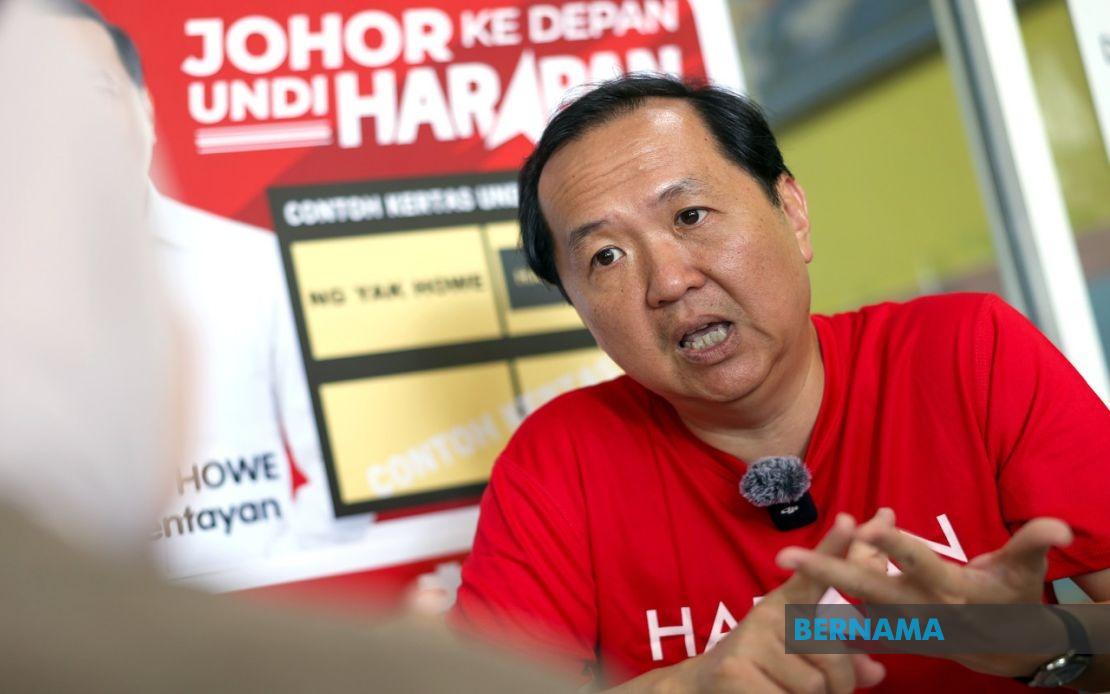
Ng Yak Howe, Pakatan Harapan's candidate for the Bentayan state seat, has placed urban regeneration at the heart of his campaign strategy, seeking to arrest the decades-long pattern of commercial decline that has hollowed out Muar's historic town centre. The sitting assemblyman's focus reflects a broader challenge facing Malaysian towns, where suburban sprawl and changing consumer patterns have left once-vibrant commercial districts struggling to maintain vitality. For Bentayan, the stakes are particularly acute since the constituency encompasses more than half of Muar town proper, making the condition of this area directly relevant to residents' quality of life and economic opportunities.
The town centre's predicament mirrors a phenomenon seen across provincial Malaysia. During business hours, the area bustles with activity as workers and shoppers circulate through offices and shops, yet the streets emptied dramatically after 5pm as residents and businesses gravitated to peripheral developments offering modern amenities and easier parking. This temporal divide between daytime commerce and evening emptiness reflects a structural shift in how Malaysians work and consume, with many workers commuting from more affordable suburban residential areas rather than living downtown. Left in this vacuum are vacant storefronts, underutilised office spaces, and deteriorating infrastructure that further discourages investment and patronage.
Ng, a former quality assurance engineer with more than a decade of industrial experience before his political career, has anchored his revival strategy around stimulating consumer spending at the grassroots level. Working in tandem with Bakri Member of Parliament Tan Hong Pin, his office has rolled out cash voucher schemes and lucky draw campaigns specifically designed to redirect shopper traffic back to local businesses operating in the town centre. These initiatives represent a pragmatic, if incremental, approach to economic stimulation—boosting immediate cash flow to merchants while building consumer awareness that vibrant alternatives to suburban shopping malls remain available.
The scale of the challenge is evident in the statistics Ng himself highlighted. With 18 per cent of commercial premises standing vacant, the town centre faces a coordination problem: merchants will not invest if foot traffic remains low, yet foot traffic will not recover without visible business activity and attractive storefronts. Breaking this cycle requires intervention from both the public and private sectors, alongside a sustained shift in consumer behaviour. Voucher campaigns and promotions can help, but they address symptoms rather than root causes such as inadequate public transport connections, poor street-level design, insufficient parking, or lack of complementary entertainment and residential options that would encourage longer dwell times.
Ng's political profile underscores his consistency in advocating for this constituency. Having served as assemblyman for more than two terms and held a Johor DAP committee position, he has nearly 25 years of continuous political engagement. This track record provides both an advantage and a vulnerability in the July 11 contest: constituents familiar with his tenure can assess whether past commitments have yielded tangible results, while opponents may argue that persistent town centre decline despite his tenure signals insufficient progress or political will.
The Bentayan seat itself carries substantial electoral weight, with 34,205 registered voters participating in what has become a straight two-way contest. Ng faces Barisan Nasional candidate Chua Lee Huat, setting up a direct ideological and performance-based comparison between the coalition in power at state level and the opposition seeking to regain influence. This matchup reflects the broader fault lines in Malaysian electoral politics post-2018, where voter sentiment in smaller towns and secondary urban centres has become increasingly volatile and responsive to pocket-book concerns such as employment, cost of living, and the quality of their immediate surroundings.
Within the context of the 16th Johor state election, the Bentayan contest occupies a middle tier of significance. The broader election will determine state government composition and policy direction, affecting everything from land development to allocations for local infrastructure. However, smaller races like Bentayan often decide overall outcomes; with 172 candidates contesting across 16 state seats, even modest shifts in vote share across multiple constituencies can reshape the state assembly. Urban and semi-urban seats like Bentayan, which straddle rural and metropolitan concerns, tend to be more sensitive to swing voting than either strongholds or consistently safe opposition seats.
Ng's emphasis on town centre revival also carries implications beyond commerce. A healthy downtown district typically correlates with stronger municipal services, better maintenance of heritage buildings, more visible police presence, and a greater sense of community cohesion. Residents and business owners in declining town centres frequently report feeling neglected compared to rapidly developing suburban areas receiving new schools, shopping centres, and entertainment facilities. By framing his campaign around revitalisation, Ng is implicitly acknowledging that Bentayan voters value not merely economic assistance but a sense that their locality remains a priority for investment and political attention.
The voucher and lucky draw mechanism deployed by Ng's camp represents contemporary political practice in Malaysian electoral campaigns. Rather than grand infrastructure promises requiring years of planning and capital expenditure, immediate cash transfers and merchandise incentives deliver tangible benefits within election cycles and demonstrate responsiveness to voter concerns. This approach has proven popular across the political spectrum, particularly among middle and lower-income voters. However, critics contend that such schemes often provide temporary boosts without addressing structural barriers to sustainable economic regeneration, such as skills mismatches, competition from e-commerce, or inadequate business support services.
The timing of Ng's campaign emphasis on Muar town centre also reflects broader anxiety within political circles about urban decline in secondary and tertiary cities. As economic activity concentrates in Kuala Lumpur, Penang, and a handful of other major centres, peripheral towns risk becoming dormitory communities or economically dependent areas. Johor, despite its proximity to Singapore and role as a major investment destination, contains numerous towns experiencing this dynamic. Political candidates who can articulate coherent visions for reversing this trend—whether through tourism, niche manufacturing, heritage conservation, or commercial revival—often resonate with constituents feeling economically marginalised.
Ng's campaign materials and walkabouts, culminating in his public pledge to prioritise town centre revitalisation, position him as a candidate attentive to local conditions and responsive to merchant and resident concerns. Whether this translates into electoral support will depend partly on whether voters perceive his commitment as credible given his previous tenure, and partly on the broader appeal of PH versus BN in the state context. The July 11 polling date will ultimately determine whether Ng secures his third consecutive term or whether Chua Lee Huat and the Barisan Nasional can capture the seat by positioning themselves as agents of more transformative change.
As polling approaches, the Bentayan contest exemplifies how Malaysian electoral competition increasingly turns on local quality-of-life issues rather than solely national party politics. Voters scrutinise whether their representative has delivered visible improvements to their town, whether businesses remain viable, and whether opportunities for younger residents exist within their communities. Ng's focus on revitalising Muar town centre speaks directly to these concerns, positioning himself as responsive to constituent priorities whilst simultaneously framing his re-election as essential for continuity in addressing long-standing urban challenges.

