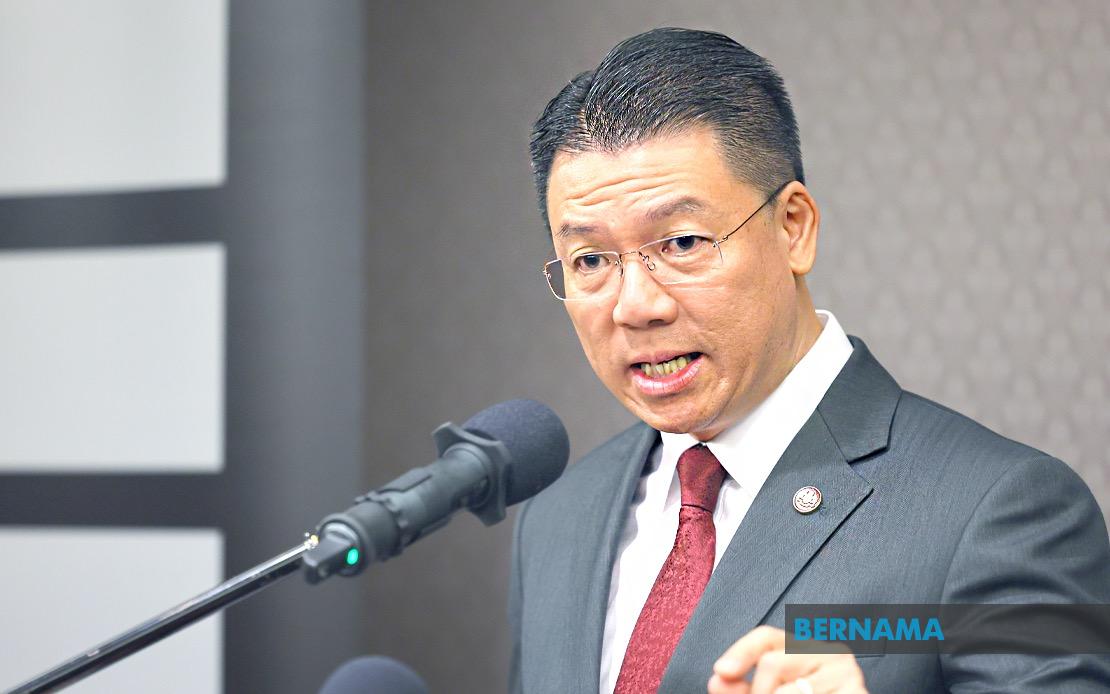
Housing and Local Government Minister Nga Kor Ming has issued a forceful reminder to Malaysia's political establishment that effective leadership demands a commitment to moderation, mutual respect and the preservation of national cohesion. Speaking in Putrajaya, the DAP deputy national chairman rejected the tendency among some politicians to weaponize identity issues for electoral advantage, instead advocating for a leadership philosophy rooted in bringing Malaysians together around shared objectives.
The minister's intervention arrives at a moment when Malaysia's political landscape continues to grapple with tensions that periodically threaten the social compact underpinning the nation's multicultural experiment. Nga's emphasis on Malaysia's foundational strength—the peaceful coexistence of diverse communities across generations—underscores a fundamental reality that undergirds the country's historical stability and economic development. This diversity, he argued, represents an asset rather than a liability, and one that demands protection through the deliberate choices made by those in positions of influence and authority.
Nga articulated a clear distinction between two models of political leadership: one that constructs bridges and identifies common interests, and another that deliberately widens fissures for short-term political gain. The contrast he drew reflected frustration with what many observers characterize as an increasingly toxic approach to electoral competition, wherein appeals to racial and religious grievance have become recurring features of political discourse. Such tactics, the minister suggested, fundamentally misread both the electorate's priorities and the historical conditions that have enabled Malaysia's relative success as a plural society.
The substantive concerns animating Malaysian households today, according to Nga, centre on tangible matters of daily economic security and opportunity. Affordable housing, employment prospects, quality education and healthcare, and infrastructure improvements rank far higher in public consciousness than abstract culture-war battles. This observation carries particular weight in Malaysia's contemporary context, where cost-of-living pressures have intensified since the pandemic, and where younger Malaysians face genuine anxieties about homeownership and financial stability. Political leaders attuned to these realities, Nga implied, would redirect their energies toward delivering practical solutions rather than pursuing divisive narratives.
The minister's framing also reflected an implicit critique of what scholars term the "ethnic outbidding" dynamic that has periodically destabilized Malaysian politics. When politicians compete primarily on who can claim to most forcefully represent communal interests or defend religious prerogatives, the result often entrenches polarization and raises political temperatures unnecessarily. Conversely, leaders who position themselves as problem-solvers focused on competent governance, economic management and equitable service delivery tend to transcend ethnic and religious boundaries more effectively, as evidence from various democratic contexts demonstrates.
Nga's warning against the deliberate manipulation of communal sentiments extended to cautioning the public itself. His call for Malaysians to exercise discernment and reject those peddling division represented an acknowledgement that voters themselves bear responsibility for the political ecosystem they collectively create. Elections and democratic processes are not passive events where leaders simply impose preferences; they reflect, at least in part, public appetite for particular brands of politics. When voters reward divisive rhetoric with electoral support, they incentivize its continued use. Conversely, when political parties discover that unity-oriented messaging and competence-focused platforms resonate more powerfully, strategic incentives shift accordingly.
The invocation of Malaysia's future hung on the choice between two pathways—one defined by leaders committed to inspiration, empathy and inclusive nation-building, and another pursued by politicians primarily motivated by exploitation of existing grievances. This framing positioned national unity not as mere sentiment or nostalgic appeal to past harmony, but as a precondition for the country's continued progress. A Malaysia fractured along ethnic and religious lines would struggle to tackle the infrastructure deficits, skills gaps, innovation challenges and regional competitive pressures that define contemporary development imperatives.
For Southeast Asian observers, Nga's intervention carries resonance beyond Malaysia's borders. Several countries in the region have experienced political polarization driven partly by ethno-nationalist or religious appeals, with consequences ranging from democratic backsliding to communal violence. Malaysia's relative maintenance of stability despite its deep diversity offers lessons about the importance of elite moderation and the willingness of political competitors to observe norms of restraint. When such norms erode, as they have in some neighbouring contexts, the consequences cascade through institutions and civil society.
The specificity of Nga's critique—targeting those who consciously sow fear, manipulate sentiments and exploit identity cleavages—reflected an understanding that such behaviour represents a strategic choice rather than an inevitable feature of competition. Political leaders, in this view, bear primary responsibility for the tone and substance of public discourse. Their decisions about which grievances to amplify, which groups to blame for societal problems, and which narratives to promote shape the broader climate of public opinion and intergroup relations. Responsibility for Malaysia's unity, therefore, flows directly from how those with platforms and influence choose to exercise them.
Nga's call ultimately amounts to an argument that Malaysian politics would serve the national interest more effectively by reconnecting to substantive governance challenges and away from perpetual identity-based mobilization. Whether current political trends will respond to such exhortations remains uncertain, but the articulation of an alternative vision—one centred on competence, inclusion and shared material improvement—provides an important counterweight to narratives of inevitable conflict and zero-sum competition along communal lines.

