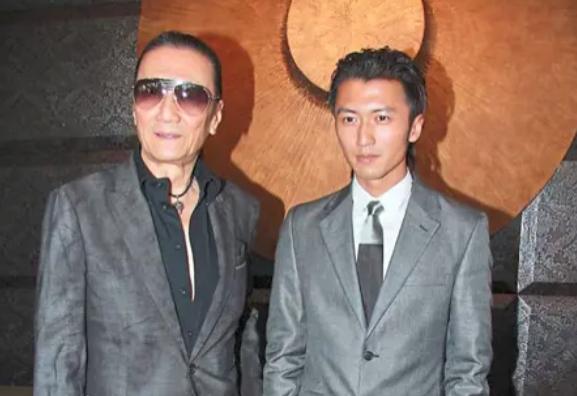
The management company of Hong Kong entertainer Nicholas Tse has stepped in to suppress what it characterises as malicious misinformation circulating online about his father, the late Patrick Tse. On July 23, Emperor Entertainment Group made public a formal statement cautioning against the dissemination of unverified claims concerning the actor's passing and subsequent matters relating to his personal estate, signalling that both the company and Nicholas Tse are prepared to pursue legal remedies against persistent offenders.
Patrick Tse, a revered figure in Hong Kong's entertainment landscape across several decades, passed away on July 16 at the age of 89. The family had chosen to keep news of his death private until after cremation ceremonies concluded on July 20, when they publicly confirmed the loss. The respected performer, affectionately remembered by fans and industry colleagues as Sei Gor or Fourth Brother, had established himself as a stalwart of local cinema and television during a career spanning generations.
The actor's immediate family structure reflected the complexities of his personal life across his marriages. From his second union with Hong Kong actress Deborah Lee, now 74, Nicholas Tse and his sister Jennifer Tse—a model and actress currently aged 43—were born. That marriage endured until their 1995 separation, establishing a household that would continue to evolve in the years following. Before his relationship with Deborah Lee, Patrick Tse had been married to Taiwanese actress Chen Chen, now 78, though that union lasted only three years before dissolving in 1977.
The agency's formal statement emphasised the fundamental right to protect the dignity of the deceased and his surviving relatives from unwarranted public intrusion. The declaration underscored that once a person has died, both their reputation and their fundamental right to privacy must be safeguarded through legal mechanisms and upheld by basic societal norms of decorum. This protection extends beyond mere sentiment, the statement suggested, encompassing enforceable legal protections that exist to maintain order and respect within society.
According to Emperor Entertainment Group, the spreading of fabricated narratives, the deliberate distortion of facts, or the orchestration of malicious campaigns designed to damage the standing of the deceased constitute serious breaches of respect that warrant intervention. The statement characterised such actions as not merely disrespectful gestures but as actionable offences against the rights of the deceased and their family. This legal framing transforms what might otherwise be dismissed as routine internet chatter into a matter of substantive legal concern, particularly in jurisdictions with robust defamation and privacy protections.
The emergence of such rumours reflects a broader phenomenon across East Asian entertainment circles, where the deaths of prominent figures frequently trigger waves of speculation online. In the age of social media, information—accurate or otherwise—spreads with unprecedented velocity, often overwhelming the capacity of families and official representatives to control the narrative. For celebrities and their heirs, managing this information ecosystem has become as integral to crisis management as handling media inquiries once were.
Hong Kong's legal framework provides several avenues through which families can challenge false or defamatory statements. The invocation of potential legal action by Emperor Entertainment serves notice that Nicholas Tse's camp will not passively allow misinformation to proliferate. This proactive stance reflects a calculated strategy to establish clear boundaries around what will and will not be tolerated, functioning as both a deterrent and a warning to those tempted to trade in speculation.
The timing of the agency's statement—less than a week after Patrick Tse's passing and cremation—suggests that problematic content had already begun circulating with sufficient velocity to warrant urgent attention. Rather than allow such narratives to establish themselves as commonly accepted versions of events, Emperor Entertainment chose immediate intervention. This approach mirrors similar situations in Hong Kong and Taiwan, where celebrity families have had to actively contest inaccurate reports about deaths, inheritances, and other sensitive personal matters.
For Malaysian audiences, the incident underscores how interconnected regional entertainment spheres have become and how quickly reputational crises can cross territorial boundaries in the digital age. The case also illustrates the ongoing tension between freedom of expression in online spaces and the established legal protections that exist to safeguard personal dignity and family privacy. As more entertainment figures pass away, families increasingly recognise that taking a firm stance against misinformation early prevents larger narratives from hardening into something more intractable and harder to correct retrospectively.

