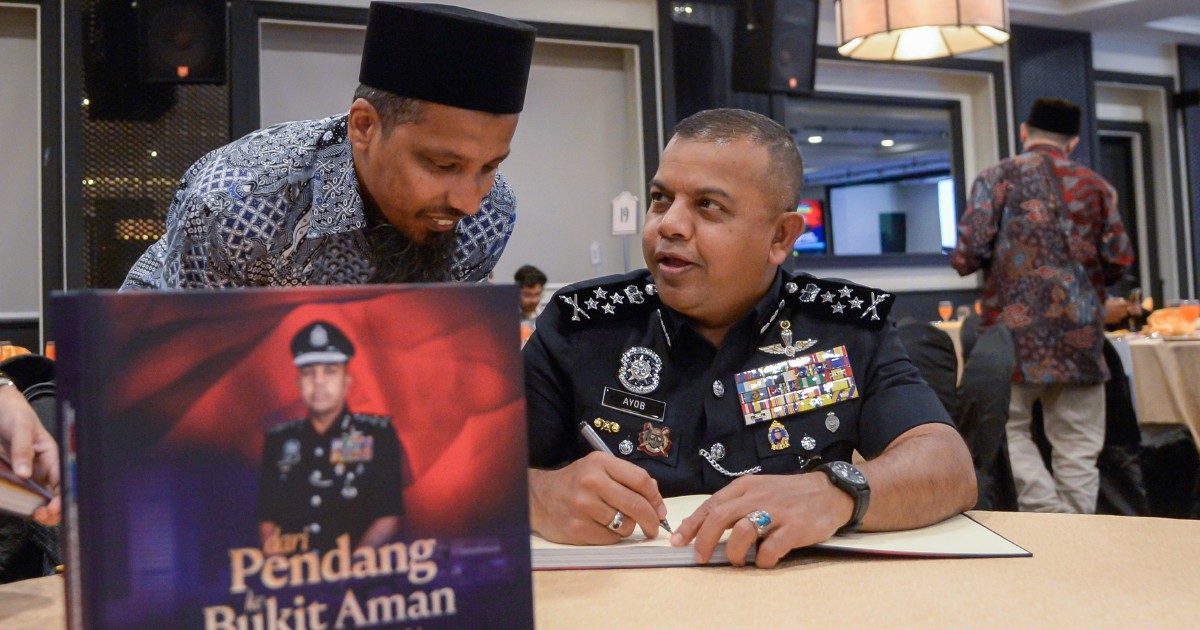
Tan Sri Ayob Khan Mydin Pitchay, who served as deputy Inspector-General of Police, has reflected on the depths of complexity surrounding the 'Gang Nicky' investigation, positioning it among the most consequential cases to cross the desks of officers at Bukit Aman. The probe demanded considerable resources and strategic thinking from Malaysia's police leadership, leaving an indelible mark on those involved in the investigative process.
The case involving Nicky Liow represents a watershed moment in the Royal Malaysian Police's operational history, reflecting the institution's capacity to tackle multifaceted criminal networks. According to Ayob Khan's recollection, the investigation stood apart from routine policing work due to its complexity, the number of individuals implicated, and the broader security implications it carried for the nation. Such cases inevitably demand coordination across multiple departments and sustained commitment from personnel at all levels.
Investigations of this magnitude typically involve extensive surveillance operations, intelligence gathering, and coordination with other law enforcement agencies. The resources deployed in such probes often extend beyond conventional investigative techniques, requiring specialists in areas ranging from cybercrime to financial crime analysis. For Malaysian law enforcement, cases of this scale serve as benchmarks against which the institution measures its operational capabilities and strategic effectiveness.
The significance Ayob Khan attributes to the 'Gang Nicky' investigation underscores the broader challenges facing Malaysian law enforcement in combating organised crime networks. Such criminal enterprises often operate across state boundaries and utilise sophisticated methods to conceal their activities, making them particularly difficult to dismantle. The police must balance rapid response with meticulous evidence gathering to ensure prosecutions withstand judicial scrutiny.
When senior officers like Ayob Khan reference cases as defining moments in their careers, it typically signals the presence of novel investigative challenges or unprecedented criminal sophistication. The 'Gang Nicky' case evidently required officers to adapt existing procedures and develop new approaches to address emerging criminal methodologies. This adaptive capacity remains essential as criminal networks continue to evolve their tactics.
For Malaysian society, such high-profile investigations carry implications extending beyond the immediate criminal charges. Public confidence in law enforcement institutions depends substantially on the visibility and apparent success of major investigations. Cases that capture sustained media attention and demonstrate police competence contribute to broader perceptions of institutional effectiveness and social security.
The investment of institutional resources in major cases reflects police priorities and resource allocation decisions. When investigations consume significant personnel hours and financial resources, they necessarily displace capacity from other operational areas. This reality makes case selection and prioritisation critical management functions within police headquarters, particularly in a nation managing competing security challenges.
Ayob Khan's comments also implicitly acknowledge the personal toll such investigations exact on investigating officers. Major cases characterised by complexity and high stakes often require personnel to work extended hours and manage considerable psychological pressure. The institutional memory surrounding significant cases thus encompasses not only the investigative outcomes but also the professional development and testing of individual officers involved.
The 'Gang Nicky' investigation serves as a reference point for understanding how Malaysian law enforcement approached organised crime during the period when Ayob Khan held senior command positions. His tenure as deputy IGP positioned him at the apex of operational decision-making, providing him with comprehensive understanding of resource deployment, strategic priorities, and the institutional challenges facing the police force.
For Malaysian readers, reflections from senior retired officers offer valuable perspectives on how national security and law enforcement institutions function at the highest levels. These insights, filtered through the experience of someone who shaped policing policy and strategy, contribute to public understanding of the capabilities and constraints within which Malaysia's police operate. The acknowledgment that certain cases stand apart as exceptional affords the public window into the complexity of serious crime in the nation.
The legacy of significant cases extends beyond their immediate outcomes, influencing how subsequent investigations are conceived and executed. Lessons extracted from complex probes become embedded in institutional practice, shaping training curricula and operational procedures. When senior officers like Ayob Khan identify specific cases as particularly demanding or notable, they are essentially highlighting evolutionary moments in the institution's development.
As Malaysia continues confronting evolving criminal threats ranging from transnational syndicates to digitally-enabled crime networks, the historical experience accumulated through cases like 'Gang Nicky' provides institutional knowledge that informs current law enforcement strategy. The capacity to reference past investigations and extract applicable lessons represents one mechanism through which police institutions improve operational effectiveness across generations of leadership and personnel.

