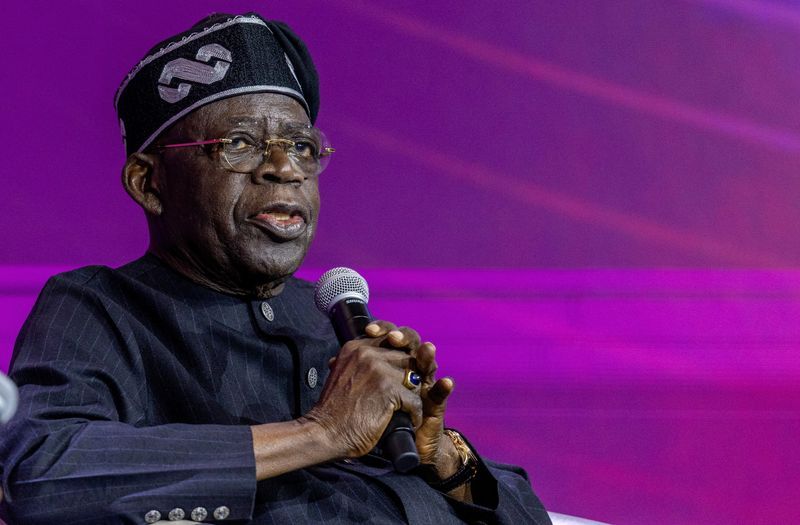
Nigeria is moving to scrutinise how major technology companies handle journalism and news content within its borders, with President Bola Tinubu directing the Federal Competition and Consumer Protection Commission to launch a formal investigation into Meta, Alphabet, X and artificial intelligence platforms operating there. The enquiry, announced late Monday by the FCCPC, stems from grievances filed by the Nigerian Press Organisation, a coalition representing newspaper proprietors, journalist unions, broadcast outlets and digital publishers across the country.
The scope of the investigation is expansive, targeting multiple dimensions of how tech platforms interact with news material. Regulators will examine allegations that these companies have exploited market dominance, engaged in practices that stifle competition, extracted or commercially exploited copyrighted journalistic and broadcast content without permission, and utilised news articles and reports to train generative artificial intelligence systems. The breadth of the inquiry reflects growing tensions between technology firms and content creators over who benefits when journalism fuels platform engagement and algorithmic training.
For Nigeria's media sector, this investigation represents a significant moment. The country's journalism industry has struggled with declining advertising revenue as global platforms capture an ever-larger share of digital advertising spending. Publishers argue they create the content that attracts users to these platforms, yet receive minimal compensation while tech firms accumulate vast profits from that traffic. The Nigerian Press Organisation's formal complaint to authorities suggests the industry has reached a breaking point with these arrangements.
The investigation is unlikely to proceed swiftly, and the FCCPC has signalled its preliminary nature by noting that the process does not presuppose any wrongdoing and that all companies involved will have opportunities to submit their positions and information. This procedural caution is standard practice, designed to withstand legal challenge and ensure fairness during the enquiry phase before any enforcement actions might be contemplated. Still, the very act of a high-profile government investigation sends a clear message about regulatory priorities.
Nigeria's move reflects a broader global pattern. Regulators across multiple continents have become increasingly assertive about whether technology companies should share revenue with news publishers or face sanctions. South Africa's competition authorities secured substantial concessions from Google and YouTube following a market inquiry, resulting in a media support package valued at 688 million rand, equivalent to approximately $42 million. This precedent matters for Nigeria, as it demonstrates that African regulators can successfully extract meaningful commitments from Silicon Valley giants.
Europe has proven even more forceful. France imposed a €500 million fine on Google in 2021 following the company's failure to negotiate in good faith with publishers and for breaches related to how AI systems utilise journalistic material. The European Union's regulatory framework has consistently treated news content extraction as a serious matter deserving enforcement action. Australia and Canada have gone further still, establishing legal bargaining frameworks that obligate technology companies to negotiate with publishers over compensation for news use, resulting in actual payment agreements that have begun to restore some financial viability to news operations.
For Malaysia and other Southeast Asian nations watching closely, Nigeria's investigation carries instructive lessons. The region's media organisations face identical pressures as their African counterparts. Malaysian publishers, Thai broadcasters and Indonesian news outlets compete for survival while global platforms built on content they have not created capture advertising value. If Nigeria succeeds in establishing that tech firms must compensate publishers or modify their practices, the precedent could strengthen the negotiating position of media companies across Southeast Asia when dealing with these same corporations.
The investigation also speaks to a deeper question about regulatory capacity in the Global South. Developed nations in Europe, North America and Oceania have long shaped how international technology companies operate. Nigeria's willingness to undertake this enquiry—and the FCCPC's apparent institutional capability to do so—suggests that African regulators are beginning to exercise genuine authority over global platforms rather than accepting their terms passively. This shift has implications far beyond news media, touching on data protection, consumer safeguards and labour standards.
What remains uncertain is whether this investigation will materially change how Meta, Alphabet and X operate in Nigeria. These companies have proven remarkably adept at navigating different regulatory environments, sometimes making modest concessions while preserving their core business models. They currently have no obligation to respond to the FCCPC inquiry immediately, and their silence thus far may reflect confidence that any settlement will be manageable. Yet the participation of Nigeria's government at the presidential level suggests this is not a routine matter that can be deflected through standard corporate affairs channels.
The investigation also highlights unresolved tensions in the global digital economy. Technology companies argue they provide platforms and tools that benefit publishers by distributing content widely. Publishers counter that platforms profit disproportionately while shifting infrastructure and market risks onto news organisations. Neither position is entirely wrong, but the power imbalance has become impossible to ignore as advertising markets concentrate and journalism declines. Regulatory interventions like Nigeria's represent attempts to rebalance bargaining power through legal mechanisms.
The timeline for Nigeria's investigation remains unclear. Competition inquiries typically require many months to complete, involving document requests, stakeholder interviews and extensive analysis. During this period, media organisations will likely intensify pressure on the FCCPC to produce outcomes, while technology companies will mobilise legal and lobbying resources to shape the investigation's direction. The eventual findings could range from innocuous to transformative, depending on whether regulators conclude that systemic breaches have occurred and how aggressively they pursue remedies.

