Jonathan Vaughters, the former professional cyclist who now runs the Cannondale-EF team, has thrown his weight behind the controversial practice of conducting doping tests at 2am, contending that such early-morning controls would have exposed cycling's notorious blood-doping epidemic far sooner had they been implemented decades ago. His defence comes amid mounting criticism from Tour de France competitors who complained about the disruption to their sleep during the demanding mountain stages of the 2024 race.
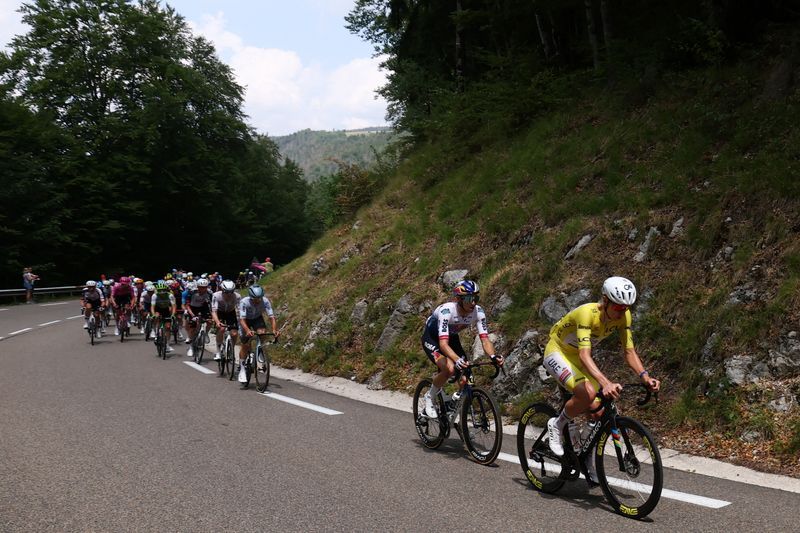
The debate erupted after race officials conducted surprise drug tests in the pre-dawn hours of Sunday ahead of the 15th stage, with leading contenders including Tadej Pogacar and Jonas Vingegaard being roused from their beds for unannounced checks. The timing provoked sharp objections from several riders, who questioned whether such aggressive testing protocols unfairly compromise safety and recovery during an already gruelling three-week competition. The controversy highlights the ongoing tension between ensuring a level playing field and protecting athlete welfare.
Vaughters took to social media to articulate his position, noting that testing at 2am represents one of the most effective deterrents against the sophisticated doping schemes that plagued the sport for decades. He specifically highlighted peptide substances including EPO and human growth hormone, as well as testosterone micro-dosing, as compounds that necessitate unpredictable testing windows. His reasoning centres on the pharmacokinetic reality that these performance-enhancing drugs can be metabolised and eliminated from the body within hours, making predictable daytime-only testing regimes insufficient as a preventive measure.
Vaughters' intervention carries particular credibility given his candid reckoning with his own past. During his professional career in the late 1990s and early 2000s, he competed as a teammate of Lance Armstrong on the U.S. Postal Service team, one of cycling's most infamous doping operations. Vaughters subsequently acknowledged his own use of performance-enhancing drugs, including EPO, before later cooperating with the U.S. Anti-Doping Agency investigation that ultimately led to Armstrong's downfall. Armstrong was stripped of all seven Tour de France titles in 2012 after USADA concluded he had orchestrated what the agency characterised as the most comprehensive doping programme ever witnessed in professional sport.
Having confronted his own complicity in that dark chapter, Vaughters transformed himself into an advocate for clean competition, building the team now known as Cannondale-EF with explicit commitments to anti-doping integrity. This personal journey from beneficiary of systematic doping to reformed advocate gives his current remarks an authenticity that purely institutional statements from cycling authorities cannot match. He represents a generation of former riders who experienced firsthand how undetectable micro-dosing became the sport's defining problem during the Armstrong era and beyond.
The riders' complaints about Sunday's tests reveal the practical human cost of aggressive anti-doping enforcement. Vingegaard, whose 2am test cost him approximately 40 minutes of sleep before a crucial mountain stage, went on to suffer a crash that resulted in a broken collarbone, raising legitimate questions about whether sleep deprivation contributed to the accident. Pogacar reported managing only four hours of rest following his 5am test. Stage winner Remco Evenepoel characterised the entire practice as "inhuman," reflecting widespread discomfort among competitors who argue that such disruptions create unfair competitive conditions and genuine safety hazards.
The International Testing Agency, which administers doping controls on behalf of the Union Cycliste Internationale, has acknowledged the burdens imposed by nocturnal testing while defending its necessity. In a statement, the ITA conceded awareness that night-time testing disrupts riders' sleep and recovery, yet insisted that effective anti-doping frameworks require testing to occur outside standard daytime hours in "limited and justified circumstances." This framing reflects a deliberate choice to prioritise the integrity of competition over short-term athlete comfort, a calculus that remains contentious within cycling.
The scientific foundation underlying the ITA's position rests on a well-documented pharmacological reality. Micro-dosing of substances such as EPO and human growth hormone—taking smaller quantities more frequently to avoid detection—became the refined doping methodology once blood testing improved. These compounds clear the body within hours, rendering traditional testing windows nearly useless. Without unpredictable nocturnal testing, a sophisticated athlete equipped with appropriate medical support could reasonably evade detection indefinitely. This represents the fundamental dilemma: without disrupting sleep, meaningful testing becomes impossible against the most effective performance-enhancing methods.
Vaughters' provocative claim—that 2am testing in 2001 would have suspended everyone involved and saved the sport "25 years of drama"—underscores the magnitude of what went undetected during cycling's most shameful period. His assertion, while hyperbolic, contains historical truth. Hundreds of professional cyclists employed the same doping networks and methods as Armstrong, yet largely escaped consequences because testing protocols remained predictable and insufficient. Had authorities possessed and implemented today's nocturnal testing arsenal, cycling's entire competitive structure during that era would have collapsed.
For Malaysian and Southeast Asian readers, this dispute touches on broader questions about sports governance and authenticity. As cycling expands its footprint across Asia, with major races now held in the region, the standards governing competition become increasingly relevant. The question of whether championships should be decided by marginal pharmaceutical advantages rather than training and talent resonates beyond cycling. Vaughters' defence of unpopular enforcement measures, rooted in his hard-won understanding of doping's corrosive effects, suggests that protecting sport's integrity sometimes requires accepting uncomfortable interventions.
The ongoing tension between athlete welfare and anti-doping enforcement will likely intensify as testing becomes more invasive. Yet Vaughters' perspective—informed by someone who personally lived through and benefited from cycling's darkest chapter—offers a sobering reminder of the costs of inadequate vigilance. The 2am test might disrupt sleep, but the alternative is a return to the systematic deception that undermined sport for an entire generation, something no amount of extra rest can adequately compensate for.

