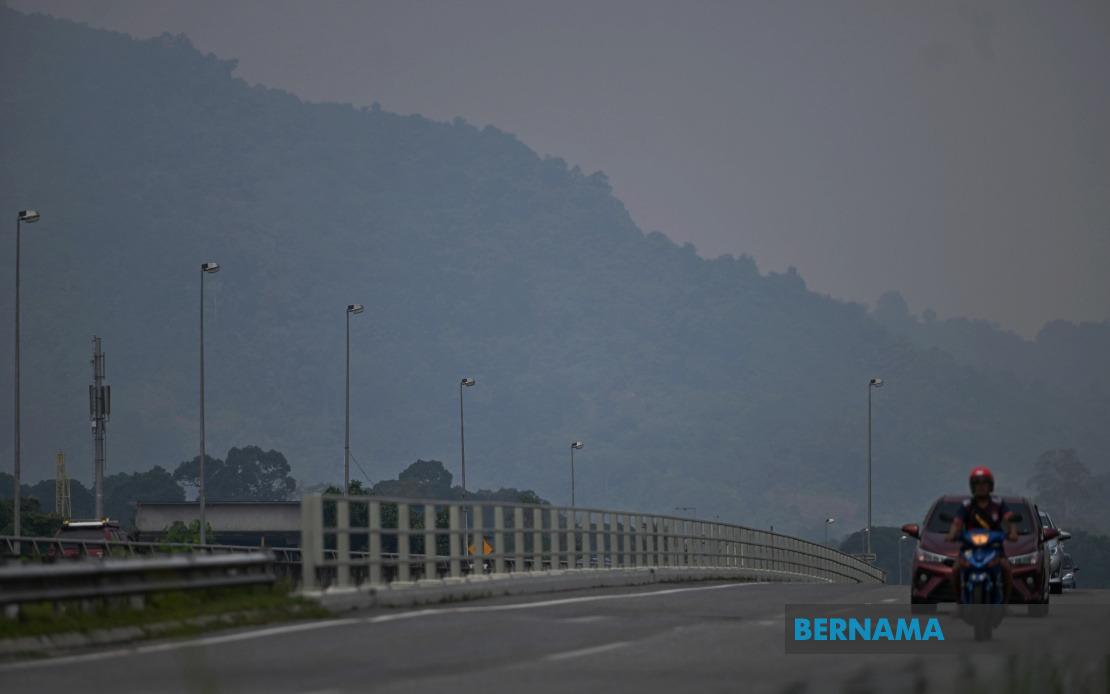
Air quality in Sarawak has deteriorated significantly, with at least ten locations across the state now grappling with unhealthy or very unhealthy pollution levels as transboundary haze originating from Indonesia continues to drift across the region. Serian, a district in central Sarawak, faces the most severe impact, with the Air Pollution Index (API) climbing to 227—a reading classified as very unhealthy and the highest recorded in the state as of midday on August 21. This critical threshold carries serious implications for vulnerable populations, including children, the elderly, and those with respiratory or cardiovascular conditions.
The Department of Environment reported that nine additional areas have slipped into the unhealthy category, painting a concerning picture of air quality across Sarawak's diverse geography. Sri Aman, positioned in the state's central region, registered the second-worst conditions with an API of 187, followed closely by Kuching at 176. Other affected areas include Samarahan and Sarikei, both recording 175 and 174 respectively, while Sibu, a major commercial hub, reached 157. The coastal towns of Bintulu and Samalaju—both significant industrial centres—registered identical readings of 154, while Kapit and Mukah, smaller interior and coastal communities, measured 130. The widespread nature of these readings demonstrates that the pollution event is not localised but rather a regional phenomenon affecting diverse parts of the state simultaneously.
According to Department of Environment deputy director-general Azuri Azizah Saedon, the deterioration in Sarawak's air quality stems from haze moving in from multiple directions, but the primary source appears to be the extensive fires burning across Indonesian Kalimantan. Data from the ASEAN Specialised Meteorological Centre, compiled on August 20, revealed a concerning concentration of fire activity, with 288 hotspots detected in Kalimantan alone. This represents the vast majority of transboundary fire sources affecting Southeast Asia at present. In comparison, Sumatra recorded 53 hotspots, while Malaysia itself detected only two—one each in Sarawak and Terengganu—suggesting that Malaysia's current haze crisis is overwhelmingly driven by Indonesian sources rather than domestic burning.
The ASEAN Specialised Meteorological Centre's regional analysis provides crucial context for understanding the atmospheric dynamics at play. Dry weather conditions persist across most of southern ASEAN, creating an environment where fires spread rapidly and smoke dispersal is limited. However, the notable exceptions are northeastern Borneo—where Sarawak is located—and northern Sumatra, both of which experienced rainfall during the assessment period. Despite these isolated wet pockets, the broader regional dryness provides ideal conditions for smoke to accumulate and travel across borders. Crucially, meteorological data indicates that smoke plumes of moderate to dense concentration are moving from West Kalimantan in a northward trajectory, directly into western Sarawak, explaining why areas like Kuching and Samarahan are experiencing elevated pollution levels.
This transboundary movement of air pollution underscores a persistent challenge for Malaysia and other Southeast Asian nations: the inability to control fire sources located beyond their borders. The seasonal nature of these haze events, typically occurring during the dry months, creates recurring disruption to economic activity, public health, and quality of life across the region. For Malaysian policymakers and regional observers, the data confirms that cooperation and enforcement mechanisms established under ASEAN frameworks remain critical, yet often insufficient to prevent these events before they cause widespread impact.
In response to the deteriorating situation, Malaysia's Department of Environment has mobilised comprehensive action plans designed to mitigate domestic burning and coordinate an inter-agency response. Both the National Open Burning Action Plan and the National Haze Action Plan have been activated, signalling coordination among government agencies to address preventable sources of pollution within Malaysia's jurisdiction. The department has simultaneously stepped up enforcement operations and increased daily patrols in areas considered high-risk for open burning, with particular focus on regions with potential agricultural or land-clearing activities.
Public communication efforts have also been intensified, with authorities urging residents to refrain from any form of open burning and to report violations immediately. The Fire and Rescue Department of Malaysia maintains a dedicated hotline at 999 for emergency fire reports, while the Department of Environment operates a separate line at 1-800-88-2727 for haze-related concerns and open burning incidents. These dual-channel reporting mechanisms reflect the complexity of addressing haze, which requires both emergency response capacity and specialised environmental oversight.
For Malaysian residents, particularly those in Sarawak, the health implications of these API readings warrant serious consideration. An API in the very unhealthy range like Serian's 227 creates measurable risks even for healthy individuals during prolonged exposure, while those in the unhealthy range across other areas pose ongoing hazards for sensitive groups. Schools and workplaces typically implement precautionary measures at these levels, reducing outdoor activities and recommending air filtration devices. The economic costs extend beyond healthcare to include reduced productivity, transportation disruptions, and impacts on tourism, sectors vital to Sarawak's economy.
Looking forward, these recurring haze episodes highlight the need for sustained diplomatic engagement between Malaysia and Indonesia on fire prevention and land management practices. While individual haze seasons vary in severity, the underlying pattern remains consistent: uncontrolled fires in Indonesian territory create transboundary pollution that affects millions across the region. For Malaysian policymakers, the challenge lies in balancing immediate response measures with longer-term advocacy for improved fire governance and environmental stewardship among ASEAN neighbours, ensuring that such episodes become increasingly rare rather than merely manageable seasonal occurrences.

