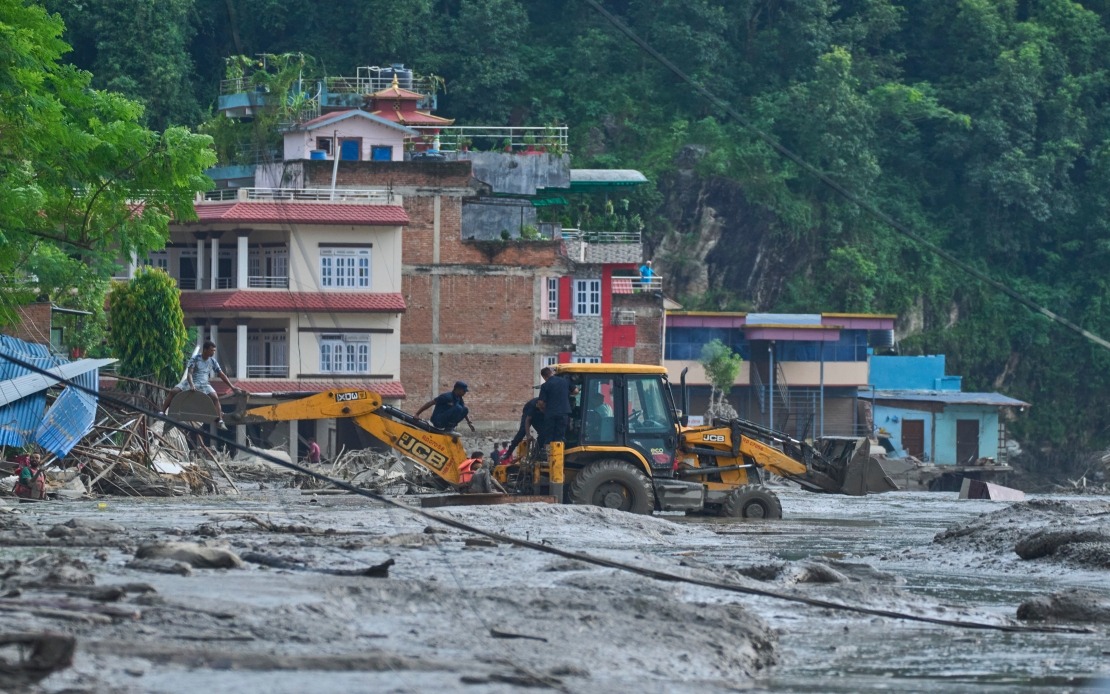
Nine South Korean nationals have disappeared in the aftermath of devastating floods that swept through Nepal's mountainous Rasuwa district, prompting Seoul to activate emergency protocols and dispatch a specialist response team to assist in search and rescue operations. The missing individuals comprised six employees from industrial firm Doosan Enerbility Co. and three staff members from Korea South-East Power Co., a state-owned energy producer. All were engaged in hydropower plant construction work when catastrophic flooding struck the region on Wednesday, according to announcements from South Korea's foreign ministry.
The disaster unfolded near the Nepal-Tibet frontier, where torrential rainfall triggered flash flooding that has claimed more than 160 lives and left hundreds unaccounted for, predominantly foreign nationals working on various development projects in the region. The scale of the calamity highlights the vulnerability of cross-border mountainous terrain to sudden hydrological events, particularly during monsoon seasons when precipitation patterns become unpredictable and intense.
While the nine remain unaccounted for, relief came with confirmation that ten additional South Koreans affiliated with Doosan had survived the initial flooding event and were located in the affected area. However, these rescued workers faced continued isolation, awaiting evacuation from a region where infrastructure had been severely compromised. Approximately 200 foreign workers engaged in the construction project had managed to evacuate the immediate danger zone during the crisis, demonstrating the scale of international participation in Nepal's energy infrastructure development.
Seoul's diplomatic and emergency response machinery shifted into high gear following news of the missing nationals. The government assembled a joint rapid response team drawing personnel from the foreign ministry, national police force, and fire service authorities. This coordinated unit was scheduled to depart Thursday and arrive in Kathmandu, Nepal's capital, where officials would coordinate with local authorities and establish a command centre for search operations. The composition of the team reflected the seriousness with which Seoul treated the situation, combining diplomatic expertise, security personnel, and specialized rescue professionals.
President Lee Jae Myung personally intervened in the crisis management process, issuing direct instructions to government agencies to mobilise every conceivable resource toward locating and rescuing the missing South Koreans. Presidential involvement in such international incidents underscores how geopolitical considerations and citizens' safety concerns intersect, particularly when nationals are endangered abroad in developing nations with limited infrastructure.
Foreign Minister Cho Hyun convened an emergency response meeting and outlined Seoul's multi-faceted approach to the crisis. Beyond immediate search and rescue operations, the ministry committed to strengthening coordination with Nepal's government and local authorities, providing psychological and logistical support to families of the missing, ensuring the wellbeing of remaining South Korean nationals in the region, and implementing preventive measures to avert additional casualties. Cho additionally pledged to contact Nepal's foreign minister directly to formalize bilateral cooperation and streamline resource sharing between the two nations.
Private sector actors also mobilized their own crisis management capabilities. Both Doosan Enerbility and Korea South-East Power established independent emergency response teams and prepared to deploy field-based rapid response units directly to the accident site. This parallel corporate response structure complements official government efforts and reflects the significant financial and reputational stakes these organizations face when employees encounter danger during overseas operations. The companies' quick activation of internal crisis protocols suggests established protocols for managing employee emergencies in remote international locations.
For Malaysia and other Southeast Asian nations, this incident carries particular resonance. The region hosts substantial communities of contract workers and engineers engaged in infrastructure projects across Asia, including hydropower developments, industrial construction, and manufacturing facilities. The Nepal floods demonstrate the occupational hazards faced by skilled workers deployed to frontier regions with challenging environmental conditions and developing emergency response infrastructure. Malaysian workers similarly engage in high-risk sectors across Asia, making this incident a sobering reminder of the dangers inherent in regional development initiatives.
The geographic and meteorological context of the disaster is significant. The Nepal-Tibet border region experiences extreme weather volatility, with monsoon systems delivering intense precipitation across steep mountainous terrain. Hydropower plant construction in such environments involves operating near river systems prone to rapid flooding. Workers in these sectors operate in inherently hazardous conditions, with limited evacuation routes and communication infrastructure that may become compromised during environmental emergencies. Regional governments have increasingly recognized the need for enhanced safety protocols and emergency preparedness systems at construction sites located in environmentally sensitive zones.
Bilateral coordination mechanisms between South Korea and Nepal will face a significant test in coming days. The response quality will depend on Nepal's capacity to mobilize search resources in remote mountainous territory and the effectiveness of diplomatic channels in facilitating rapid information sharing and operational coordination. Past international disaster responses in the region suggest that communication breakdowns and resource constraints can substantially delay rescue operations, making the first hours and days following such incidents critical for survival outcomes.
For South Korean industrial companies operating across Asia, this incident reinforces the business case for enhanced worker safety investments and comprehensive insurance coverage. Doosan Enerbility's significant workforce deployment in Nepal reflects the Korean industrial sector's important role in regional infrastructure development. However, episodes like these create pressure for companies to reassess safety protocols, implement more conservative operational decisions during adverse weather seasons, and potentially increase insurance and compensation reserves for international operations.

