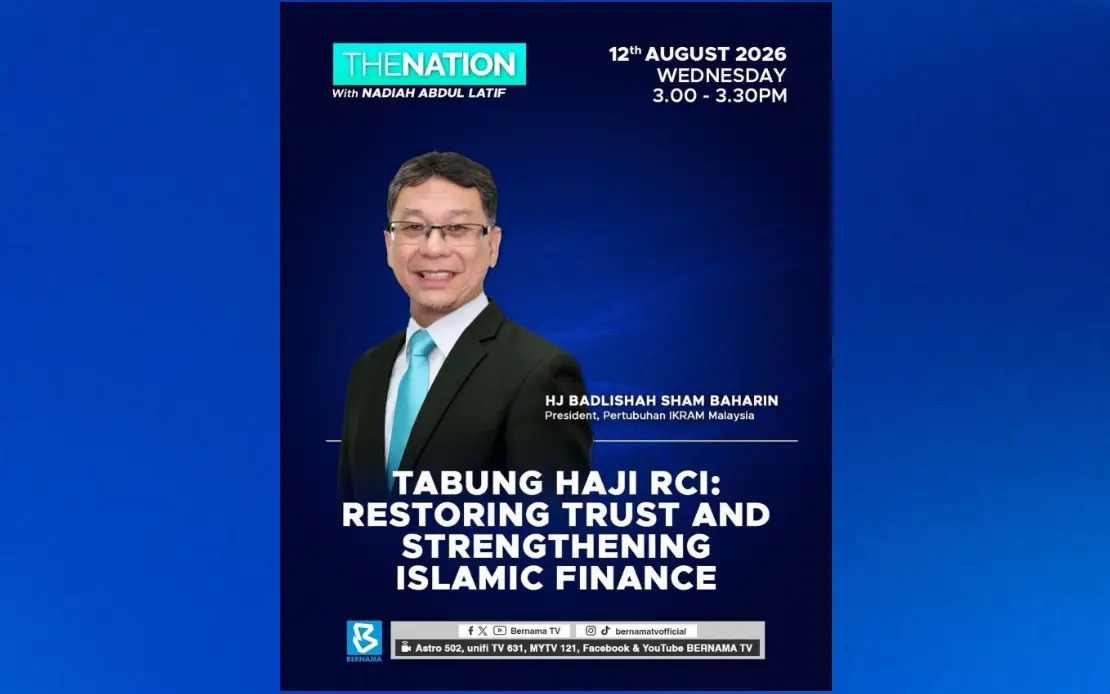
The president of Pertubuhan IKRAM Malaysia has firmly rejected suggestions to launch another Royal Commission of Inquiry into Tabung Haji's troubled operations, insisting that current investigations by law enforcement agencies possess sufficient mandate to uncover wrongdoing and hold culprits accountable. Badlishah Sham Baharin made his position clear in comments responding to fresh parliamentary calls from both government and opposition benches for a second RCI to examine the pilgrimage fund's performance during 2021-2025, extending beyond the scope of an existing inquiry that covered 2014 to 2020.
The IKRAM leader expressed concern that routine establishment of commissions of inquiry erodes their institutional weight and public credibility. When deployed for every organisational malfunction, he reasoned, these investigative bodies lose their gravitas and become instruments of political convenience rather than mechanisms reserved for national crises demanding the highest level of judicial scrutiny. His argument reflects anxiety within Malaysia's civil society that mounting RCIs risk transforming them from solemn instruments of accountability into reflexive political theatre, diluting their effectiveness.
Instead of additional inquiries, Badlishah Sham championed reliance on existing institutional safeguards already mobilised against Tabung Haji. The Malaysian Anti-Corruption Commission, alongside other regulatory authorities, possesses adequate investigative powers, prosecutorial reach, and legal frameworks to pursue breaches identified in any earlier probe. The fundamental requirement, he stressed, remains swift justice — that irregularities and legal violations be prosecuted decisively, regardless of the investigative pathway chosen.
His intervention arrives amid mounting revelations about the scale of financial catastrophe embedded within Tabung Haji's investment portfolio. During the Dewan Rakyat special sitting debate on the existing RCI report, Finance Minister II Datuk Seri Amir Hamzah Azizan disclosed that problematic investments spanning fourteen distinct ventures had depleted the fund's reserves by approximately RM13 billion — an astronomical sum representing years of accumulated deposits from nearly ten million individual depositors across Malaysia. Seven of these fourteen ventures experienced complete loss of capital, wiping out investors' contributions entirely.
The anatomy of these losses reveals deeper systemic dysfunction within the fund's governance architecture. Government bailout mechanisms injected RM10.2 billion through Urusharta Jamaah Sdn Bhd in 2018, while additional impairment provisions totalling RM2.6 billion were recorded between 2018 and 2025 for investments still under management despite deteriorating valuations. This structure means Malaysian taxpayers simultaneously absorbed the immediate crisis through emergency capitalisation while depositors suffered devaluation of their holdings, compounding the distributional injustice.
Among these calamitous ventures, the Al-Rawda transaction stands emblematic of decision-making failures that warrant forensic examination. Tabung Haji committed 1.4 billion Saudi riyals — approximately RM1.5 billion — to an intermediary entity between 2015 and 2017 to secure lease arrangements for four hotels in Makkah and Madinah intended to house Malaysian pilgrims. When Al-Rawda defaulted on rental payments beginning in the first quarter of 2019, Tabung Haji eventually accepted a complete impairment loss amounting to RM1 billion in 2024, representing a near-total destruction of capital deployed in this single venture.
Yet Badlishah Sham simultaneously advocated for institutional innovation beyond traditional RCI frameworks. He endorsed proposals to establish a multi-agency task force specifically configured to assess investments approaching critical loss thresholds and interrupt patterns of poor decision-making before they materialise into catastrophic write-downs. This preventative approach targets the upstream governance failures — inadequate due diligence, insufficient ethical validation, procedural circumvention — that enabled problematic investments to proceed in earlier years. For him, the grassroots mechanics of scrutiny require overhaul: comprehensive vetting protocols must precede capital deployment, ensuring investments conform to both regulatory requirements and Islamic finance principles.
The debate also exposed fractures in parliamentary decorum when opposition members staged a walkout during the special sitting. Badlishah Sham characterised this withdrawal as fundamentally irresponsible, emphasising that elected representatives bear an irreplaceable duty to provide institutional checks and democratic accountability regardless of partisan disagreement with government positions. Opposition MPs, he argued, represent the interests of nearly ten million affected depositors — a constituency transcending party politics and demanding vigorous parliamentary scrutiny.
His critique extended to the parallel discourse unfolding beyond parliament's walls. Opposition lawmakers, he observed, eagerly deploy social media platforms like TikTok to articulate grievances and mobilise public sentiment, yet decline to exercise their statutory role within the legislature where actual legislative power resides. This bifurcation between performative activism outside parliament and substantive participation within it strikes him as dereliction of representative duty — especially when vulnerable populations like pilgrims requiring Tabung Haji's services remain undefended by their elected advocates.
The existing RCI report, released publicly on July 29, documented extensive governance weaknesses spanning 2014 to 2020 and formulated 25 specific recommendations for institutional strengthening. By July 30, Tabung Haji had implemented approximately 75 per cent of these recommendations, suggesting some responsiveness to reform imperatives. Whether implementation proves substantive or merely superficial remains contested, but the completion rate indicates willingness to acknowledge identified failures and adjust operational practices accordingly.
BADLISHAH Sham's position ultimately advocates for pragmatic sequencing: deploy existing investigative machinery to its fullest capacity, pursue prosecutions rigorously, then establish preventative governance infrastructure to interrupt future pathways toward similar losses. This framework prioritises accountability through existing legal channels while building institutional guardrails against recurrence. For Malaysia's Islamic finance sector and the millions of Malaysian pilgrims whose retirement savings remain vulnerable to investment mismanagement, the distinction between investigative excess and substantive reform carries profound implications.

