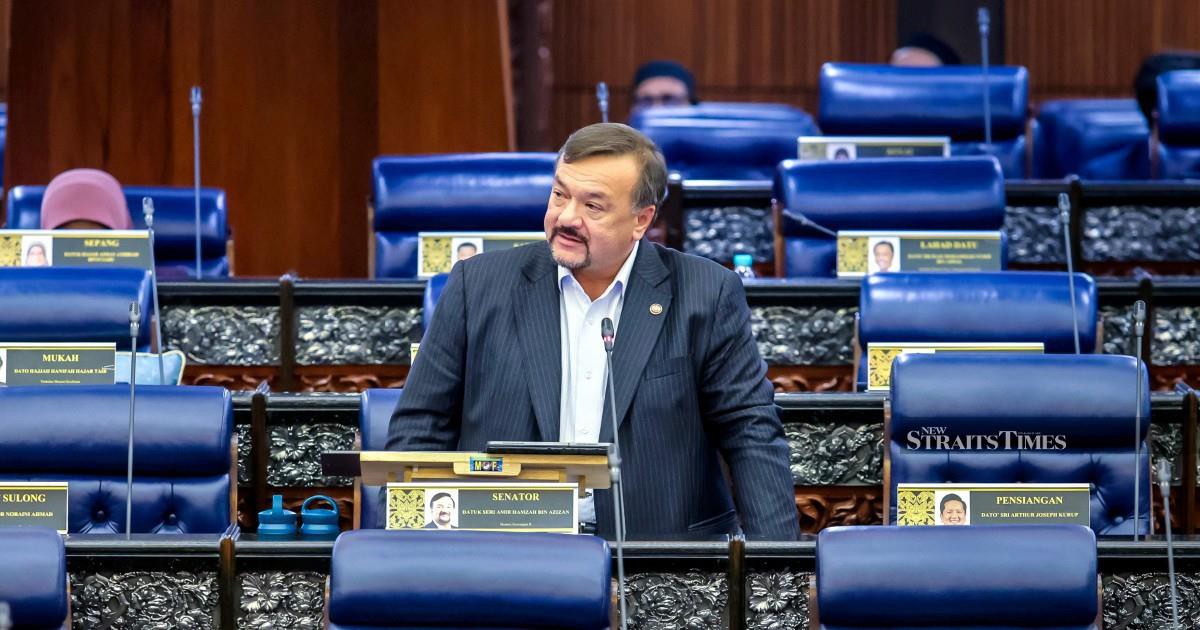
The government has made an unequivocal commitment to hold all parties accountable in the ongoing Tabung Haji investigation, signalling that no individual—whether in private or public service—will receive special treatment if evidence implicates them in misconduct. This reassurance underscores the administration's stated determination to restore public confidence in the institution following revelations about problematic investment decisions and financial irregularities.
Tabung Haji, Malaysia's pilgrim fund manager and a major domestic investor, has faced intense scrutiny over its handling of shareholder money. The entity, which oversees savings from hundreds of thousands of Malaysian Muslims preparing for hajj pilgrimages, had invested heavily in now-defunct ventures and complex financial instruments that deteriorated significantly in value. The scale of potential losses and the decisions that led to such exposures have prompted both parliamentary inquiries and formal investigations into institutional governance and accountability.
The pledge of impartial investigation carries particular significance given Malaysia's recent political history, where institutional corruption and abuse of public office have become central to national discourse. Assertions that investigations will follow evidence rather than protect favoured figures represent an important signal about the government's stated commitment to transparency and rule of law. For ordinary Malaysians—particularly those who contributed their hajj savings to Tabung Haji—such assurances directly affect their confidence in how the institution will be reformed and how those responsible for losses will face consequences.
Tabung Haji's predicament highlights a broader challenge facing Malaysia's public institutions. The entity operates as both a religious trust managing pilgrimage savings and as a substantial investment portfolio with diverse holdings across Malaysian companies, property, and international assets. This dual role creates governance complexities that require robust oversight mechanisms and clear lines of accountability. When such mechanisms fail—as investigations suggest occurred—the reputational and financial damage extends beyond the institution itself to affect public trust in similarly structured entities.
The investigation's scope encompasses several areas of concern that have emerged in recent years. These include investment decisions that committed substantial capital to projects with questionable fundamentals, property acquisitions and development ventures that underperformed expectations, and internal controls that allegedly failed to prevent or flag problematic transactions. Understanding precisely where decision-making breakdowns occurred and identifying which individuals bore responsibility requires meticulous examination of documentation, communications, and institutional procedures spanning years of operations.
For the Malaysian financial sector and regulatory framework, the Tabung Haji case serves as a critical test of investigative rigour and prosecutorial consistency. The investigation's outcome will demonstrate whether Malaysia's enforcement agencies possess the independence and capability to pursue cases involving prominent individuals, institutional leaders, or politically connected figures without interference. This capacity is essential not only for restoring specific institutions but for maintaining the integrity of the broader financial system that depends on investor confidence and regulatory credibility.
The government's stated position also reflects pressure from pilgrims and their families who stand to lose accumulated savings if financial deterioration continues unchecked. Public backing for firm accountability helps create political space for investigators to pursue cases where they might otherwise face pressure to protect influential figures. In this sense, the government's public commitment functions not merely as a statement but as a check on potential interference in the investigation process.
International observers of Malaysian governance have increasingly focused on whether the country can move beyond perceived patterns of selective prosecution and institutional capture. The Tabung Haji investigation offers an opportunity to demonstrate measurable progress. If senior figures found culpable face proportionate consequences while lesser-connected individuals receive identical treatment, it would reinforce messaging about equal accountability under Malaysian law. Conversely, any perception that investigations conclude based on political convenience rather than evidence would further undermine public trust in institutions already suffering credibility deficits.
The timing of these assurances also matters. As Tabung Haji develops restructuring plans and potentially seeks additional funding to cover losses, institutional stakeholders need clarity about governance improvements and accountability measures. Pilgrims evaluating whether to continue using Tabung Haji services must assess whether management has fundamentally changed or whether previous problems risk recurring. Transparent, conclusive investigations that establish clear responsibility and consequences contribute to answering these critical questions.
Looking forward, the investigation's findings may prompt legislative or regulatory changes to strengthen Tabung Haji's governance structure, independent oversight, and risk management protocols. The institution's experience might also inform how Malaysia structures accountability mechanisms for other major public and semi-public entities managing collective funds or serving essential social functions. Ensuring that investigative conclusions drive genuine institutional reform—rather than serving as brief public relations exercises—remains essential for translating accountability rhetoric into tangible governance improvement.

