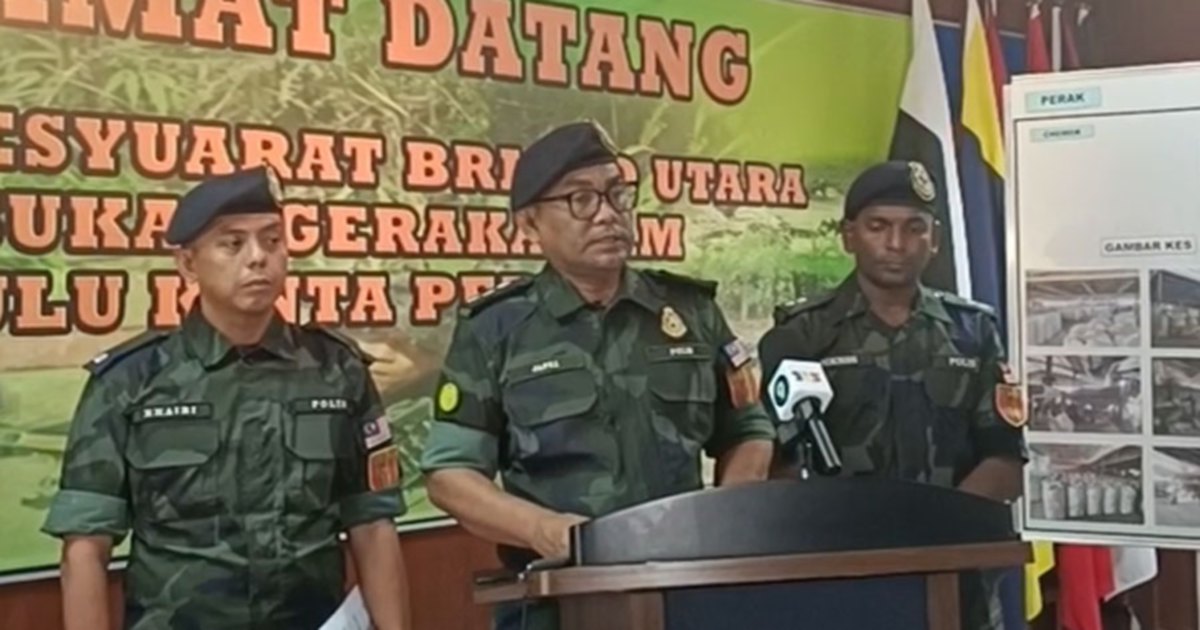
A major crackdown on unlicensed mining in the northern peninsula has yielded substantial results, with the General Operations Force Northern Brigade seizing assets worth RM31.7 million and apprehending 30 individuals suspected of involvement in illegal mineral extraction and processing. The enforcement operation, which targeted unauthorised operations across Perak and Kedah, represents a significant intensification of efforts to combat the persistent problem of uncontrolled resource exploitation in these states.
The seizure encompasses both raw minerals and processing equipment, indicating that the operations under investigation involved multiple stages of the mining supply chain rather than simple site extraction. The scale of the confiscated assets underscores the considerable financial stakes involved in illegal mining networks, which often operate with sophisticated infrastructure and supply arrangements. Such operations typically represent organised activity rather than sporadic individual prospecting, suggesting the enforcement action may have disrupted more extensive criminal networks than surface indications reveal.
Illegal mining has emerged as a significant governance challenge across northern Peninsular Malaysia, where geographical terrain and institutional capacity constraints create conditions conducive to unauthorised resource extraction. Perak, historically a major tin-producing state, and Kedah, with substantial mineral deposits, have both experienced recurring waves of illegal mining activity. The persistence of such operations despite regulatory oversight points to ongoing demand from processors and downstream buyers willing to engage with informal supply chains, creating economic incentives that law enforcement must continually counter.
The General Operations Force plays a vital role in enforcing natural resource regulations across Malaysia, operating with broader powers than conventional police units in areas requiring intensive field operations. The Northern Brigade's capacity to conduct large-scale coordinated enforcement actions reflects the institutional specialisation required to address organised illegal mining, which often involves networks spanning multiple jurisdictions and administrative boundaries. The sustained effort required to identify, monitor, and dismantled such operations demands dedicated expertise and inter-agency coordination that general law enforcement structures may struggle to provide alone.
The detention of 30 suspects raises important questions about the organisational structure of illegal mining enterprises in northern Malaysia. Such operations typically involve hierarchical networks encompassing site managers, equipment operators, transport personnel, and commercial facilitators who aggregate and market extracted materials. The number of arrests suggests the enforcement action targeted multiple levels of involvement, though the specific roles and alleged responsibilities of individual detainees remain undisclosed. Prosecutorial outcomes will depend on establishing culpability within these organisational structures and proving knowledge of operating without proper authorisation.
Environmental implications of illegal mining extend beyond immediate resource depletion to encompass landscape degradation, water contamination, and ecosystem disruption. Unregulated extraction typically involves minimal environmental safeguards, with operators prioritising mineral recovery over remediation or restoration. The cumulative environmental footprint across multiple sites can substantially alter local hydrology, soil stability, and biodiversity. Perak and Kedah communities proximate to mining areas have reported water quality concerns and land subsidence linked to unauthorised operations, creating public health dimensions that transcend purely regulatory concerns.
The economic motivations underlying persistent illegal mining reflect broader challenges in formalising Malaysia's extractive sectors. Individuals engaging in unauthorised operations often pursue marginal livelihoods in communities with limited economic alternatives, particularly in rural areas where formal employment opportunities remain constrained. Simultaneously, buyers willing to source from informal channels benefit from cost savings unavailable through regulated supply chains, creating economic traction for illegal producers. Addressing the phenomenon therefore requires not only enforcement capacity but also economic strategies that enhance formal sector attractiveness and livelihood alternatives in affected communities.
International dimensions also merit attention, as some illegally extracted minerals enter cross-border supply chains servicing regional manufacturing sectors. Malaysia's integration into global commodity networks means that enforcement actions have implications extending beyond domestic resource management to encompass due diligence obligations increasingly imposed on buyers and processors operating within international supply chains. The seizure of substantial quantities of minerals underscores the scale through which informal Malaysian operations contribute to broader regional commodity flows.
The RM31.7 million valuation attached to confiscated materials reflects estimated market worth rather than proven possession value, and actual disposition of seized assets involves complex procedural considerations. Confiscated minerals may be transferred to state authorities, destroyed to prevent re-entry into informal channels, or auctioned through formalised processes. Processing equipment seized from operators typically requires decontamination and verification before disposition, as it may have been employed for illicit purposes. The substantial financial value of confiscations creates practical challenges in asset management and raises questions about cost-recovery mechanisms supporting enforcement activities.
Looking forward, sustaining enforcement effectiveness against illegal mining requires multifaceted approaches extending beyond periodic operations. Enhanced inter-agency coordination between the General Operations Force, state government resource management authorities, environmental regulators, and local administration can improve intelligence gathering and operational planning. Technological solutions including satellite monitoring, drone surveillance, and data analytics may enhance detection capabilities and operational efficiency. Community engagement initiatives addressing economic drivers of illegal mining in affected areas represent longer-term investments in social stability and resource governance.
The enforcement action also highlights ongoing tensions between developmental aspirations in commodity-dependent regions and environmental stewardship imperatives. While minerals represent valuable resources, the externalities imposed by uncontrolled extraction ultimately undermine sustainable development pathways. Perak and Kedah authorities face persistent pressure to balance resource utilisation with environmental protection, a challenge compounded by jurisdictional fragmentation and competing claims over land use authorisation. The General Operations Force operation demonstrates commitment to enforcement, yet addressing underlying drivers of illegal mining remains a foundational challenge requiring sustained institutional and political commitment.

