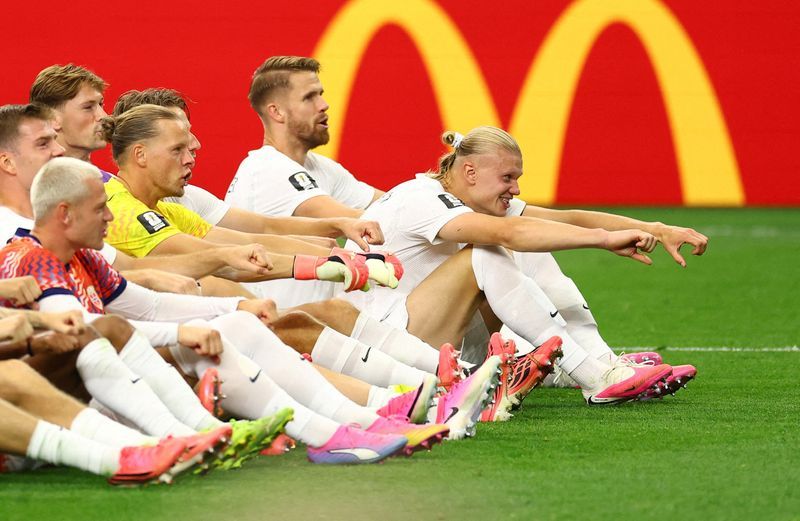
Norway's World Cup adventure concluded in heartbreak on Saturday when England defeated them 2-1 after extra time in their Miami quarter-final, yet the Scandinavian nation's performance throughout the tournament has fundamentally reshaped perceptions of their football prowess. Absent from the global stage for 28 years, the team under manager Stale Solbakken arrived in the United States with a blend of tradition and modernity, capturing imaginations with pre-tournament photoshoots depicting their squad as Viking warriors—a cultural touchstone that resonated far beyond Scandinavia's borders.
The symbolism proved prescient. Erling Haaland and his teammates stormed through the group phase with the swagger of conquerors, dismantling Ivory Coast with a commanding 2-1 victory that featured a Haaland brace in the knockout stages. That triumph set the tone for an improbable progression against Brazil, where Norway produced a performance of such technical sophistication and tactical discipline that even neutrals conceded they had witnessed a side playing above their historical pedigree. The Brazilian scalp—achieved through a 2-1 scoreline that defied the odds facing any team attempting to dethrone one of football's traditional heavyweights—shifted the narrative entirely. Norwegian supporters, emboldened by each successive victory, dared imagine their team might reach the semi-finals or even contest the final itself.
Yet fatigue ultimately proved an unyielding opponent. Against England in the quarter-final, Norway surrendered their one-goal advantage when Jude Bellingham struck twice during the extra-time period, exposing the accumulated physical toll that extended campaigns place upon squads lacking the depth resources of richer footballing nations. Both Haaland and captain Martin Odegaard, cornerstones of Norway's ambitions throughout the tournament, visibly wilted as the match progressed into its decisive phases. Their withdrawal from contest left England to advance, but the narrative of Norwegian disappointment was tempered by the accomplishment of having competed credibly against a side boasting vastly greater experience at this stage of World Cup competitions.
The rehabilitation of Norwegian football within international consciousness extends far beyond this tournament's results. Domestically, Bodo/Glimt's sustained excellence in European club competitions over successive seasons has provided concrete evidence that Norwegian football culture has transcended its historical reputation as a rigid, direct, almost utilitarian approach to the sport. Instead, contemporary Norwegian football now produces technically gifted, tactically astute players capable of executing sophisticated passing schemes and positional play that would satisfy the most demanding European observers. This transformation took years to cultivate, but the World Cup stage accelerated its global recognition.
Solbakken's measured assessment of the campaign reflected a coach comfortable with context and perspective. Describing the summer of 2026 as "fairly OK"—a distinctly Scandinavian understatement delivered with evident irony—he acknowledged both the bittersweet nature of early elimination and the profound achievement inherent in Norway's tournament run. The manager's philosophy, shared visibly by both Odegaard and Haaland, emphasizes dignity, self-awareness, and the capacity to extract meaning from competitive struggle without descending into either false bravado or despondent recrimination. This temperamental consistency defined how the squad conducted themselves both in victory and, ultimately, defeat.
For Malaysian and Southeast Asian observers, Norway's resurgence carries instructive implications. The Scandinavian nation invested sustained commitment into player development systems, youth infrastructure, and coaching excellence across two decades when their senior team remained absent from World Cup competition. This long-term philosophy, rather than knee-jerk reactive management changes, created the conditions permitting a credible return. Nations throughout the region, some possessing greater natural resources and population bases than Norway, might contemplate whether similar patience and systematic investment in foundational structures could eventually yield comparable international dividends.
The trio of Solbakken, Odegaard, and Haaland embodied a particular Norwegian character archetype—confident without arrogance, capable of self-deprecating humor while remaining utterly serious about competitive ambition. This psychological profile, evident in their comportment throughout the tournament, contributed meaningfully to how other nations and supporters perceived Norwegian football's trajectory. They neither apologized for returning nor permitted disappointment to undermine their conviction that Norwegian players genuinely belonged in company with football's established elite.
Looking forward, Solbakken articulated a crucial element of the squad's psychological legacy: numerous players now carry forward the conviction that they can measure themselves against the world's finest without inferiority. This belief system, perhaps more valuable than any individual tournament result, provides the foundation upon which future Norwegian campaigns will build. The interval between now and subsequent World Cup qualifying cycles will determine whether this moment crystallizes into sustained competitive improvement or remains a memorable anomaly. Yet if recent years of Bodo/Glimt's European performances offer reliable indication, Norwegian football's trajectory curves decisively upward.
The visualization of Norwegian supporters performing the "Viking row" celebration became the tournament's defining iconic gesture, embraced enthusiastically by American crowds and broadcast globally with infectious enthusiasm. This cultural element—Norwegian tradition seamlessly integrated into contemporary football spectacle—symbolized something beyond mere sporting tribalism. It represented a nation reconnecting with its football presence on football's grandest stage, doing so with style, substance, and the kind of good humor that transcended national boundaries. When Norway eventually departed Miami, they left behind not bitter regret but genuine fondness from observers who appreciated watching a rediscovered football nation remind the world that competitive excellence, when achieved through patient development and maintained through disciplined execution, need not emanate exclusively from football's traditional power centers.

