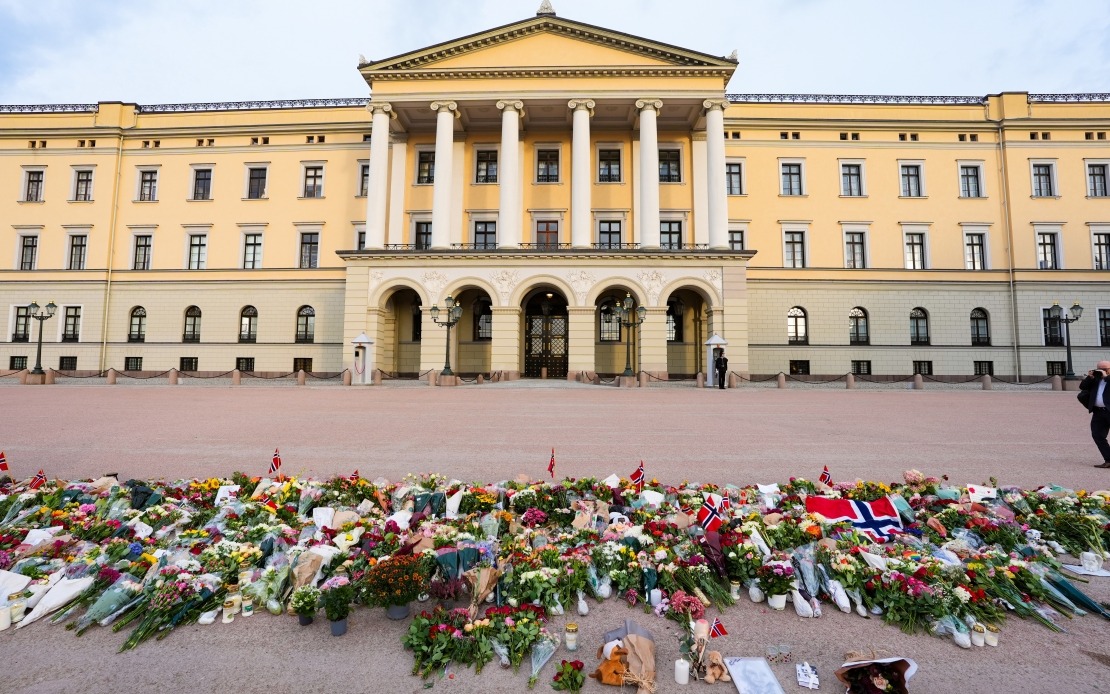
King Harald V of Norway died peacefully on Friday morning at the National Hospital in Oslo, ending a reign that spanned more than three decades and made him one of Europe's most senior monarchs. The 89-year-old passed away at 6:35 am local time, with the Royal Palace lowering flags to half-mast in acknowledgement of his passing. His death marks a significant moment for Scandinavia and the broader European royal landscape, with implications rippling across Nordic diplomacy and institutional continuity.
The Norwegian monarch had been admitted to the hospital on 17 August following routine medical examination, but his condition deteriorated more seriously in the following days. Medical records revealed that Harald had been undergoing cortisone treatment for hemolytic anemia, a complex blood condition that causes the body's red blood cells to break down prematurely, resulting in fluid accumulation throughout his system. This chronic illness had required ongoing management, yet the situation escalated when he developed a bacterial infection in his bloodstream, fundamentally altering his medical trajectory.
According to reporting from Norwegian public broadcaster NRK, the bloodstream infection—known medically as bacteremia—proved to be the decisive factor that led to his deterioration. The combination of his existing hemolytic anemia, which already compromised his immune system's effectiveness, and the subsequent bacterial infection created a cascade of complications that his body could not overcome. The palace's statement that he passed away peacefully suggests that medical staff were able to ensure comfort in his final hours, though the precise nature of the infection and the specific bacteria involved were not disclosed publicly.
Under Norway's constitutional framework, succession occurs automatically without formal coronation ceremonies. Crown Prince Haakon, Harald's eldest son and heir apparent, immediately assumed the throne upon his father's death, becoming King Haakon VII according to Norwegian monarchical naming conventions. This seamless transition reflects the stability mechanisms built into Scandinavian constitutional monarchies, where established protocols ensure governance continuity during dynastic change. The government is scheduled to convene an extraordinary Council of State at the Royal Palace to formally acknowledge the new sovereign and confirm his royal title.
As part of constitutional requirements, the newly crowned king must take a formal oath before the Norwegian parliament, Stortinget, though Norway's tradition explicitly excludes the elaborate coronation ceremonies common in other European monarchies. This streamlined approach reflects Nordic pragmatism and democratic principles that position the monarch as a constitutional figurehead rather than a ceremonial potentate. The oath-taking will formally bind King Haakon VII to uphold Norway's laws and constitution, cementing his legal authority.
Harald's 33-year reign represented one of modern Europe's longest-serving monarchical tenures. He ascended to the throne on 17 January 1991 following the death of his father, King Olav V, bringing contemporary relevance to a thousand-year-old institution. At the moment of his death, Harald held the distinction of being Europe's oldest currently reigning monarch—a status that underscored both his longevity and the generational shifts occurring across European royal houses. His extended reign witnessed sweeping geopolitical transformations, from the Cold War's end through European Union expansion and digital revolution.
For Malaysia and Southeast Asian observers, Harald's passing offers instructive lessons about constitutional monarchy in modern democracies. Norway's model demonstrates how hereditary monarchy can coexist with robust democratic institutions and popular support, a relevant consideration for Commonwealth nations including Malaysia that maintain similar constitutional arrangements. The orderly succession and absence of constitutional crisis highlight the institutional resilience that clear succession rules provide, regardless of a nation's specific governmental structure.
The late king's tenure encompassed significant challenges to Norwegian stability and international standing. During his reign, Norway navigated complex relationships with the European Union despite remaining outside its formal structures, managed substantial oil wealth through the Government Pension Fund Global, and maintained its NATO alignment while balancing relations with Russia—particularly acute given Norway's Arctic geography. Harald represented continuity and diplomatic steadiness throughout these transitions, embodying national identity during periods of rapid international change.
Crown Prince Haakon's accession introduces a new generation of Nordic leadership at a moment when European monarchies face evolving public expectations regarding transparency, environmental responsibility, and social relevance. The new king, born in 1973, represents a bridge between traditional royal authority and contemporary democratic values. His succession occurs as Norway continues confronting questions about its global role, energy transition, and Arctic sovereignty—issues where consistent monarchical presence provides institutional continuity even as policy directions shift.
The constitutional succession also reflects how Scandinavian monarchies have successfully modernized their institutions while preserving symbolic national unity. Unlike constitutional crises that have afflicted some European royal houses, Norway's transition demonstrates institutional maturity and public acceptance of hereditary succession within democratic frameworks. This stability partly explains why Nordic monarchies maintain relatively high public support compared to their continental counterparts, suggesting that transparent governance and clearly defined roles sustain popular legitimacy.
As Norway enters this new reign, international observers note that King Haakon VII inherits both the symbolic responsibilities and practical constraints of contemporary constitutional monarchy. He assumes leadership of a wealthy, stable, geographically strategic nation facing complex international questions about climate change, energy policy, and regional security. The seamless succession reflects institutional strength, yet also presents opportunity for the new monarch to establish his own diplomatic priorities and leadership style within constitutionally defined boundaries.

