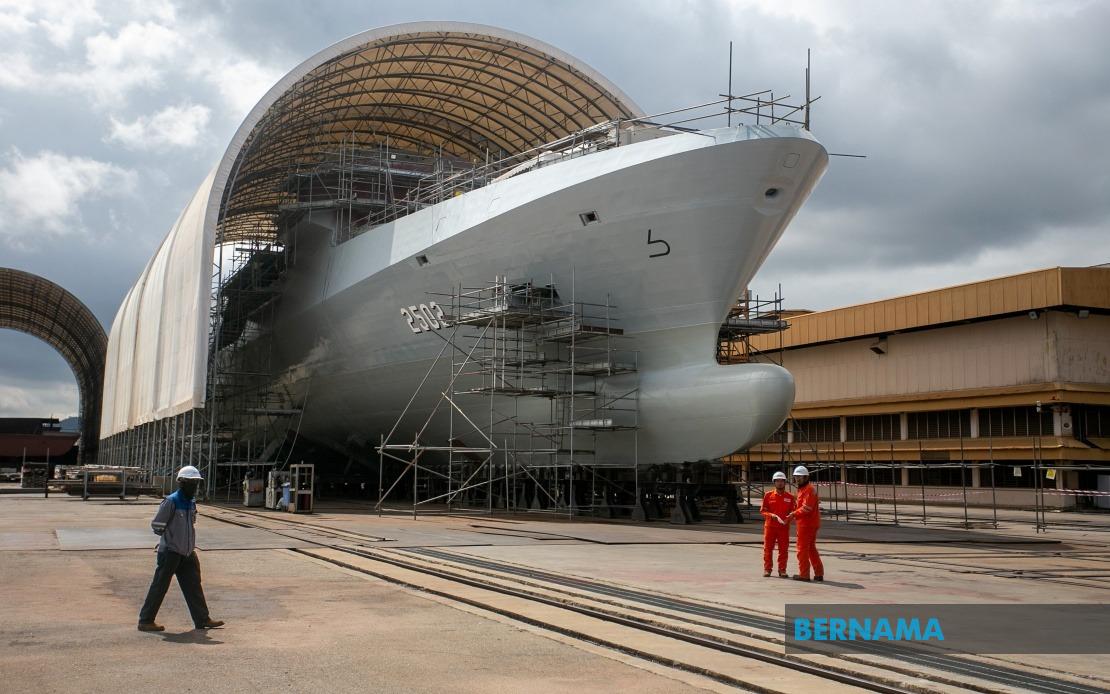
The Defence Ministry has pushed back against parliamentary criticism over the RM571.9 million payment to Norway's supplier for the Naval Strike Missile anti-ship system, clarifying that the funds were released only after the contractor had completed manufacturing and passed rigorous testing protocols established by the Royal Malaysian Navy. The statement comes as parliament has scrutinised the procurement, with backbenchers questioning whether the government acted prudently in releasing full payment and whether adequate contractual protections were in place.
According to MINDEF's parliamentary response, the timing of the payment was strictly tied to contractual milestones rather than representing an advance disbursement with no corresponding physical progress. The ministry emphasised that at the moment payment was authorised, all NSM systems for Malaysia's Littoral Combat Ship project had been fully manufactured, had undergone and passed the RMN's acceptance testing regime, and were positioned ready for shipment to Malaysian waters. This sequencing directly addressed parliamentary concerns that the government had paid before receiving full value for the expenditure.
The ministry further rejected allegations that the NSM procurement contract lacked protective clauses safeguarding government interests. MINDEF asserted that the contract framework includes substantive provisions enabling Malaysia to take corrective action should the supplier fail to perform or breach its obligations. These contractual mechanisms provide the government with legal recourse options in response to non-performance or breach scenarios, though the specific nature and scope of these clauses were not detailed in the parliamentary response.
The dispute has centred on Norway's controversial decision to revoke the export licence for the NSM systems, a move that has complicated Malaysia's acquisition of the cutting-edge anti-ship capability. MINDEF characterised the licence revocation as an event beyond the control of both the Malaysian government and the Norwegian supplier, positioning it as an extraordinary circumstance rather than a consequence of contractual mismanagement. The ministry has indicated that Malaysia intends to activate available contractual remedies to pursue recovery of the payment and compensation for associated damages arising from the licence revocation.
The NSM system represents a significant technological upgrade for the RMN's surface warfare capabilities, with the integration into the LCS platform intended to enhance Malaysia's maritime defence posture. The anti-ship missile's advanced targeting and engagement range would have substantially extended the RMN's ability to respond to threats across Malaysia's extensive exclusive economic zone and contested maritime areas. The licence revocation therefore creates not merely a financial problem but a capability gap that the Navy must now address through alternative solutions.
In responding to parallel parliamentary queries about operational implications, MINDEF stressed that the export licence revocation has not compromised the current operational readiness of the Malaysian Armed Forces overall. The RMN retains existing weapon systems and assets sufficient to discharge its primary responsibility of safeguarding Malaysia's maritime sovereignty, the ministry stated. This reassurance was directed at concerns that the NSM delay might create a dangerous capability vacuum in an era of increased maritime activity and regional tensions in Southeast Asian waters.
The ministry also clarified that the export licence revocation does not affect the delivery schedule for the LCS vessels themselves, suggesting that the ships will proceed toward commissioning on their original timeline despite the absence of the intended missile system. The RMN is actively engaged in evaluating alternative missile platforms that could potentially serve as substitutes for the NSM system, effectively forcing Malaysia to restart the systems integration process with whatever alternative is ultimately selected. This reassessment will consume additional time and resources beyond what was originally budgeted for the project.
The NSM controversy highlights the risks inherent in defence procurement, particularly when sourcing advanced military equipment from countries whose export control regimes may shift due to geopolitical considerations. Norway's decision appears linked to broader international tensions and diplomatic alignments rather than supplier performance issues, placing Malaysia in a vulnerable position as a customer whose interests diverge sharply from those of the defence supplier's home government. The situation underscores the complex interplay between commercial contracts and state-level foreign policy decisions in the defence sector.
For Malaysian defence planners, the NSM episode presents a practical lesson in diversifying supplier sources and maintaining vigilance over geopolitical risks when acquiring sophisticated weapons systems. The procurement process for replacement systems will likely be scrutinised more intensively by parliament and the public given this experience. MINDEF's defensive posture suggests the ministry is aware that further criticism may emerge depending on how Malaysia progresses in identifying and acquiring alternative anti-ship missile capabilities for its maritime forces.
The broader context reflects Malaysia's continued modernisation efforts across the armed forces, a process that frequently involves sourcing from suppliers whose foreign policy priorities may not perfectly align with Malaysia's long-term security interests. As regional maritime tensions persist and neighbouring nations advance their naval capabilities, the pressure to acquire effective anti-ship systems remains acute, even as Malaysia contends with the fallout from the Norwegian licence revocation and searches for viable replacement platforms that can be integrated into the LCS platform without requiring extensive redesign.

