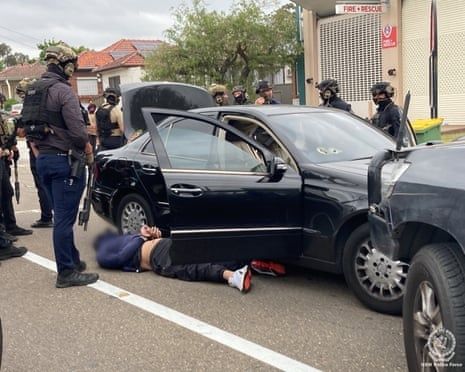
The New South Wales Police Force has intensified its battle against crime on public transport networks, announcing the arrest of 356 individuals during the latest phase of a targeted operation designed to safeguard commuters and transport infrastructure across the state. The enforcement blitz, conducted over a three-day period from Thursday to Saturday, deployed more than 400 officers daily across trains, buses, light rail trams and ferries throughout NSW, underscoring the scale of police commitment to maintaining safety on one of Australia's busiest transport systems.
Operation Waratah, launched in 2024 specifically to combat violent and sexual offences on public transport, has now evolved into an ongoing initiative with this sixth phase representing a milestone in sustained law enforcement activity. The cumulative impact of these coordinated operations demonstrates growing police determination to address a persistent problem affecting commuter confidence and public safety. Since the operation's inception, authorities have now surpassed 1,800 total arrests, indicating the breadth of criminal activity previously occurring on NSW's trains, buses and ferries without systematic interdiction.
The scale of police deployment during the recent three-day phase underscores institutional commitment to transport safety. Officers conducted patrols across 539 trains, inspected 127 buses, and monitored 29 light rail trams, creating a visible and sustained police presence designed both to deter offenders and reassure regular commuters. This intensive saturation approach reflects police strategy to make public transport feel safer by increasing the likelihood that potential offenders encounter law enforcement, while simultaneously providing commuters with evidence that authorities are actively protecting their journeys.
Beyond arrest numbers, the operation yielded significant seizures that point to the nature of threats on public transport. Officers confiscated 28 knives or other weapons during the phase, a reminder that many violent offences involve armed individuals creating heightened danger for other passengers and transport workers. These weapon seizures alone justify the extensive resource commitment, as even a single blade in the hands of an agitated person poses serious risk to crowded commuter environments where escape options are limited and bystanders are trapped in confined spaces.
Drug-related offences also featured prominently, with 137 detections during the operation indicating that substance abuse and drug commerce remain significant drivers of transport crime. Drug users and dealers operating on trains and buses create secondary problems beyond simple possession charges, including erratic behaviour, theft targeting other commuters, and violence sparked by intoxication or disputes over narcotics. The dual focus on violent, sexual and drug offences reflects police understanding that transport crime is interconnected, with substance abuse often fueling more serious criminal conduct.
The 645 combined charges laid against the 356 arrested individuals reveal that many detainees faced multiple counts, with an average of approximately 1.8 charges per person. This distinction matters because it demonstrates that many arrested offenders were not casual rule-breakers but rather repeat offenders or individuals engaged in multiple simultaneous criminal activities. Some would have faced charges spanning violent assault, sexual harassment, weapon possession and drug offences, painting a picture of deeply problematic individuals whose removal from transport networks offers genuine improvement to commuter safety.
For Malaysian observers, the NSW operation offers instructive comparison regarding transport safety enforcement. Malaysia's own public transport networks in Kuala Lumpur, Penang and other major cities occasionally face similar challenges with crime on buses, trains and light rail systems. The intensity and systematic nature of Operation Waratah suggests that sustained, visible police presence combined with serious charging decisions can meaningfully impact commuter experiences, a lesson potentially applicable as Malaysian authorities consider transport safety initiatives.
The timing and scope of Operation Waratah also reflect broader Australian concerns about safety and security in urban environments. Public transport is essential infrastructure, and when commuters fear harassment, theft or violence, broader urban mobility and economic activity suffer as people avoid peak hours or opt for private vehicles, further congesting roads and reducing public transport viability. By visibly policing these networks, authorities attempt to restore confidence and normalcy to essential infrastructure that millions depend upon daily.
Looking ahead, the question remains whether intensive periodic operations represent sustainable long-term strategy or whether NSW requires more permanent, integrated approaches combining infrastructure improvements, mental health support, and addiction services alongside police enforcement. The transition from six discrete operational phases to permanent, embedded transport policing would signal confidence in the problem's solution, whereas continued reliance on episodic crackdowns suggests underlying challenges remain unresolved and require cyclical intensive intervention to manage acceptably.

