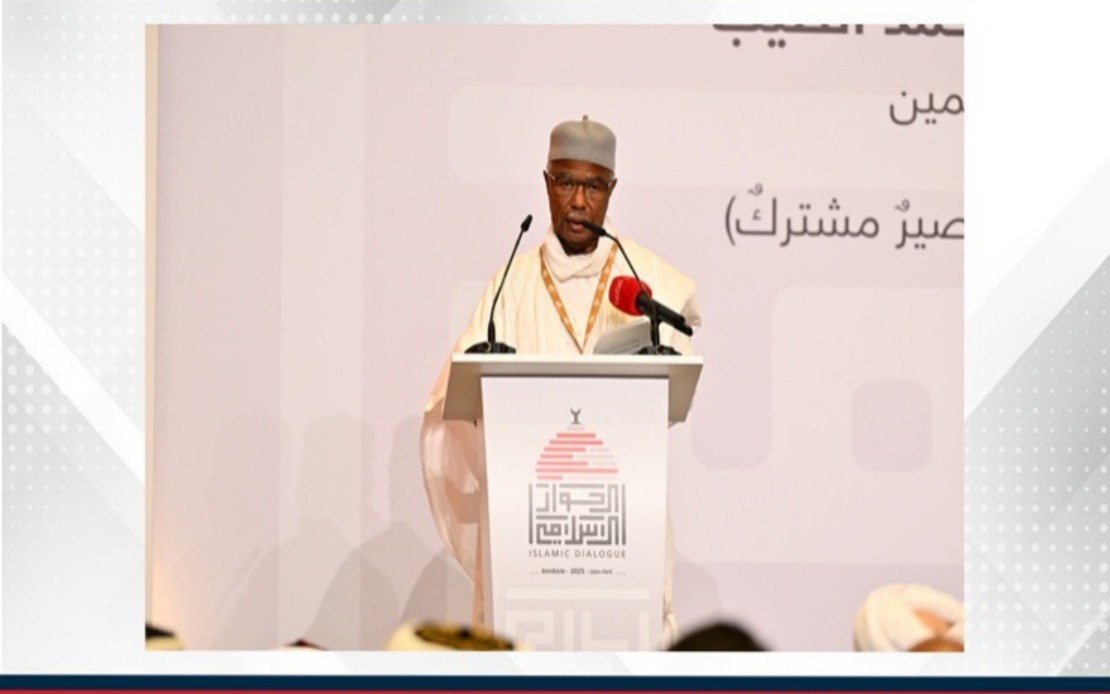
The Organisation of Islamic Cooperation has formally welcomed the signing of a trilateral defense accord forged between Turkey, Saudi Arabia, and Pakistan, marking what the bloc's leadership characterizes as a pivotal moment for strategic cooperation among major Muslim-majority nations. The Mecca Joint Defence Agreement, inked on Friday at a summit held in the holy city, represents a significant diplomatic realignment in the Middle East and South Asia, two regions where geopolitical tensions have traditionally challenged regional cohesion.
OIC Secretary-General Sharein Brahim Taha conveyed his "strong appreciation and support" for the pact, emphasizing that it constitutes an "important strategic step" demonstrating Ankara, Riyadh, and Islamabad's collective determination to deepen mutual cooperation on defence and security matters. The three signatories—Turkish President Recep Tayyip Erdogan, Saudi Crown Prince Mohammed bin Salman, and Pakistani Prime Minister Shehbaz Sharif—executed the agreement at Al-Safa Palace during their summit, establishing what officials describe as a framework explicitly designed to advance regional and global peace rather than target any particular adversary.
The substance of the agreement establishes a collective defense mechanism whereby an armed attack against any signatory nation is treated as an assault upon all three members. This mutual defense obligation echoes classical alliance-building but carries particular weight given the geopolitical posture of the three countries. Turkey maintains NATO membership and significant influence across the Eastern Mediterranean, the Caucasus, and Central Asia. Saudi Arabia anchors Gulf security architecture and wields considerable economic leverage through petroleum markets. Pakistan commands South Asia's second-largest military and nuclear arsenal, projecting influence across Afghanistan and the Indian subcontinent.
Taha framed the accord as "a fundamental pillar for supporting security and stability in the region and across the Muslim world," underscoring the OIC's conviction that the pact extends beyond bilateral military coordination to serve broader multilateral interests. His remarks reflect the organization's institutional aspiration to promote solidarity among its 57 member states, a constituency spanning North Africa, the Middle East, Central Asia, South Asia, and Southeast Asia—including Malaysia. For the OIC, such high-level defense cooperation among prominent members validates its role as a convener of Islamic-world consensus.
According to Turkish officials involved in the negotiations, the agreement operates on the principle of burden-sharing, wherein each nation commits to strengthening collective deterrence capacities while pursuing common security objectives. This approach departs from traditional bilateral pacts by embedding three-way consultation mechanisms and coordinated responses to emerging threats. The framework explicitly emphasizes defensive posturing, designed to prevent escalation while reassuring each member's strategic interests and regional allies.
The timing of this accord carries significance for Southeast Asia, where Malaysia and other ASEAN states maintain diplomatic and economic relationships with all three signatories. Turkey has expanding interests in the region through trade and cultural ties. Saudi Arabia remains a major investor and strategic partner, particularly in energy and Islamic finance sectors. Pakistan maintains defence and security partnerships with several Southeast Asian nations. The tripartite agreement could influence how these external powers calibrate their regional engagement, potentially affecting alliance dynamics and security cooperation frameworks that Southeast Asian countries navigate.
Taha's expression of hope that the pact will "contribute to achieving peace and prosperity in the region and the wider international community" reflects the OIC's institutional optimism that defense cooperation, when framed around shared values and mutual security interests, can stabilize volatile areas. This perspective contests the notion that military alliances inevitably heighten regional tensions; instead, the OIC leadership suggests that transparent, multilateral security arrangements among major players can discourage miscalculation and foster confidence-building.
The agreement's explicit stipulation that it targets no country appears designed to preempt criticism from nations apprehensive about encirclement or exclusion. Saudi Arabia and Pakistan have historically viewed Iran as a regional competitor, while Turkey maintains complex relations with Russia, the United States, and European powers. By framing the pact as defensive and inclusive rather than confrontational, the signatories signal openness to eventual dialogue with other regional actors, though such overtures would require significant diplomatic groundwork.
For Malaysian observers, the Mecca agreement illustrates how major Muslim-majority states are realigning their security partnerships in response to evolving geopolitical threats—from terrorism and proxy conflicts to great-power competition and cybersecurity challenges. The accord also demonstrates that the OIC, despite criticism regarding its effectiveness and divisions among members, retains symbolic importance in legitimizing cooperation among Islamic nations. Malaysia's own membership in the OIC and its balanced approach to regional powers position it as a potential beneficiary of more stable, cooperative frameworks among larger regional actors.
The agreement's focus on multilateral burden-sharing and preventive defense measures presents a model that could appeal to other coalitions seeking alternatives to unilateral military posturing or exclusive alliance systems. Should the Mecca framework prove durable and expand to include additional signatories or observer states, it could reshape regional security architecture and create new diplomatic channels for resolving disputes through institutional mechanisms rather than confrontation.

