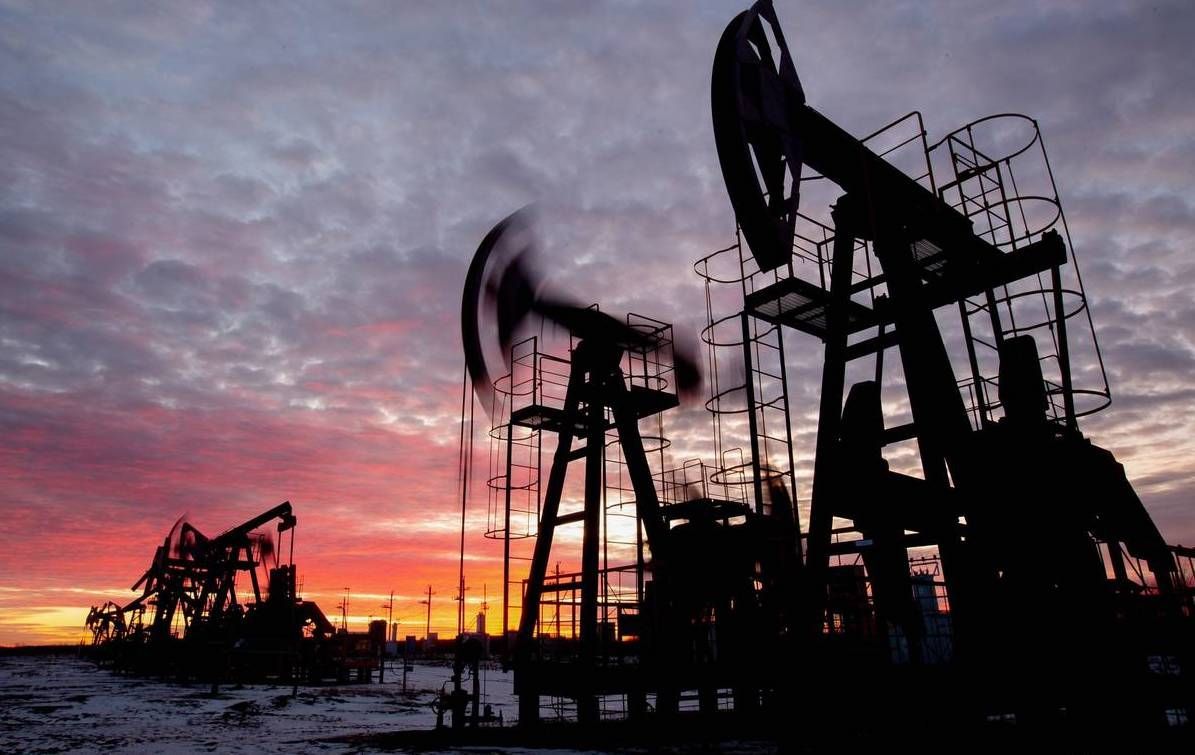
Crude oil tumbled sharply on Tuesday, with Brent futures shedding US$4.27 per barrel to close at US$84.09 and West Texas Intermediate falling US$3.35 to US$79.26, marking the lowest prices seen in approximately two weeks. The decline, representing drops of roughly 4.8% and 4.1% respectively, reflected a tentative easing of direct military confrontation between Washington and Tehran. Both benchmarks extended losses from a wider three-day selloff of around 16%, suggesting markets are recalibrating risk premiums now that the immediate threat of escalating strikes between the two regional powers has temporarily subsided.
The pullback in oil prices reflects measured market confidence that the pause in hostilities could eventually pave the way for substantive negotiations to resolve the underlying conflict. Yet this optimism remains considerably restrained. Traders appear acutely aware that previous ceasefires in this ongoing struggle have proven fleeting, with both sides rapidly returning to confrontation. President Donald Trump has repeatedly claimed that productive talks are occurring, but Iran has consistently dismissed these assertions, creating a credibility gap that tempers any sustained rally in crude markets. The fundamental disconnect between American and Iranian statements underscores the fragility of the current truce and the possibility that fighting could resume without warning.
Despite the momentary halt in direct military operations, the underlying structural damage to global oil flows remains unchanged. The Strait of Hormuz, through which approximately one-fifth of the world's seaborne oil passed before the war, remains effectively closed due to the conflict. This chokepoint blockade represents an ongoing constraint on supply that continues to support energy prices even as headline risk recedes. The two antagonists remain poles apart on the fundamental issues that triggered the closure in the first place, suggesting that achieving genuine resolution will require far more than a temporary lull in shooting.
Diplomatic efforts to address the Strait crisis are proceeding, though with limited success thus far. Oman, acting as an intermediary backed by other Gulf states, presented Iran with a proposal to manage maritime traffic through a system of voluntary user fees. However, Tehran firmly rejected this approach. Instead, Iran's Deputy Foreign Minister Kazem Gharibabadi revealed a counter-proposal during a television address on Tuesday that would require traffic in both directions to route substantially through Iranian territorial waters. This Iranian insistence on controlling the passage reflects Tehran's determination to leverage its geographic position for political advantage, making any quick resolution to the blockade unlikely.
Energy markets are grappling with what analysts describe as a fundamentally messy situation where neither party has resumed military strikes but neither has made genuine progress toward resolution. Bob Yawger, director of energy futures at Mizuho, captured market sentiment succinctly, noting that traders are pricing in the absence of active warfare while remaining deeply uncertain about what comes next. The ongoing closure of the Strait of Hormuz continues to artificially constrain global supply, while simultaneous attacks by Iran-backed Houthi forces in the Red Sea have created a second critical bottleneck. These dual disruptions mean that the benefits of reduced US-Iran tension are being largely offset by continued shipping chaos.
The Houthi militia's operations in the Red Sea have introduced complexity to the energy equation beyond the primary US-Iran conflict. Saudi Aramco was forced to shut down its 400,000-barrel-per-day Jizan refinery on July 27 following a Houthi missile strike two days prior, directly curtailing Saudi output. The Iranian-aligned group has also successfully disrupted traffic through the Bab el-Mandeb Strait, the critical waterway connecting the Red Sea to the Gulf of Aden. This secondary chokepoint has forced significant re-routing of global energy shipments and increased transportation costs. Houthi commanders claimed on Tuesday that they had attacked a Saudi oil tanker with ballistic missiles, reinforcing that Red Sea waters remain dangerous for commercial shipping.
Chinese diplomatic engagement has emerged as an unexpected factor shaping energy security dynamics in the region. Beijing has opened direct dialogue with the Houthi leadership to negotiate safe passage for Chinese tankers through contested Red Sea waters. This pragmatic bilateral arrangement illustrates how major energy importers are adapting to persistent regional instability by negotiating directly with non-state actors. Such initiatives underscore the degree to which global energy markets are fragmenting around bilateral arrangements rather than relying on international law or regional stability mechanisms. For Southeast Asian traders and refiners dependent on stable Middle Eastern supplies, this development suggests a period of elevated costs and logistical uncertainty.
Shipping data from Kpler reveals the magnitude of current disruption: on Monday, only 28 vessels transited the Bab el-Mandeb Strait, representing a four-day high but still dramatically below normal traffic levels. Meanwhile, the Strait of Hormuz remains largely idle compared to pre-war patterns. This congestion at multiple chokepoints is pushing marginal barrels off the market and forcing energy companies to extend voyage durations and reroute shipments through longer, more expensive routes. The Suez-Mediterranean pipeline alternative has become increasingly important, and Saudi Aramco is considering new pricing mechanisms for crude loaded from Egypt's Sidi Kerir port specifically to compensate Asian buyers for the higher transportation costs resulting from these detours.
The geopolitical landscape extends beyond the Middle East proper. Ukrainian President Volodymyr Zelenskiy disclosed that he and Trump have discussed reinvigorating peace negotiations with Russia, signalling potential progress on another critical energy-related conflict. A settlement in the Ukraine war could trigger sanctions relief on Russian crude exports, allowing Moscow to boost production and add additional barrels to global markets. Russia ranks as the world's third-largest crude producer behind the United States and Saudi Arabia. Any significant increase in Russian supply flowing to markets, particularly to Asian buyers who may be less constrained by Western sanctions compliance, could exert downward pressure on global benchmarks and provide relief to energy-dependent economies throughout Southeast Asia.
Production policy from the Organisation of the Petroleum Exporting Countries and allied producers including Russia will likely impose additional supply discipline over coming months. Multiple sources indicate that Opec+ is preparing to pause scheduled output increases for three months beginning in October, following the completion of current voluntary production cuts being returned to the market. Negotiations over new production quotas are expected to prove contentious among member states, with divergent interests likely creating friction. This coordinated production management, coupled with ongoing Middle Eastern disruptions, suggests that energy prices should remain supported despite the temporary optimism generated by the US-Iran ceasefire. For energy-importing nations throughout Southeast Asia, the outlook remains one of elevated costs, supply uncertainty, and dependence on diplomatic developments beyond their control.

