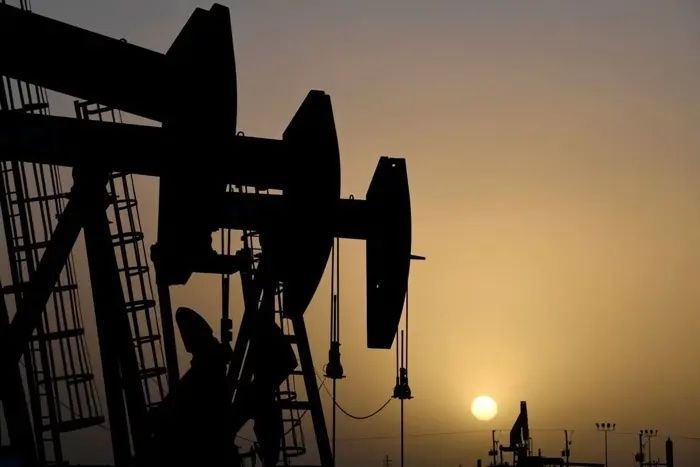
Crude oil markets surged on Friday following a dramatic intensification of hostilities between the United States and Iran, with investors pricing in growing risks to two of the world's most critical energy transit corridors. Brent crude futures climbed 70 cents to settle at $84.93 per barrel, while US West Texas Intermediate crude rose 81 cents to $79.76, together erasing losses accumulated in the previous trading session and reflecting renewed anxiety over geopolitical disruptions to global oil flows.
The week proved particularly volatile for energy traders, with both benchmark contracts gaining nearly 12 percent across the five-day period. Brent crude is now tracking toward a third consecutive weekly advance, while WTI futures appear headed for a second straight week of gains, suggesting that market participants view the current tensions as more than temporary noise. This sustained rally underscores deeper concerns about the durability of fragile supply chains in an already tight energy market where spare production capacity remains limited globally.
The escalation began on Wednesday when American forces launched two major waves of air strikes in a single day, targeting military installations and infrastructure near Iran's southern coast. The bombing campaign continued through Thursday and intensified further on Friday evening, when the US Central Command initiated what it described as a sixth consecutive night of strikes aimed at degrading Iranian military capabilities. Each fresh assault raised the stakes in a brinkmanship contest that threatens to destabilize the entire Middle Eastern energy ecosystem.
Tehran has responded in kind with volleys of missiles and unmanned drones directed at American military installations across the region, including a newly expanded air base in Jordan. This tit-for-tat exchange represents a dangerous escalation from the relative calm that had prevailed following a ceasefire agreement reached just weeks earlier. The breakdown of that tentative truce signals that diplomatic off-ramps may be narrowing, pushing markets toward pricing in worst-case scenarios for regional stability.
Perhaps most alarming for global energy security are reports that Iran has instructed its Houthi allies to prepare for a coordinated blockade of the Red Sea should American forces strike Iranian infrastructure facilities. Such a move would create what analysts describe as a dual-risk scenario, with both the Strait of Hormuz and the Red Sea simultaneously threatened as chokepoints for global oil exports. The Houthi movement, which maintains significant military capabilities despite years of Saudi-led military intervention, has demonstrated capacity to disrupt shipping in these waters, adding credibility to Iranian threats.
Qatar also reported military action within its territory on Friday morning, with its defence ministry claiming that armed forces intercepted an Iranian missile attack. The interior ministry subsequently disclosed that a child suffered shrapnel injuries during the interception operations, highlighting how the spiraling tensions now directly affect civilian populations across the broader region. Such incidents risk triggering wider retaliation cycles that could quickly spiral beyond current containment.
Market analysts have grown increasingly vocal about the severity of these risks. Tim Waterer, chief market analyst at KCM Trade, characterised the current environment as particularly precarious, noting that the prospect of the Red Sea emerging as a new major supply disruption focal point adds another layer of complexity to an already challenging global oil outlook. The confluence of direct US-Iran military confrontation with proxy threats through Houthi intermediaries creates what traders term a geopolitical risk premium now embedded firmly in pricing across both Brent and WTI contracts.
The International Energy Agency, typically cautious in its public commentary, has signalled heightened concern through its executive director Fatih Birol. Speaking at a Council on Foreign Relations event in Washington, Birol articulated worry about whether the situation could be contained over the coming weeks, acknowledging that oil security remains a critical vulnerability for global energy markets. His comments reflected growing consensus within the international energy establishment that current trajectories are unsustainable without diplomatic intervention.
The mathematics of this crisis are unforgiving for emerging markets and oil-importing nations like Malaysia. Any sustained disruption to flows through the Strait of Hormuz, through which roughly one-third of globally traded oil passes, would immediately trigger price spikes that ripple through supply chains worldwide. Malaysian manufacturers, whose competitive advantages depend partly on stable energy costs, face margin compression if crude prices remain elevated. Airlines, shipping companies, and chemical producers all face higher input costs that ultimately translate into higher prices for Malaysian consumers and businesses.
Technical analysts tracking WTI crude suggest the contract could test the mid-$80 range if it maintains support above the mid-$70s threshold, implying significant upside pressure should geopolitical risks continue escalating. Such price levels would represent meaningful increases from the $60-70 range that had prevailed during more stable periods, with substantial implications for regional economies heavily dependent on oil imports and sensitive to energy cost movements.
The risk now facing policymakers across Southeast Asia is that these tensions become self-perpetuating, with each military action triggering countermeasures that push prices higher and extend the geopolitical premium indefinitely. Malaysian authorities monitoring these developments must consider contingency planning for sustained elevated oil prices, including potential impacts on domestic inflation, currency pressures, and broader economic stability. The region's exposure to Middle Eastern energy supplies makes it a silent stakeholder in conflicts it did not create and cannot easily influence.

