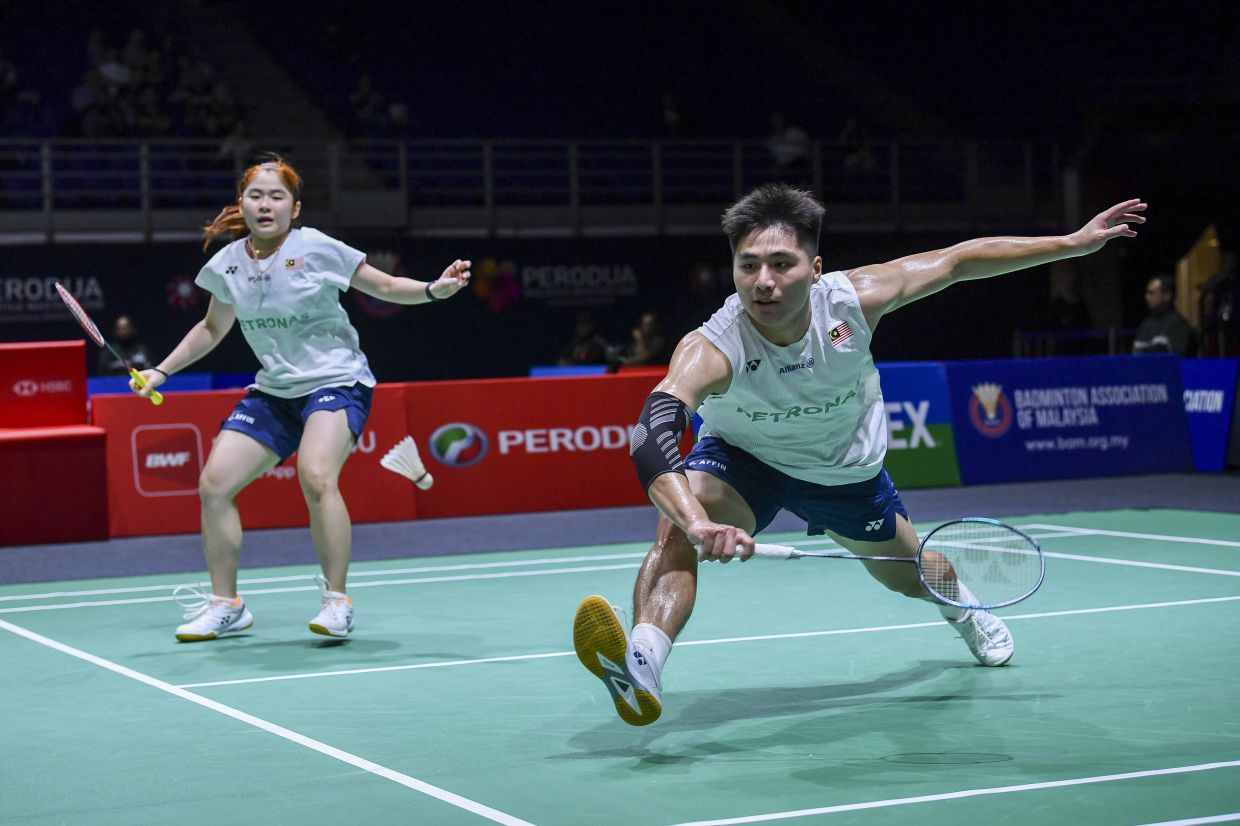
Jimmy Wong's return to the Badminton Association of Malaysia in April represents a pivotal moment in the 23-year-old shuttler's career as he pursues his long-held Olympic aspirations. Having reintegrated into the national team environment, Wong has expressed optimism about his trajectory under Malaysia's professional coaching structure, viewing the transition as essential preparation for his dream of competing at the 2028 Los Angeles Olympics alongside mixed doubles partner Cheng Su Yin. The young player's commitment reflects growing momentum within Malaysian badminton to develop emerging talent capable of achieving international recognition on sport's grandest stages.
Wong approaches his Olympic objective with measured pragmatism, emphasizing the importance of incremental progress over setting arbitrary performance milestones that could prove psychologically counterproductive. He recognizes that sustainable competitive development requires balancing ambition with mental resilience, a perspective shaped by his experiences transitioning back into the demanding national system. This philosophical approach suggests maturity beyond his years, as many emerging athletes succumb to pressure from self-imposed targets rather than allowing performances to accumulate organically toward larger objectives.
The partnership between Wong and Cheng Su Yin carries particular significance within Malaysia's mixed doubles landscape, where the country has historically produced formidable competitors. Their current International Badminton Federation ranking of 118th places them among Malaysia's developing prospects, but the trajectory matters more than the absolute position at this stage of their partnership's development. By season's end, Wong and Cheng aim to penetrate the top 32 rankings, a threshold that would unlock participation in prestigious Super 750 and Super 1000 tournament series where they would face elite-level opposition essential for Olympic qualification pathways.
Central to Wong's renewed optimism is his collaboration with mixed doubles coach Nova Widianto, whose credentials speak to BAM's investment in quality coaching infrastructure. Widianto's background as an Olympic silver-medallist and former world champion provides invaluable experiential knowledge that transcends technical instruction alone. Wong attributes his development to Widianto's holistic approach, which addresses competitive gameplay while simultaneously cultivating emotional intelligence and mental fortitude required for sustained performance in high-pressure international tournaments.
The dynamics between Wong and Cheng demonstrate the communicative foundation necessary for mixed doubles success, a discipline requiring exceptional synchronization and mutual understanding between partners. Early tournament participation has yielded encouraging results, including a stunning upset victory against China's world number one pairing Feng Yanzhe-Huang Dongping during the Singapore Open's opening round, evidence that Wong and Cheng possess the technical capability to challenge elite players despite their current ranking disparities. This victory serves as proof of concept that their potential extends significantly beyond their statistical position.
Wong's acknowledgement that technical aspects require continued refinement reflects realistic self-assessment rather than overconfidence. The mixed doubles discipline contains numerous variables—court positioning, net play execution, deception strategies, and tactical adaptability—where marginal improvements compound into competitive advantages. With only four tournament outings thus far, Wong and Cheng remain in the exploratory phase of partnership development, meaning systematic enhancement of weaknesses represents genuine progress pathways.
The national badminton framework supporting Wong's development has undergone substantial evolution in recent years, with strategic emphasis on identifying and nurturing players capable of Olympic qualification. Malaysia's historical strength in badminton creates both expectations and resource availability that aspiring players like Wong can leverage. The country's investment in coaching expertise, training facilities, and international tournament exposure reflects institutional recognition that Olympic medals require long-term developmental commitment rather than reactive talent identification.
For Malaysian badminton followers, Wong and Cheng represent potential future contributors to the country's Olympic medal count, a consideration particularly relevant as the Los Angeles Games approach within the next Olympic cycle. The mixed doubles category remains strategically important for Malaysia, offering medal opportunities in a discipline where technical excellence and partnership cohesion can overcome individual athletic limitations. Success at the 2028 Olympics would validate BAM's developmental strategy and inspire younger players pursuing similar pathways.
Wong's transition narrative also illustrates broader Southeast Asian badminton dynamics, where player development increasingly occurs within structured national systems rather than through independent pathways. Countries across the region—including Indonesia, Thailand, and Vietnam—have similarly invested in coaching infrastructure and competitive ecosystems designed to produce internationally competitive players. Wong's decision to commit fully to the national setup rather than pursue alternative career paths demonstrates confidence in BAM's capacity to facilitate Olympic qualification.
The psychological dimension of Wong's approach warrants consideration, particularly his deliberate avoidance of excessive target-setting that could trigger counterproductive pressure responses. This perspective reflects maturity in competitive sports psychology, recognizing that elite performance emerges from consistent technical execution and tactical intelligence rather than anxiety-driven motivation. By maintaining focus on process elements—training intensity, competitive learning, partnership development—rather than outcome obsession, Wong positions himself for sustainable improvement trajectories.
Looking forward, Wong and Cheng's progress toward the top 32 ranking threshold will provide reliable performance indicators for Olympic qualification viability. Their continued tournament participation against progressively stronger opposition will reveal whether early achievements against elite players like Feng-Huang represent genuine competitive capacity or isolated upsets. The ensuing tournament calendar offers multiple opportunities to test their capabilities and identify technical refinements required for consistent competitiveness at the highest levels of mixed doubles badminton, ultimately determining whether the Olympic dream transitions from aspiration to achievable reality.

